
Irish citizens have been urged to avoid travelling to Israel and to leave Lebanon, due to deepening tensions in the region.
In separate social media posts on X today, Taoiseach Simon Harris and Tánaiste and Minister for Foreign Affairs Micheál Martin said the Department of Foreign Affairs now feels it is not safe for Irish citizens to travel to either countries.
A similar view already exists in terms of Irish citizens travelling to Palestine.
In a message on X, Mr Harris said: "Our travel advice for Israel has changed due to growing instability in the region. The Government is now advising Irish citizens do not travel to Israel. The same advice applies to Lebanon and Palestine."
In a separate message on social media, Mr Martin said: "I strongly advise Irish citizens in Lebanon to leave the country and take advantage of the commercial options still available.
"Safety and security of citizens is our priority. DFA officials in the region and Dublin are available for consular advice."
An information statement on the Department of Foreign Affairs website states: "The Department advises against all travel to Israel. The Department advises against all travel to Palestine.
"Irish citizens who are currently in Israel or Palestine who have not already done so, are asked to register on the Department's citizens registration platform."
A registration link for which is located on the department's website.
The department's information statement also said "Irish citizens are strongly advised" not to travel to areas that border with Lebanon.
This, the department statement said, was because the area had been identified by the Israeli military as a "closed military zone" and that there was the "potential for intense escalation" of violence.
"Extreme caution is advised," it said.
Lebanon says three dead in Israeli strikes
Lebanon's health ministry said Israeli strikes killed three people on Monday in the country's south, with Hezbollah announcing one of its fighters killed and a rescue group mourning a paramedic.
Since last week, tensions have soared as Iran and Tehran-backed groups, including Hezbollah, vowed revenge for the killing of Hamas's political leader in Tehran and Israel's killing of the Lebanese group's military chief in Beirut.
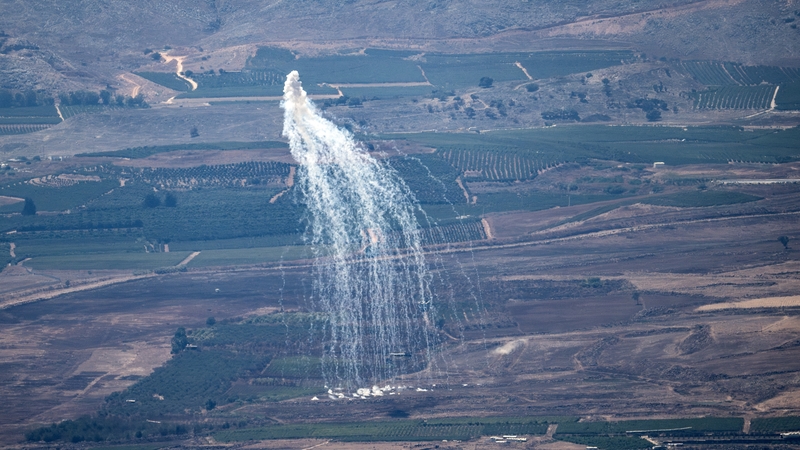
Hezbollah has traded near-daily fire with Israel in support of its ally Hamas since the Palestinian militant group's 7 October attack on Israel triggered the Gaza war.
The twin killings have raised fears of full-blown war between Israel and Hezbollah, which last went to war in the summer of 2006.
Lebanon's health ministry said an "Israeli enemy strike that targeted a motorbike" in the southern village of Ebba killed one person, wounded another and caused a pregnant woman who was near the site to miscarry due to "shock".
It was not immediately clear whether the person killed was a fighter or a civilian.
Earlier, the health ministry said an "enemy raid" near the cemetery in the border village of Mais al-Jabal "killed two people".
An Israeli army statement said that "soldiers identified a terrorist cell operating a drone" in the Mais al-Jabal area, and that air forces "struck and eliminated the terrorists".
'Tense and volatile'
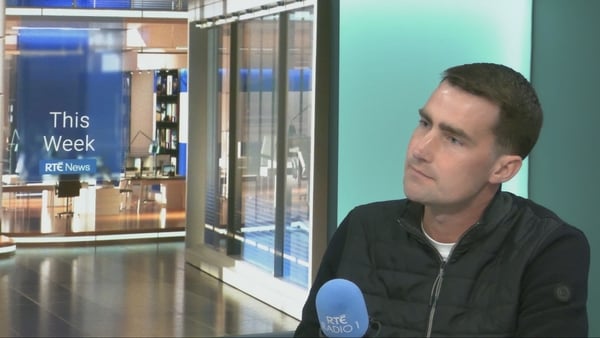
Yesterday, the commander in charge of Irish peacekeepers in south Lebanon, Lieutenant Colonel Tom Fox, told RTÉ's This Week programme that the situation in the region had become "tense and volatile".
He said there was a sense that an escalation in the conflict between Israel and Hezbollah was imminent.
There are 332 Irish peacekeepers stationed at Camp Shamrock in South Lebanon, and at an Irish outpost close to the blue line - the effective border between Israel and Lebanon.
This is in addition to at least 100 Irish private citizens who are known by the department to be in Lebanon, with many more in Israel and Palestine.
The already volatile situation in the region - which has deepened significantly since the 7 October attack by Hamas on Israel and the resulting military action by Israel in Palestine - has further worsened in recent days after the killing of Hamas leaser Ismail Haniyeh in Tehran, Iran, last week.
"Iran seeks to establish stability in the region, but this will only come with punishing the aggressor and creating deterrence against the adventurism of the Zionist regime (Israel)," he said, adding that action from Tehran was inevitable.