


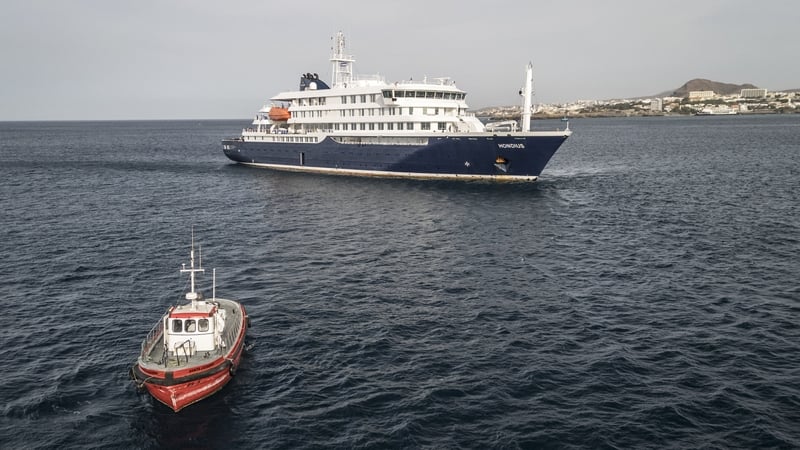
The Government jet will be sent to Spain tomorrow morning to take two Irish citizens on board the vessel at the centre of the hantavirus outbreak back to Ireland.
They will then be placed in an as yet unidentified HSE facility, where they will continue to be monitored for a number of weeks.
RTÉ News understands the jet, which under normal circumstances is used to carry the Taoiseach and ministers to necessary locations, will be dispatched tomorrow morning to Tenerife.
The MV Honduis is expected to anchor near the island between 0300GMT and 0500 GMT (4am and 6am Irish time).
Local authorities have said the evacuation must take place between tomorrow midday local time and around the same time Monday before conditions at sea are expected to become stormier for the rest of the month.
When the vessel is anchored, all those on board will be examined for any signs of the hantavirus.
If they are shown to have no symptoms, as is currently the case with both Irish citizens on board, they will be sent to planes organised by their respective countries to bring them home.
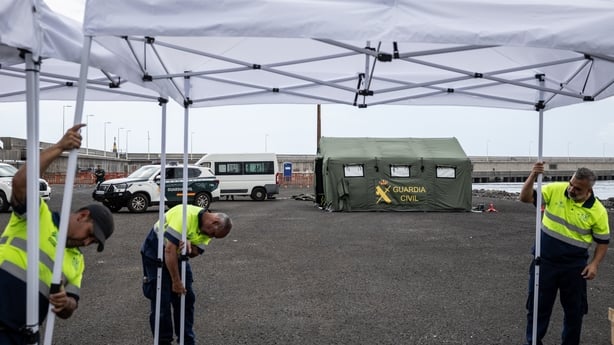
The Government jet will be waiting for the two Irish citizens and is expected to leave early tomorrow afternoon.
When it lands in Ireland, the two Irish citizens will be sent to a HSE facility for further monitoring and isolation - a situation which could take a number of weeks due to the incubation rate of the virus.
Should anyone on board the vessel show signs of the virus when they are assessed, they will be sent for further examination on board an EU medevac aircraft and potentially to a facility in the Netherlands for further assessment.
Both the Department of Health and Government sources have stressed the Irish plans are based on strict isolation and wider public protection protocols
It follows remarks from Spain's Interior Minister Fernando Granda-Marlaska in which he said repatriation flights with Germany, France, Belgium, Ireland and the Netherlands as destinations have been organised.
Mr Granda-Marlaska said the European Union is sending two further planes for remaining European citizens
The US and UK have confirmed planes and contingency plans were being arranged for non-EU citizens whose countries were unable to send air transport, he added.
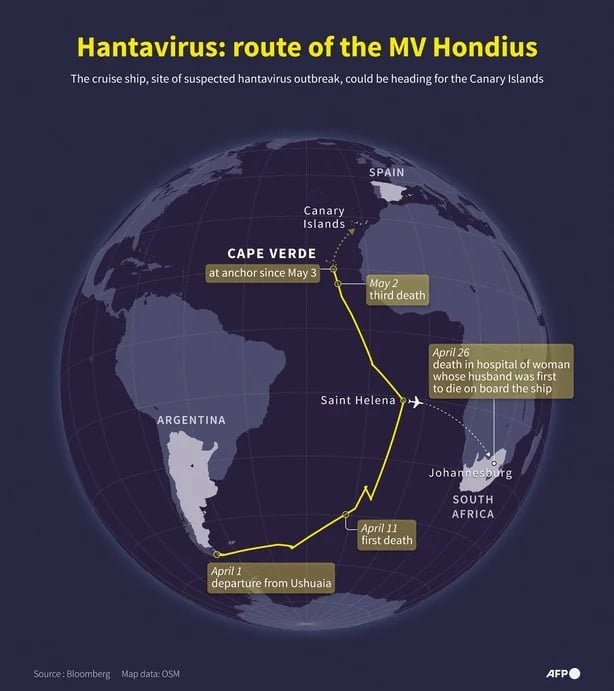
Three passengers from the MV Hondius, a Dutch husband and wife and a German woman, have died, while others have fallen sick with the rare disease, which usually spreads among rodents.
The European Centre for Disease Control and the World Health Organization have separately said while the situation is serious the risk to the wider public remains low.
Earlier interim Chief Medical Officer Professor Mary Horgan said intensive work has been carried out to make sure everything has been put in place for the safe quarantine of the Irish passengers.
Prof Horgan said the current quarantine period was 45 days but that Irish authorities would closely monitor the guidelines from the European Centre for Disease Control (ECDC).
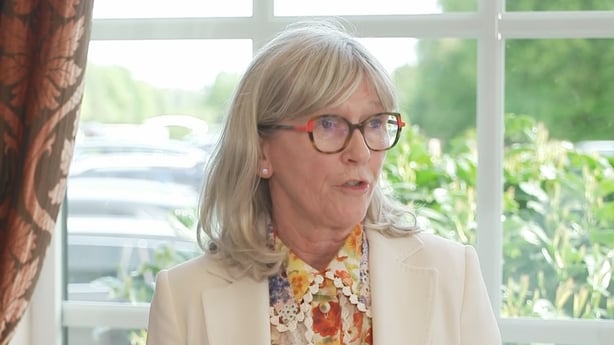
It has yet to be decided whether that will be a quarantine at home or in another medical setting.
"The risk of human to human transmission for this virus is very low, this in not like Covid," she said.
She added: "What is also important is not only is the transmission low but we're putting protocols in place so that there is even further confinement and that's the purpose of quarantine, is to really contain that infection but monitor people during that time, that they've no symptoms, to make sure they're looked after both physically and mentally.
"From the passengers point of view, everything has been put in place for them to come home and be in quarantine in a safe place."
Prof Horgan was speaking in Co Carlow where she is attending the Irish Pharmacy Union's annual conference.
Prof Horgan said there had been ongoing communication with passengers and with doctors from the HSE.
She said it was really important that protocols put in place by the ECDC are followed.
"We've been working very closely with our European partners to ensure they come back safely. Thankfully they don't have any symptoms which is really good for them," she said.
Watch: Plans in place for the safe quarantine of the Irish passengers on board ship
We need your consent to load this rte-player contentWe use rte-player to manage extra content that can set cookies on your device and collect data about your activity. Please review their details and accept them to load the content.Manage Preferences
Ms Horgan said everyone in Ireland is wishing them well.
"I think that's the message they're getting. I'm sure they're very strong people and they'll get a warm welcome home, albeit they'll have to quarantine for a while," she said.
Prof Horgan said it was important more research and development be carried out to understand this virus and to develop vaccines and treatments.
"There is no direct medication or vaccination at the moment for this, but there is research going on in many universities, particularly the University of Oxford, looking at vaccines in this area so we will learn a lot," she said.
Minister for Health Jennifer Carroll MacNeill said Irish doctors had been in contact with the two Irish citizens, along with diplomats from the Irish Embassy in Madrid.
She said she hoped to speak to the passengers in the coming days about what supports they might need.
She said Irish authorities would work closely with the ECDC and European partners to ensure that they are all responding in the same way and taking the correct steps.
She said a meeting was held this morning to make sure this alignment was happening.
"They will need to isolate and that is all in keeping with the ECDC protocol," she said.
Minister Carroll MacNeill said the risk to the general population was very low, but she could understand why reports of the virus were generating concern.
"I've been briefed very clearly that there's a very, very low risk of human to human transmission," she added.
WHO chief arrives in Tenerife
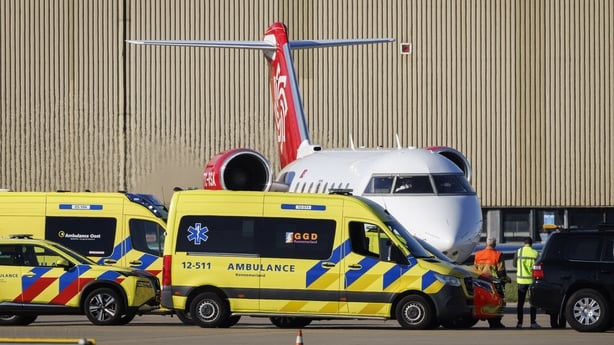
The World Health Organization's chief has arrived on the Spanish island to help oversee the disembarkation of the ship, a spokesperson said.
Tedros Adhanom Ghebreyesus landed along with a Spanish delegation on the island where most of the nearly 150 people on board the Dutch-flagged vessel are due to be evacuated and flown home after weeks at sea.
Dr Tedros will accompany Spain's health and interior ministers to a command post there "to ensure coordination between administrations, health control, and the application of the planned surveillance and response protocols", the sources said.
The only hantavirus strain that can transmit from person to person, the Andes virus, has been confirmed among those who have tested positive, fuelling international concern.
The WHO said the hantavirus outbreak posed a minimal risk to the general public.
"This is a dangerous virus, but only to the person who's really infected, and the risk to the general population remains absolutely low," WHO spokesperson Christian Lindmeier told reporters.
A picture is emerging from MV Hondius where "even those who have been sharing cabins don't seem to be both infected in some cases", when one has fallen sick, he added.
"The virus is not that contagious that it easily jumps from person to person," he said.
The WHO said there were six confirmed out of eight suspected cases of the virus so far. There are no suspected cases remaining on the ship.
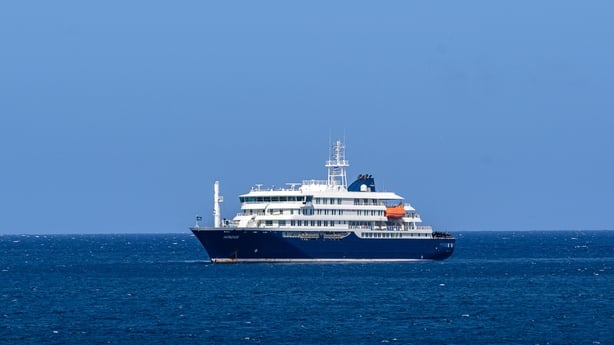
Meanwhile, the United States said it was organising an evacuation flight for Americans on the MV Hondius that has sailed to the Canary Islands, which are part of Spain.
"The Department of State is arranging a repatriation flight to support the safe return of American passengers on this ship," a State Department spokesperson said.
The State Department said it was coordinating with the Spanish government as well as other US federal agencies.
"We are in direct communication with Americans on board and are prepared to provide consular assistance as soon as the ship arrives in Tenerife, Spain," the spokesperson said on condition of anonymity.
The ship operator earlier said that 17 Americans were onboard. The State Department did not immediately give a number of US passengers.
The US evacuation flight will then take the American cruise passengers to Offutt Air Force Base in Omaha, Nebraska, and then on to a national quarantine facility at the University of Nebraska Medical Centre, the Centres for Disease Control and Prevention said.
"At this time, the risk to the American public remains extremely low," the CDC said.
Nebraska Medicine, a health care network, and the University of Nebraska Medical Center said the US citizens will be cared for in the federally funded National Quarantine Unit.
"At this time, the individuals being monitored are well with no symptoms of illness," they said in a statement.
The World Health Organization has said that the United States is among 12 countries with nationals who have already left the ship, on the remote British island of Saint Helena on 24 April.
It comes as a provincial official in Argentina said that there is an "almost zero" chance that the Dutch man linked to the hantavirus outbreak on the MV Hondius contracted the disease in the Argentine port of Ushuaia.
Juan Petrina, director of epidemiology for Tierra del Fuego province, where Ushuaia is located, told reporters that his assessment was based on the virus's incubation period, among other factors.
Additional reporting AFP
