


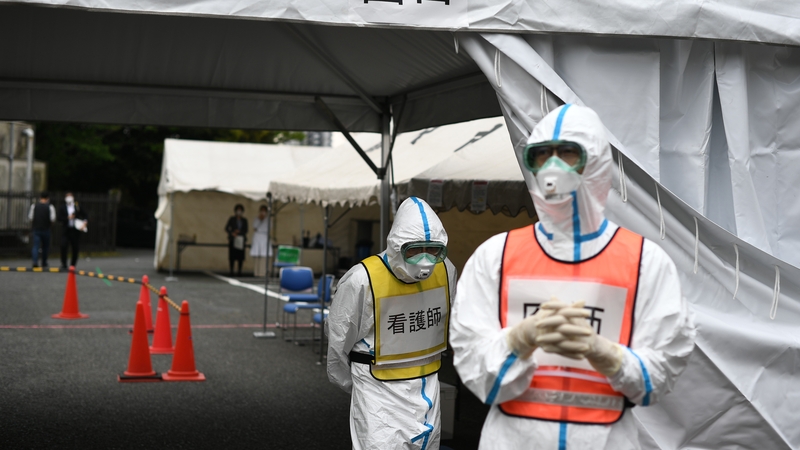
More than three million cases of coronavirus have been officially registered across the world, with nearly 80% in Europe and the United States.
At least 3,003,344 infections have been detected as of 8.50pm on Monday, including 209,388 deaths, mostly in Europe where there are 1,393,779 cases and 126,233 deaths.
The United States, the country where the pandemic is progressing the most rapidly, has 980,008 cases including 55,637 deaths.
The number of detected cases is believed to represent only a fraction of the true number of infections because most countries carry out only limited testing.
- Pandemic could create 'human rights disaster': UN -
The UN rights chief has warned that countries flouting the rule of law in the name of fighting the coronavirus pandemic risk sparking a "human rights disaster".
United Nations High Commissioner for Human Rights Michelle Bachelet called on countries to refrain from violating fundamental rights "under the guise of exceptional or emergency measures."
"Emergency powers should not be a weapon governments can wield to quash dissent, control the population, and even perpetuate their time in power," she warned in a statement.
"They should be used to cope effectively with the pandemic - nothing more, nothing less."
- European stock markets jump at open -
European stock markets jumped at the start of trading today as countries eased lockdown measures and after the Bank of Japan unveiled further support for its virus-hit economy.
London won 1.4%, Frankfurt rallied 2.2 percent, Paris gained 2.0%, Milan advanced 2.4% and Madrid climbed 2.6%.
- British PM makes first public appearance since coronavirus recovery -
British Prime Minister Boris Johnson has made his first public appearance in nearly a month after a spell in hospital and several days in intensive care with novel coronavirus.
In a statement outside his Downing Street office, he said Britian was "beginning to turn the tide" in tackling COVID-19 but indicated no immediate lifting of lockdown restrictions.
- Italy's bishops attack Conte for extending ban on mass -
Prime Minister Giuseppe Conte has come under attack from Italy's Catholic bishops and even some of his own cabinet members for refusing to reintroduce mass once the coronavirus lockdown is lifted on 4 May.
The number of infections has been ebbing and scientists believe the contagion rate is low enough to gradually get back to work.
Conte has allowed Italians to take strolls in parks and go jogging starting next Monday.

More stores will reopen and restaurants will resume takeout service. Museums will unlock their gates on 18 May in an effort to draw back tourists and help out Italy's devastated hotel and services industry.
But there will still be no mass and attendance at funerals will be limited to 15 people.
"We cannot accept to see the freedom of worship compromised," the Italian Episcopal Conference of the country's top bishops said in a statement.
"Why on earth, with proper precautions, can you go to a museum but not to mass?"
The country registered its lowest day-to-day number of new cases of Covid-19 since practically the first day the nation was put under lockdown.
According to data from the Italian health ministry, 1,739 cases new cases were confirmed in the 24-hour period ending on Monday evening.
The previous time the nation saw such a low daily number occurred on 10 March, when 77 new cases were registered.
Italy now has 199,414 known cases. It registered 333 deaths since Sunday evening, raising to 26,977 the number of known deaths in the country, which has Europe's highest death toll in the pandemic.
-Spain's daily death toll rises slightly -
The number of daily fatalities from the coronavirus reported in Spain rose to 331 today, up from 288 the previous day, the health ministry said.
The overall death toll caused by the disease rose to 23,521from 23,190 the day before. The total number of diagnosed cases rose to 209,465 from 207,634 the day before.
- Netherlands reports 400 new coronavirus cases -
The Netherlands' number of confirmed coronavirus cases has risen by 400 to 38,245 health authorities say, with 43 new deaths.
The country's death toll stands at 4,518, the Netherlands'Institute for Public Health (RIVM) said in its daily update.
The RIVM cautioned it only reports confirmed cases, and actual numbers are higher.
- Belgian COVID-19 hospital entries at lowest since lockdown start -
Belgian hospitals admitted the lowest number of COVID-19 patients since the start of the lockdown almost seven weeks ago, figures show, a week before the country starts to ease restrictions.
In an encouraging sign, the number of hospital admissions, a key number to monitor the disease's evolution, fell to 127 on Sunday, the lowest level since 18 March. Daily admissions peaked at over 600 at the end of March and have hovered at around 200 for the past week.
The number of new confirmed COVID-19 cases also declined to a month low of 553, although health officials said the decline might be in part due to a weekend effect.
- Greek hair salons to reopen as lockdown eases -
Hair salons will be among the small businesses to reopen in May and June in Greece as the government relaxes its coronavirus lockdown, the government spokesman said.
Prime Minister Kyriakos Mitsotakis will announce the plan on Tuesday, Stelios Petsas told reporters, adding that restrictions will be lifted incrementally so that the effects on public health can be evaluated.
Small businesses such as hair salons will be the first to open under strict crowd conditions, while larger enterprises, restaurants and churches will follow, he said.
- School resumes in Norway -
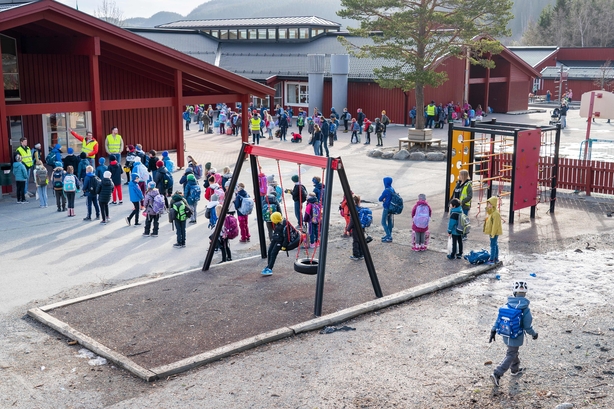
Norway, which says it has the new coronavirus epidemic under control, reopened primary schools to the youngest students, in another step toward a gradual normalisation, though some parents expressed concern.
One week after nursery schools, pupils aged six to 10 started returning to their school desks after six weeks of remote learning from home in the Nordic cotry.
Classes were however reduced to a maximum of 15 students.
Norway has progressively begun lifting restrictions imposed on 12 March to combat the spread of the novel coronavirus.
Hair salons and dermatologists were also authorised to resume business.
- German economy minister urges caution -
Germany's economy minister urged the country's 16 federal states to go slowly in lifting coronavirus restrictions to avoid the outbreak spreading further and being forced to backtrack later.
Under Germany's decentralised political system, the states have the power to implement and rescind the social distancing measures on which Berlin is relying to slow the virus's spread,and Chancellor Angela Merkel is resisting pressure from some to further ease restrictions.
Germany has had around 150,000 diagnosed cases of coronavirus, according to official figures published today, but has only had 5,750 deaths, a far lower proportion of fatalities than neighbouring Italy, Spain, France and Britain.
- Romania aims to reopen schools in September -
Schools, kindergartens and universities will remain closed in Romania for the rest of the academic year because of the coronavirus pandemic, President Klaus Iohannis has said, with a re-opening planned for September.
"We gave up on the idea of reopening schools. It would be impossible, for example, for students to respect social distancing rules, so we are trying to avoid major risks," Iohannis said during a televised speech.
- Russia overtakes China with coronavirus cases at 87,000 -
Russia has overtaken China in the number of confirmed coronavirus cases after its tally climbed above 87,000, as pressure rose on the government to consider easing lockdown restrictions for businesses to help shore up the rattled economy.
Russia, the world's largest country by territory, has been on lockdown since President Vladimir Putin announced the closure of most public spaces on 25 March. These measures are due to expire on 30 April and Putin has not yet said if he plans to extend them.
- Turkey detains over 400 over 'provocative' posts -
Turkish authorities have detained 402 people over "baseless and provocative" social media posts about the coronavirus pandemic, the interior ministry has announced.
The official said some of the posts in question included claims that a lockdown would last longer than all-day weekend curfews announced by the government and accusations that authorities were lying about the number of deaths.
"In the past 42 days, 6,362 social media accounts have been analysed, and 855 suspects have been confirmed while 402 have been caught," the ministry tweeted.
The figure is separate from the detention of 410 people over similar claims at the end of March, a ministry official clarified to AFP.
- Coronavirus delays in U.S. extradition case against Assange -
Hearings in the U.S.extradition case against WikiLeaks founder Julian Assange will not go ahead next month as scheduled because of the coronavirus lockdown which prevents lawyers from attending court, a British judge has decided.
The 48-year-old is held at London's Belmarsh Prison where he is fighting a request by the United States to send him to stand trial for conspiring to hack government computers and espionage.
Judge Vanessa Baraitser told a hearing held by conference call that the case could not be argued properly as long as lawyers were unable to appear in person.

"Remote attendance by the parties in this case will not be appropriate. Mr Assange and the lawyers on both sides will need to be physically present in the courtroom," she said.
She adjourned the case until 4 May when a new date will befixed, noting that the Woolwich Crown Court where hearings last took place had availability for a three-week period only in November. Lawyers for both sides agreed to the delay.
- U.S. states from Minnesota to Mississippi to reopen despite health warnings -
U.S. states from Minnesota to Mississippi this week prepared to join other states that have eased coronavirus restrictions to try to revive their battered economies, although some business owners voiced reluctance in the face of health warnings.
Colorado, Montana and Tennessee were also set to allow some businesses deemed nonessential to reopen after being shut for weeks even as health experts advocated for more diagnostic testing to ensure safety.
Georgia, Oklahoma, Alaska and South Carolina previously restarted their economies following weeks of mandatory lockdowns that have thrown millions of American workers out of their jobs.
The number of known U.S. infections have kept climbing, topping 970,000 as the number of lives lost to COVID-19 surpassed 54,800.
- Canada death toll slows -
Canada's death toll from the coronavirus grew by less than 10% for the eighth day in a row, data shows and Canada's most populous province prepared to explain how it intends to restart its economy.
The total number of people killed by the coronavirus in Canada rose by 5% to 2,617 in a day, according to figures posted by the public health agency.
- Apple to delay mass production of iPhones - WSJ -
Apple Inc is delaying the production ramp-up of its flagship iPhones coming later this year by about a month as the coronavirus pandemic has weakened global consumer demand and disrupted manufacturing across Asia, the Wall Street Journal has reported citing people familiar with the matter.
Apple did not immediately respond to Reuters' request for comment.
- Australians download tracing app en masse -
More than a million Australians rushed to download an app designed to help medical workers and state governments trace close contacts of COVID-19 patients, as Prime Minister Scott Morrison's approval rating soared on his pandemic response.
Australia has been one of the most successful countries in fighting the coronavirus pandemic, recording just 83 deaths and 6,700 cases, because of border closures, movement restrictions and a stay-at-home policy.
It has lowered the daily growth in new infections to less than 1%, well down from the 25% seen in March.
Australia has indicated it might lift some of the social distancing restrictions starting 11 May. Morrison has said at least 40% of the population will need download the app, which allows health authorities to trace users' movements.

- New Zealand has won a battle against transmission: PM -
Prime Minister Jacinda Ardern claimed New Zealand had scored a significant victory against the spread of the coronavirus as the country began a phased exit from lockdown.
"There is no widespread, undetected community transmission in New Zealand," Ardern declared. "We have won that battle."
- Tokyo reports fewest new coronavirus cases in 4 weeks -
Metropolitan Tokyo has confirmed 39 more cases of coronavirus infection, Governor Yuriko Koike said, the fewest since 30 March and the second consecutive day of new cases below triple digits.
But Koike stressed at a video conference that the situation offered no grounds for optimism, saying that the number was usually low on Mondays as fewer test samples are brought in.
"We can't let our guard down," she said.
- Tokyo's Nikkei closes up more than 2.7% -
Tokyo's benchmark Nikkei index rallied more than 2.7% as the Bank of Japan took additional easing steps to support the virus-hit economy.
The Nikkei 225 index rose 2.71%, or 521.22 points, to close at 19,783.22 while the broader Topix index was up 1.83%, or 25.96 points, at 1,447.25.
"Details of the announcement were widely anticipated but welcomed as good news," said Toshikazu Horiuchi, a broker at Iwai Cosmo Securities.
- China eases restrictions on equipment exports -
China is dropping a requirement that a number of key virus care products get domestic regulatory approval before export, as long as they are approved in the importing countries, according to its commerce ministry.
China had been stipulating such extra approval at home since the end of March after several European countries complained that Chinese-made test kits were inaccurate, in effect hampering many firms' efforts to supply global efforts against the coronavirus pandemic.
The new ruling applies to products such as coronavirus tests, medical masks, protective suits, infrared thermometers and ventilators.
- China envoy issues Australia consumer boycott warning -
China's ambassador in Australia has warned that demands for a probe into the spread of the coronavirus could lead to a consumer boycott of Aussie wine or trips Down Under.
Australia has joined the United States in calling for a thorough investigation of how the virus transformed from a localised epidemic in central China into a pandemic that has killed more than 200,000 people, forced billions into isolation and torpedoed the global economy.
In a thinly veiled threat, ambassador Cheng Jingye warned the push for an independent inquest into the origins of the outbreak was "dangerous".
- HK scientists say new antiviral coating can protect surfaces for 90 days -
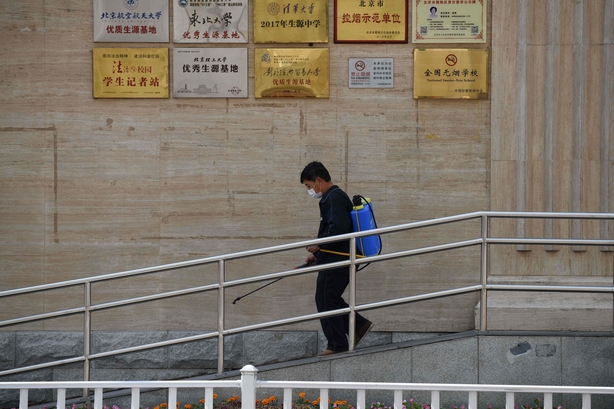
Researchers at a Hong Kong university say they have developed an antiviral coating which could provide 90 days of "significant" protection against bacteria and viruses such as the one causing COVID-19.
The coating, called MAP-1, took 10 years to develop and can be sprayed on surfaces that are frequently used by the public,such as elevator buttons and handrails, researchers at the Hong Kong University of Science and Technology (HKUST) say.
"These places are frequently touched, and, at the same time,serve as a very effective medium for transmission of diseases," said HKUST Adjunct Professor Joseph Kwan, one of the chief researchers in the team that developed the product.
- Iran death toll rises by 96 -
The death toll from the outbreak of coronavirus in Iran has risen by 96 in the past 24 hours to 5,806, Health Ministry spokesman Kianush Jahanpur said in a statement on state TV.
The total number of diagnosed cases of coronavirus in Iran, one of the countries hardest hit by the outbreak in the Middle East, has reached 91,472, he said.
- India ponders gradual reopening -
In India, where a strict shutdown for its 1.3 billion people is due to end on 3 May, Prime Minister Narendra has begun talks with the chief ministers of the country's 28 states to decide on what restrictions should be kept in place.
Ashok Gehlot, the chief minister of the western state of Rajasthan, said any extension of the severe lockdown could lead to people starving and the government should allow economic activity to begin in less-affected areas. Some 300 of India's 730 districts have reported no cases of the coronavirus.
India's has 27,891 confirmed infections of the coronavirus, according to government data, the second highest amount in Asia after China. So far 872 people have died.
The government says the lockdown has meant that it now takes 10 days for cases to double, compared with 3.6 days last month.
- Malaysia criticised for jailing virus rule breakers -
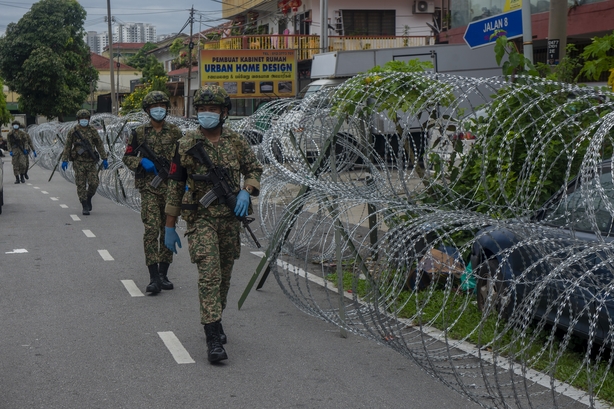
Malaysia should stop jailing people who breach strict curbs imposed to halt the spread of the virus, as it places people at greater risk of infection, Human Rights Watch has said.
Thousands have been detained for breaking the rules and some of them have been handed short jail terms.
Authorities have established temporary jails to hold those who break virus rules, and said at the weekend that the first batch of 58 inmates had been sent to the prisons.
- Nine new cases in Thailand -
Thailand has reported nine new coronavirus cases and one death, bringing the country's totals to 2,931 cases and 52 fatalities.
It is the first time since the outbreak started in January that there have been no new local transmissions reported in Bangkok, said Taweesin Wisanuyothin, a spokesman for the government's Centre for COVID-19 Situation Administration.
- Kazakhstan to reduce measures -
Kazakhstan will ease some coronavirus-related restrictions in the coming days despite extending its state of emergency until 11 May, President Kassym-Jomart Tokayev has said.
The Central Asian nation will, in particular, renew flights between its two major cities from 1 May, he said in a statement.
The state of emergency declared due to the pandemic was due to end on 30 April.
- Argentine commercial flight sales blocked until September -
Argentina has banned until September ticket sales for commercial flights, according to a decree, in a new measure the government said is part of its coronavirus response.
While the country's borders have been closed since March, the new decree goes a step further in preventing until 1 September the sale and purchasing of commercial flights to, from, or within Argentina.
The spread of coronavirus "does not allow certainties" for the end of social isolation measures, which would threaten commercial air transportation, the decree said.
The country has 3,892 confirmed cases of coronavirus and 192 deaths.
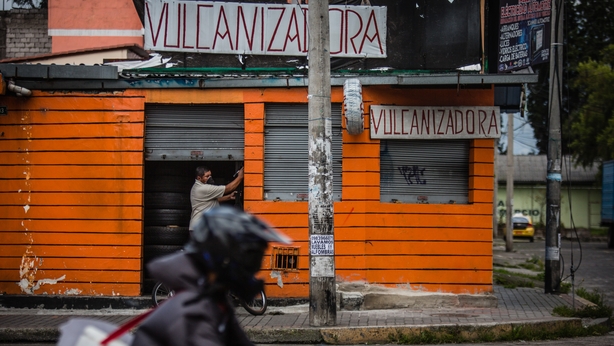
- Ecuador to colour-code regions ahead of easing -
Ecuador will gradually ease restrictions after seven weeks of coronavirus lockdown, the president said, with cities colour-coded according to their risk level.
The South American country has recorded over 22,000 COVID-19 infections and almost 600 deaths, according to the US Johns Hopkins tally.
From 4 May he said regions "depending on their health indicators" would be identified according to traffic-light colours - red, yellow and green - and "this will determine the gradual and careful reopening of some sectors."
Red areas will remain under shutdown orders, although online delivery services would be expanded.
But yellow and green regions will see transport restrictions partially lifted, curfew hours scaled back, up to 70% of employees allowed to return to work, and some shops reopened.
- Over 200 Cuban health experts arrive in South Africa for virus fight -
More than 200 Cuban doctors and health workers have arrived in South Africa to help the fight against coronavirus, the presidency said.
South Africa has the highest number of coronavirus cases on the continent with 4,546 infections, of which 87 have been fatal.
