


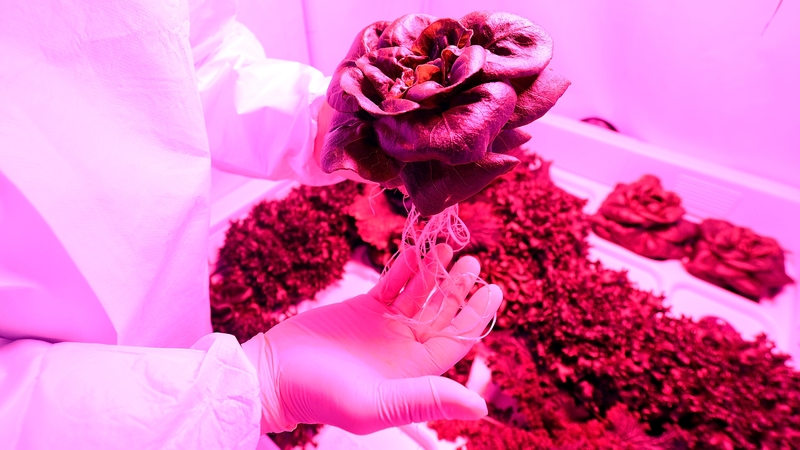
Astronauts living at the International Space Station have taken their first bites of space-grown lettuce, in what scientists described as another step toward enabling human missions to Mars.
If space explorers can grow their own food while they are away from the Earth, they are more likely to survive the rigours of deep space exploration lasting months or even years, according to NASA.
"There is evidence that supports (the idea that) fresh foods, such as tomatoes, blueberries and red lettuce, are a good source of antioxidants," said Ray Wheeler, NASA's lead scientist for advanced life support activities at Kennedy Space Center in Florida.
"Having fresh food like these available in space could have a positive impact on people's moods and also could provide some protection against radiation in space," he added.
The red romaine lettuce was grown in a special plant-growing box called Veg-01, and was flown to space aboard the SpaceX Dragon cargo ship.
The seeds are contained in rooting pillows, and were "activated" by Commander Kelly on 8 July, NASA said.
Next time you eat salad, do a lettuce toast like the @Space_Station astronauts did today! #NASAVEGGIE pic.twitter.com/HrQCXCOtha
— ISS Research (@ISS_Research) August 10, 2015
The plants grew for 33 days before being harvested.
A previous crop of lettuce was grown in space last year but was not eaten by astronauts. Instead, it underwent - and passed - food safety tests back on Earth.
This time, the astronauts "will clean the leafy greens with citric acid-based, food safe sanitising wipes before consuming them," NASA said.
"They will eat half of the space bounty, setting aside the other half to be packaged and frozen on the station until it can be returned to Earth for scientific analysis."
