


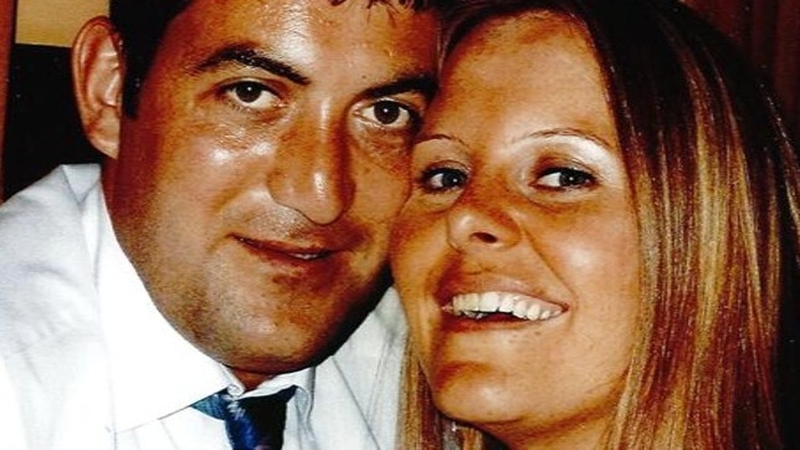
A consultant obstetrician has told the inquest into the death of Sally Rowlette that the 36-year-old mother was aware she had a history of HELLP Syndrome.
The comments from Dr Heather Langan have been disputed by Mrs Rowlette's husband, Sean.
Dr Langan was giving evidence on the second day of the inquest in Sligo.
Mrs Rowlette, from Dromore West, died after giving birth to her fourth child in February 2013.
Dr Langan told the inquest she first met Mrs Rowlette on her second pregnancy in 2007.
Medical records at the time show she was diagnosed with a severe form of pre-eclampsia called HELLP Syndrome.
Dr Langan did not see Mrs Rowlette again until 2013, when she was admitted to Sligo General Hospital prior to the birth of her fourth child.
Her blood pressure was described earlier as "off the wall".
Mrs Rowlette was taken to ICU after the birth of her daughter because her blood pressure was still not under control.
Dr Langan said Mrs Rowlette asked her whether she had HELLP Syndrome as had occurred during her second pregnancy.
Mr Rowlette disputed this evidence, saying his wife was too ill to talk to anybody, and neither he nor his wife had ever heard of HELLP Syndrome.
He said they knew she had high blood pressure and nothing else.
Dr Langan agreed that when asked later by Mr Rowlette what she would have done differently if she was Mrs Rowlette's treating doctor, she said she would have induced her at 38 weeks given her history of HELLP Syndrome.
Mrs Rowlette died the day after giving birth to her daughter. She suffered a brain haemorrhage as a complication of HELLP Syndrome.
The inquest heard that there is no record of advice given to Mrs Rowlette regarding future pregnancies and risk of recurrence.
In his evidence yesterday, Mr Rowlette described Dr Langan's manner as dismissive and said she had told him to go home when he had voiced concern about his wife's worsening condition.
The obstetrician said she had simply suggested that Mr Rowlette go home to get some rest so that he could help his wife in her recovery the next day.
She said Mrs Rowlette was in a very serious but stable condition in ICU at the time.
The legal team representing Mr Rowlette put it to Dr Langan that there were systemic wrong turns long before Mrs Rowlette was admitted to hospital on 4 February 2013.
Solicitor Roger Murray said it was up to the jury to look critically at the system, and not individuals, to see how the system can be improved and how Mrs Rowlette's death could have been prevented.
The inquest heard that the mortality rate for HELLP Syndrome is just 1%.
Speed of treatment is essential where there is a risk of stroke in relation to high blood pressure.
The court heard that the single biggest cause of death as a result of HELLP Syndrome is a delay in bringing blood pressure under control using aggressive anti-hypertensive therapy.
Consultant Anaesthetist Dr Seamus Crowley gave evidence this afternoon.
He came on duty late on 4 February and was providing cover for ICU.
Dr Crowley explained the catastrophic nature of Mrs Rowlette's haemorrhage and the gravity of her clinical condition to her husband and other family members.
He had been negotiating a transfer to Beaumont Hospital but neurosurgeons decided she would not benefit from such an intervention because of her lack of response to treatment measures at Sligo General Hospital.
In court today the legal team representing Mrs Rowlette quoted from the statement of expert witness Dr Peter Boylan, who will appear at the inquest tomorrow.
Dr Boylan said Mrs Rowlette had developed very aggressive acute onset hypertension.
It required an urgent response and represented a medical emergency requiring immediate senior medical attendance.
The court heard that Mrs Rowlette only saw a consultant once between 3.10pm and 7.45pm on 4 February, hours after giving birth.
Dr Langan was the obstetrician who saw her at around 4.30pm.
The legal team for Mr Rowlette said if she had been in a hospital in Dublin a consultant would be sitting be her bedside monitoring her continually.
