


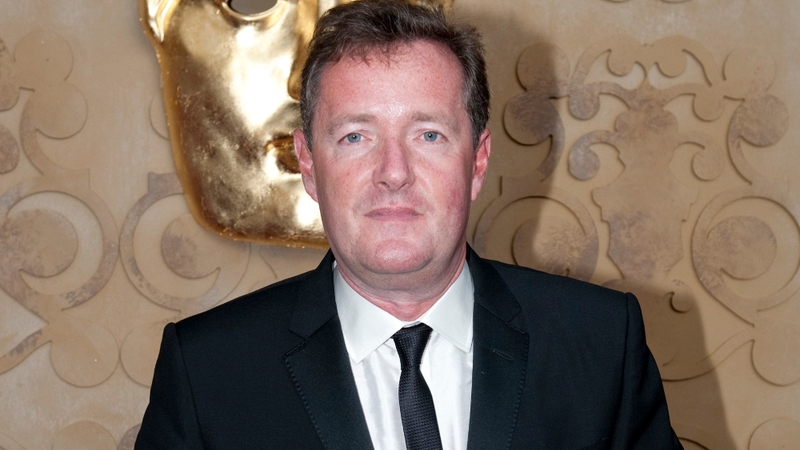
Piers Morgan has told the Levson Inquiry he never sanctioned phone hacking during his time as a tabloid editor, as he faced tough questions over his involvement in the "dark arts" of journalism.
Mr Morgan, now a high-profile CNN talk-show host in the US, edited the News of the World from 1994 to 1995 before going on to edit the Daily Mirror from 1995 to 2004.
Mr Morgan has consistently denied any involvement in the practice, which resulted in the closure of Rupert Murdoch's Sunday tabloid.
However, politicians had called for him to appear before the high-profile inquiry after his name became associated with the scandal.
Asked why he had previously given interviews in which he said that everyone knew about phone hacking, Mr Morgan said he was merely repeating rumours at the time and that no one at the Mirror had been found guilty.
"Not a single person has made any formal or legal complaint against the Daily Mirror for phone hacking, not one," he said, in often testy exchanges with the lead prosecutor in the inquiry and the judge, Brian Leveson.
Referring to Clive Goodman, the one journalist who went to jail for hacking, Mr Morgan had said he had been made a scapegoat.
But he said that still did not mean that he had had any prior knowledge of the issue.
"The Fleet Street rumour mill, which is always extremely noisy and often not entirely always accurate, was buzzing since this blew up with just endless rumours that it spread a lot further than Clive Goodman," he said. "I felt sorry for him."
Much of the questioning centred on an article Mr Morgan wrote for another newspaper, the Daily Mail, in 2006 in which he made reference to how he had listened to a phone message left for the ex-wife of former Beatle Paul McCartney.
The article was written in 2006 and before any allegations of phone hacking had surfaced.
As the scale of the phone hacking problem emerged this summer, Mr McCartney's ex-wife Heather Mills gave an interview about the incident and said that a senior journalist at the Trinity Mirror Group had admitted hacking her phone.
Ms Mills said the journalist had confronted her with details of a message left by Mr McCartney in early 2001 following a row between the couple. She said the journalist was not Mr Morgan, but that he was editor of the paper at the time.
Asked about the incident, Mr Morgan refused to say who had played him the recorded message and said he did not think it was entirely unethical to listen to someone's voice message.
The phone hacking scandal, which severely damaged the reputation and value of Mr Murdoch's News Corp at the height of the scandal this year, has largely focused on the malpractice at the News of the World.
But the allegation by Ms Mills briefly turned the spotlight on the behaviour of other tabloids, which have for years competed ferociously to secure front-page stories.
It also turned the spotlight onto Mr Morgan who took over from Larry King as he developed a television career in the US with the "Piers Morgan Tonight" show.
British Prime Minister David Cameron set up the Leveson Inquiry in July in response to revelations that the News of the World commissioned a private detective to hack murdered schoolgirl Milly Dowler's phone after she disappeared in 2002.
The first part of the inquiry, sitting at the Royal Courts of Justice in London, is looking at the culture, practices and ethics of the press in general and is due to produce a report by next September.
The second part, examining the extent of unlawful activities by journalists, will not begin until detectives have completed their investigation into alleged phone hacking and corrupt payments to police, and any prosecutions have been concluded.
