





On This Week: Irish moments from history (May 4th - 10th)
Welcome to On This Week, where we delve into the standout stories from the years gone by, featuring standout news stories, major sporting events, and pop culture highlights that helped shape Irish life. Here's your dose of Irish history from May 4th - 10th.
This week in Irish life and news
1981: the death of Bobby Sands
On 5 May 1981 Bobby Sands died in the Maze Prison after 66 days on hunger strike. Two days later he was laid to rest at Milltown cemetery in West Belfast. On 7 May 'Today Tonight' reported on the funeral and reactions to the death of Bobby Sands among the nationalist population and press.
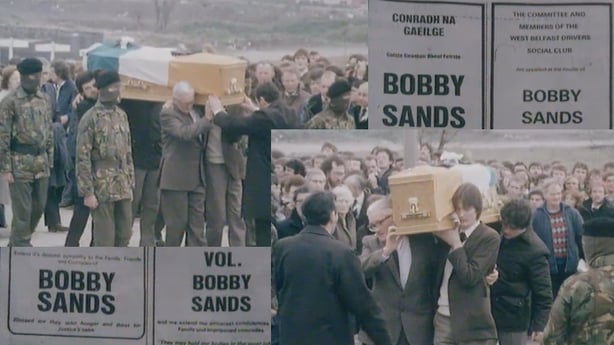
The funeral procession travelled four miles from Twinbrook Parish Church, along Andersonstown, through Lower Lenadoon, along the Falls Road to his final resting place at Milltown Cemetery. West Belfast came to a standstill as thousands turned out to show their support for the hunger strikers and respect for Sands. Many of those that turned out saw Sands as a martyr to the republican cause. It was one of the biggest political funerals in the history of Ireland.
The coffin, draped in a tricolour, was carried by six masked men wearing combat jackets and black berets before being lowered into the grave.
The reporter was Forbes McFall.
1986: Could Chernobyl create radioactive milk?
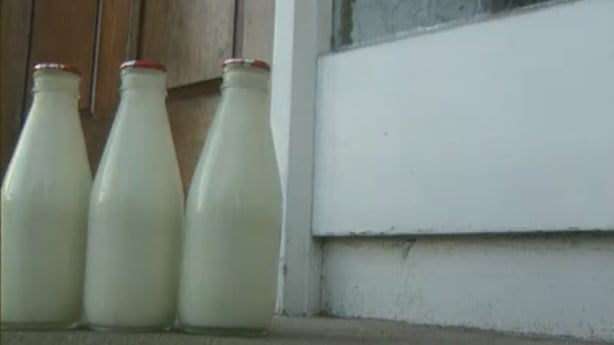
After the Chernobyl disaster in 1986, there was concern all over Europe about radiation contamination. Was there a danger of radioactive rain? Was it safe to drink milk from cows who had fed on grass? On this week forty years ago, Charlie Bird interviewed Dr Peter Mitchell, Director, Environmental and Radiation Research, University College Dublin (UCD) on the findings of the milk samples tested. In the interview, broadcast on May 6th 1986, Mitchell said that while levels were higher than expected, there was no need for concern.
The then-Fianna Fáil leader Charles Haughey criticised the Government's handling of the aftermath of the Chernobyl accident. "Chernobyl came out of the blue, but before that we had Sellafield, which was there as a threat all the time. Therefore they should have been ready for nuclear fall-out and had plans in place to respond to it." Tánaiste Dick Spring defended the government.
This week in arts and entertainment
1984: Temple Bar gets arty
In the 1980s, the Temple Bar area of Dublin's city centre began to emerge as a cultural hub. 1984 saw the launch of a new workspace for artists at the Temple Bar Arts Studios. On this week in 1984, Jenny Haughton, the chief organiser behind the new studios, told the RTÉ show Youngline how she went about finding this new workspace for artists in a city centre location and based on the New York style loft spaces. Over the previous six months, Jenny and her collaborators set up spaces for artists to work in. Painter Margaret O'Hagan had recently moved into the new studios and talked about how the bigger space allowed her work to become bigger. She described the place as a "godsend".
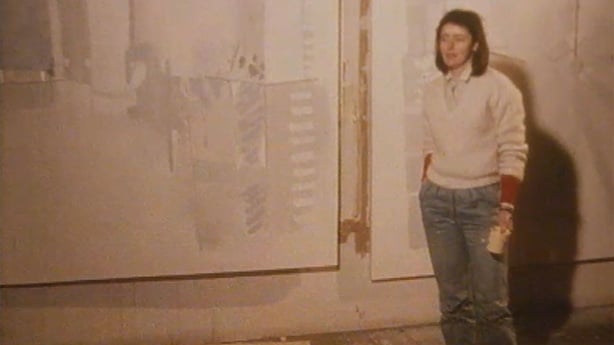
At a cost of £25 per week, spaces were filling up fast in Temple Bar. Poster designer Robert Armstrong shared a space with his partner Joe Hanley and Royal Ballet dancer Tony Rudenko rented space to teach contemporary and jazz dance classes which are held once a week. Peter Murray, one of Ireland's few slide archivists, was creating a comprehensive archive of contemporary art which he planned to make available to schools, colleges and galleries. And sculptor Catherine Carmen talked of the importance of having space for her work, which is something offered by the new space.
This episode of 'Youngline', a weekly, half-hour magazine show for younger viewers, was broadcast on 7 May 1984..
2001: the Buena Vista Social Club bring Havana to Dublin
Smithfield in Dublin was the venue for Cuban legends the Buena Vista Social Club who played to 10,000 people as part of the Heineken Green Energy Festival on this week in May 2001.

Musicians Ibrahim Ferrer, Ruben Gonzalez and Omara Portuondo found fame and fortune late in life. On May 6th 2001, Dave Fanning explained to reporter Teresa Mannion that while they were well known in Cuba, it took an album produced by Ry Cooder to bring their music to the world stage. The album 'Buena Vista Social Club', released in 1997, went on to sell 4 million copies worldwide.
On their trip to Dublin Ibrahim Ferrer and Omara Portuondo met up with the new Cuban Charge d'Affaires Teresita Trujillo in a Dublin hotel. While it was Ferrer's second time in Dublin, Portuondo was extremely excited to be there.
I feel like 15 years old you know, as I am really, really happy to be here with all these musicians.
An RTÉ News report by Teresa Mannion, broadcast on 6 May 2001.
This week in sports
1991: Fair play for women in sport
On May 6th 1991 the Council for the Status of Women (CSW) called for the government to re-establish Cospóir, the National Sports Council, with equal sports opportunities for women a priority. These demands followed the publication of a report by the Physical Education Association of Ireland (PEAI) highlighting the poor performance of women in this area.
The CSW and the PEAI both said there was an urgent need for the Minister for Sport Frank Fahey to take women's involvement in sport more seriously.
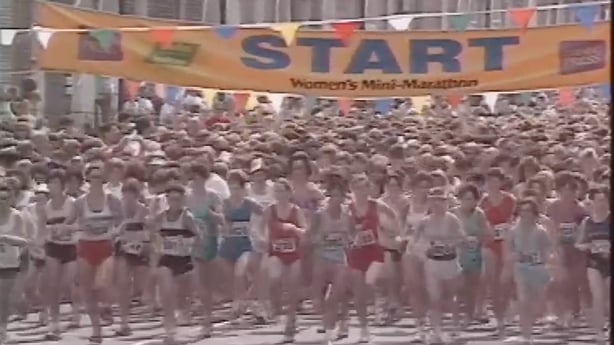
They wanted to see his department introduce an equality policy for sporting organisations such as the Gaelic Athletic Association (GAA) and the Football Association of Ireland (FAI). They also wanted physical education teachers in primary schools.
Chief executive of the CSW Carmel Foley wanted to see women’s sporting organisations getting an equal share of the Department of Education’s £15 million, which she points out is tax payers money.
We’re just looking for fair play. We’re looking for the Minister to level the playing pitch in this instance.
According to the CSW in 1991, four out of every 10 women were involved in sport, usually once a week. Ger Murphy of the PEAI pointed out that 51% of the population were women, and the non participation in sport by such a large cohort is a problem area. The CSW said that up until now women have been peripheral in sport and this situation will only change when the government bring in a policy.
The reporter was Lorna Donlon.
2002: Doctor Roy Keane
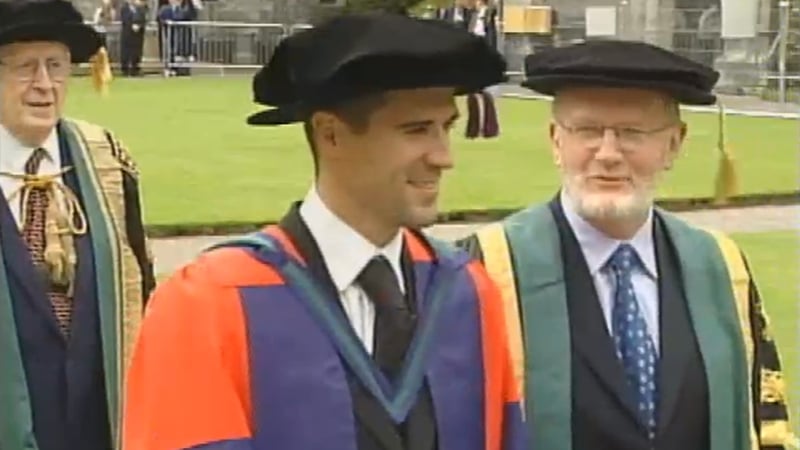
On May 10th 2002, Manchester United and Republic of Ireland captain Roy Keane was conferred with an honorary Doctorate of Law by the National University of Ireland (NUI) in his native Cork. At a ceremony held in University College Cork (UCC), Mayfield's famous son was honoured for his contribution to Irish life. Wearing his conferring gowns, the newly appointed Dr Roy Keane emerged from UCC's Aula Maxima to roars of approval from the hundreds of students and fans gathered to see their hero.
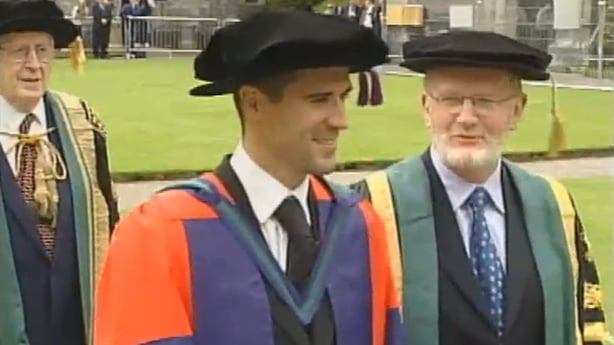
The Manchester United midfielder confessed he felt humbled and proud to accept the award.
I never thought I'd make it to UCC to be honest, growing up in Mayfield, but having said that I’ve been very fortunate in my career.
Roy Keane was nominated for the award by President of UCC Professor Gerry Wrixon and presented with his doctorate by the Chancellor of the NUI Dr Garret FitzGerald. Keane’s proud parents Mossie and Marie were among those attending the conferring ceremony. Not one to rest on his laurels, Doctor Keane then returned to Old Trafford for Manchester United’s last Premiership game of the season against Charlton Athletic.
The reporter was Paschal Sheehy.
What was Number 1 in Ireland this week?
1987: 'Nothing's Gonna Stop Us Now' by Starship
Starship featured former members of the iconic sixties band Jefferson Airplane, and had their biggest with this anthem.

It became a hig hit after featuring in the movie Mannequin and stayed at the top of the Irish charts for two weeks in May 1987.
1991: 'The Shoop Shoop Song (It's In His Kiss)' by Cher
This retro banger from the film Mermaids became a massive hit for the movie's star, the one and only Cher and was number one in Ireland on this week in 1991.
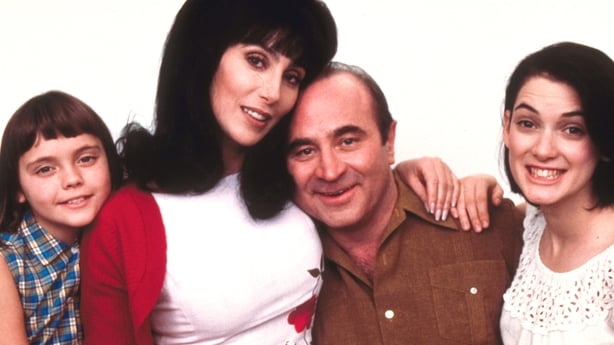
The song, which had previously been a hit for Betty Everett in 1964, stayed at the top of the Irish charts for six weeks.
2001: 'It's Raining Men' by Geri Halliwell
The former Spice Girl released her second solo album in 2001 and the lead single, a cover of the Weather Girls' 'It's Raining Men', was number one for four weeks.

Famous Irish names celebrating birthdays this week
Ruth Negga
The actor celebrates her 44th birthday on May 4th
Christy Moore
The legendary musician turns 81 on May 7th.
Roddy Doyle
The writer turns 68 on May 8th.
