



On This Week: Irish moments from history (April 6th - 12th)
Welcome to On This Week, where we delve into the standout stories from the years gone by, featuring standout news stories, major sporting events, and pop culture highlights that helped shape Irish life. Here's your dose of Irish history from April 6th - 12th.
This week in Irish life and news
1981: the Irish male in the 1980s
On April 11th 1981, the Late Late Show aired a special episode dedicated to the subject of the Irish male. Gay Byrne hit the streets of Dublin to find out what Irish women thought of Irish men and what they looked for in a man.
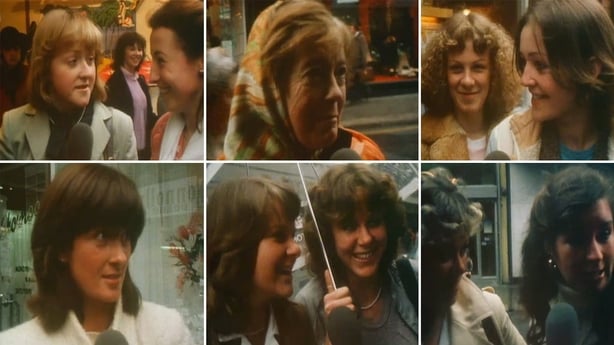
Opinions varied on Grafton Street with one woman describing Irish men as,
Cold, badly dressed, ill-mannered, have no sense of style, and generally very boring.
But another woman described them as
Intelligent, good-humoured and nice.
According to Gaybo's interviewees, the ideal Irish man ranges from Johnny Logan to... Garret FitzGerald.
1981: Election campaigning for Bobby Sands
In 1981 Bobby Sands and Harry West contested a by-election in Fermanagh and South Tyrone for a seat at Westminster. Hunger striker Bobby Sands stood as a Anti H-Block Armagh Political Prisoner and Harry West was the candidate for the Ulster Unionist Party. They were the only candidates for the seat in the Fermanagh and South Tyrone by-election. The election came about following the death of Irish republican MP Frank Maguire. This RTÉ news report from April 7th 1981 shows Bernadette Devlin McAliskey, Neil Blaney, Owen Carron and others attending a news conference for the Bobby Sands campaign.
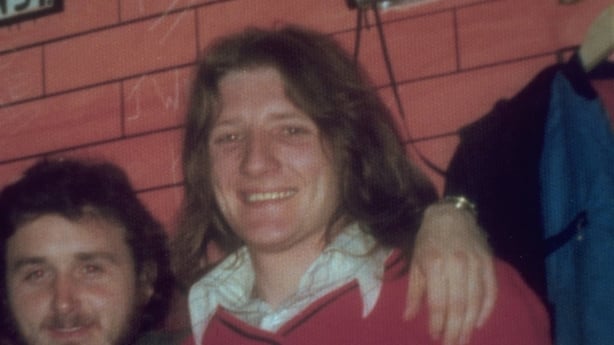
Speaking in Irish at the news conference Bernadette Devlin McAliskey said that people were satisfied to come out and support Bobby Sands and other prisoners. The question was not the armed struggle but rather not to let him die. Ulster Unionist Party candidate Harry West expected to gain the support of all unionist voters in the election. The election took place on 9 April and saw Bobby Sands elected. Bobby Sands died 26 days later.
The reporter is Póilín Ní Chiaráin.
86: The kidnapping of Jennifer Guinness
On 8 April 1986 Jennifer Guinness, whose husband John Henry Guinness was chairman of Guinness and Mahon Merchant Bank, was kidnapped from her home in Howth and held captive by an armed gang for eight days.
Brendan O'Brien reported for 'Today Tonight' two days after the kidnapping took place, when the Gardaí seemed none the wiser as where Mrs Guinness was or who is responsible for her abduction.
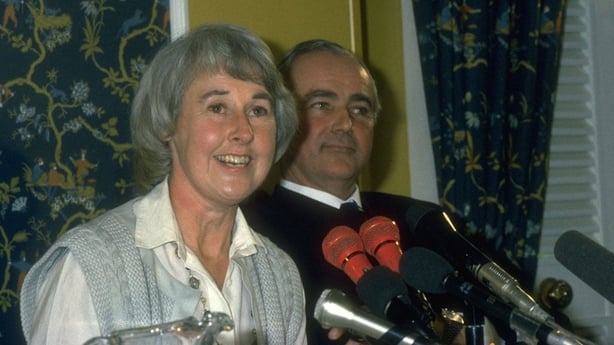
At the time there were no significant leads on her whereabouts or who the kidnappers might be. At the incident centre in Raheny, Dublin Gardaí officially said they had an open mind on the kidnapping but most signs point to a criminal and not a paramilitary gang.
At a press conference the Garda Press Officer provided a description of who they believe the kidnappers to be, one of whom is referred to by his accomplices as "Colonel". Guinness was held in various locations before being rescued by Gardaí eight days later at a house in Ballsbridge. Three men were later convicted of her kidnapping.
This week in arts and entertainment
1985: Shakespeare in... space?
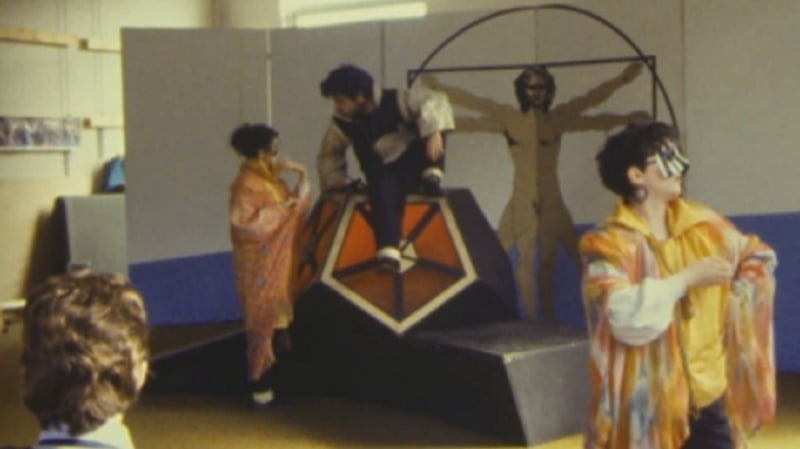
It was Othello, but not as we know it when Graffiti Drama Group bring their version of Shakespeare's play to Cork schools. Formed in 1984, the Graffiti Drama Group were funded by a grant from the Youth Employment Agency. The actors, who prior to this had been unemployed, were now bringing drama to schools in County Cork, performing for fifth year students at the Presentation Convent Crosshaven. On April 10th 1985, RTÉ News attended one performance of Othello, set hundreds of years in the future.
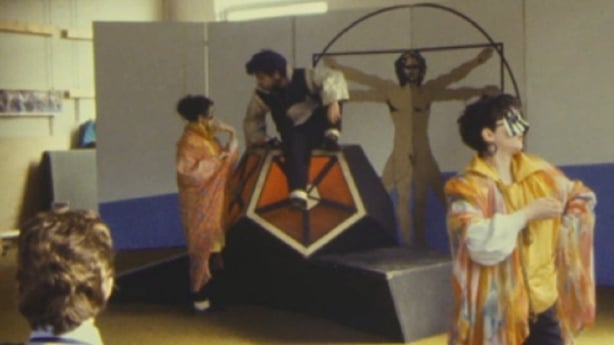
Graffiti's approach meant that the actors discussed the play with students after each performance, and answered questions such as why the play is set in the future? "We set it as far into the future as Shakespeare's Othello was written in the past" said one actor. One of the reasons given was that themes and devices such as Shakespeare’s the code of chivalry is also found in modern cinema:
"[In Shakespeare you find] a code of honour and glory that men must adhere to...you will find that in science fiction movies."
The reporter is Tom MacSweeney.
1996: Dublin memories of Samuel Beckett
On April 9th 1996, Trinity College Dublin appealed to the public for help in expanding its collection of Samuel Beckett memorabilia. Trinity was hosting a celebration of the work of Samuel Beckett to mark what would have been his 90th birthday on 13 April. The writer died on 22 December 1989 but his memory was kept alive at his alma mater Trinity College where he studied modern languages and lectured for a time.
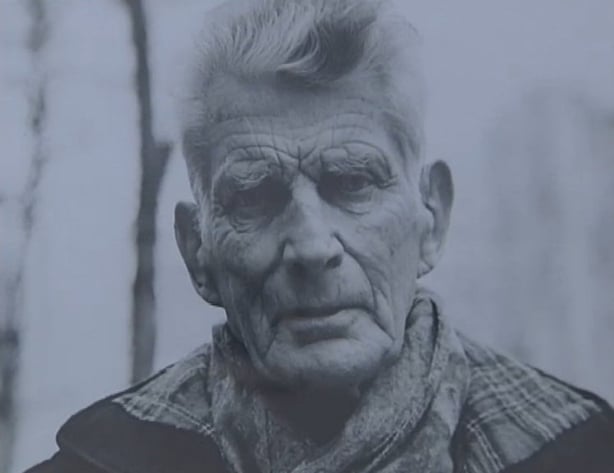
Trinity College named its drama school after the Nobel Prize winning writer and had one of the three largest collections of Samuel Beckett memorabilia in the world. The collection included many first editions. TCD was now appealing to the public to donate or sell other Samuel Beckett items and is specifically interested in letters which may still be in private hands.
Appealing for the public's help and contributions, Dr Thomas Mitchell of Trinity College said,
We want them to recognise how important the Centre for Beckett Studies in Trinity is and to appreciate our determination that this was Beckett’s city, this was Beckett’s university.
The reporter is Cathy Milner.
This week in sports
1977: Clash of the... plastic?!
A new virtually unbreakable plastic hurley aimed at juvenile players was put to the test at Croke Park on this week in 1977. As the best quality ash was reserved for making adult hurleys, juvenile players had to make do with inferior quality hurleys that break easily. In response to this problem, Wavin Pipes Limited developed a synthetic alternative hurl that they claimed was unbreakable and will be guaranteed for life.

The Wavin hurley was the result of 18 months of development and testing to find the most satisfactory polypropylene. The Wavin factory in Balbriggan, County Dublin announced its intention to manufacture 3,000 hurleys a week each retailing at £2.40.
Wavin Pipes Limited marketing manager Sean Kennedy spoke to RTÉ news on April 7th 1977 and was confident the new hurl would be robust and have the potential to outperform the traditional ash hurl on the pitch. Initially, the company planned to produce 32 inch hurls but plan to produce sizes 30, 34 and 36 inches. Sean Kennedy believed younger players will happily use Wavin hurls but,
I think it will take a long time to get the adult attuned to plastic.
Road testing the Wavin hurley at Croke Park were Chairman of the Dublin Gaelic Athletic Association Board Jimmy Gray and Dublin Senior Hurling Manager Jim Boggan.
Jim Boggan thought the Wavin hurls are better quality than the juvenile ash hurls currently being manufactured. He would be happy to see the Wavin hurley used at senior level, saying:
The stick itself I think would be of equal merit at least anyway.
Ultimately he thought people will be slow to make the change from ash to plastic, especially if good ash were still available.
The reporter is Colm Connolly.
2001: the GAA says no to non-gaelic sports
On April 12 2001, GAA club members gave their reaction to the decision not to allow soccer and rugby to be played at Croke Park. Many club members believed the decision taken by the Gaelic Athletic Association Congress to keep soccer and rugby out of Croke Park seen was wrong. Legan Sarsfield GFC is a small junior club on the Longford Westmeath border which regularly fund raised for improved facilities. In this report, members of the club gave their reaction to the GAA Congress decision.
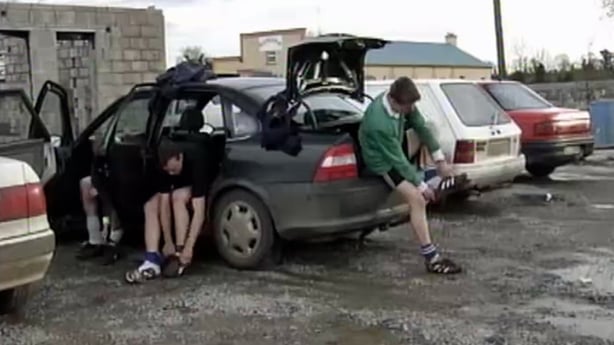
TJ Ward believed that this is a missed opportunity to maximise the use of GAA facilities by sharing them with other sports, while Nuala Flynn, a parent of some young players at the club, felt that the decision as at odds with modern society.
Paul Ross thought that
To alienate soccer and rugby is unfair.
Tony Carty, Chairman of Legan Sarsfield, says the decision is a missed opportunity on a national scale.
While most people at Legan Sarsfield GFC are disappointed by the decision, they believe it will be passed at next year's congress, and most people there felt that soccer, rugby and many other field sports should be played at Croke Park. The first soccer match took place at Croke Park in 2007
The reporter is Ciaran Mullooly.
What was Number 1 in Ireland this week?
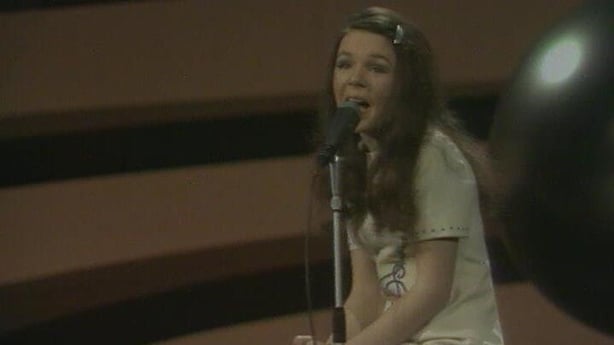
1970: 'All Kinds of Everything' by Dana
The Eurovision winning song by stayed at the top of the charts for nine weeks in spring 1970.
1991: 'Deep Deep Trouble by the Simpsons
Cartoon family the Simpsons dominated the Irish charts in the first few months of 1991, with 'Do the Bartman' staying at the top for nine weeks from January to March, followed a month later by 'Deep Deep Trouble'.
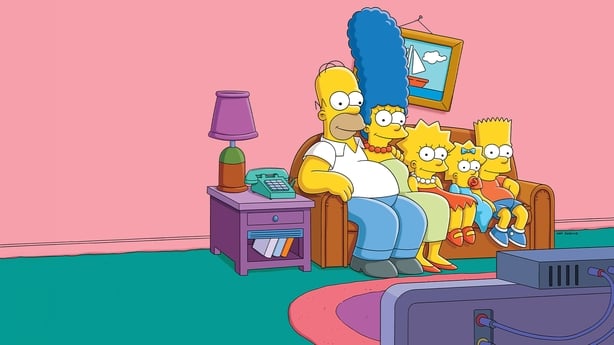
The track was written by Simpsons creator Matt Groening and DJ Jazzy Jeff.
Famous Irish names celebrating birthdays this week
Jennifer Zamparelli
The broadcaster will be 46 on April 9th.
Sorcha Cusack
The actress will be 77 on April 9th.
