
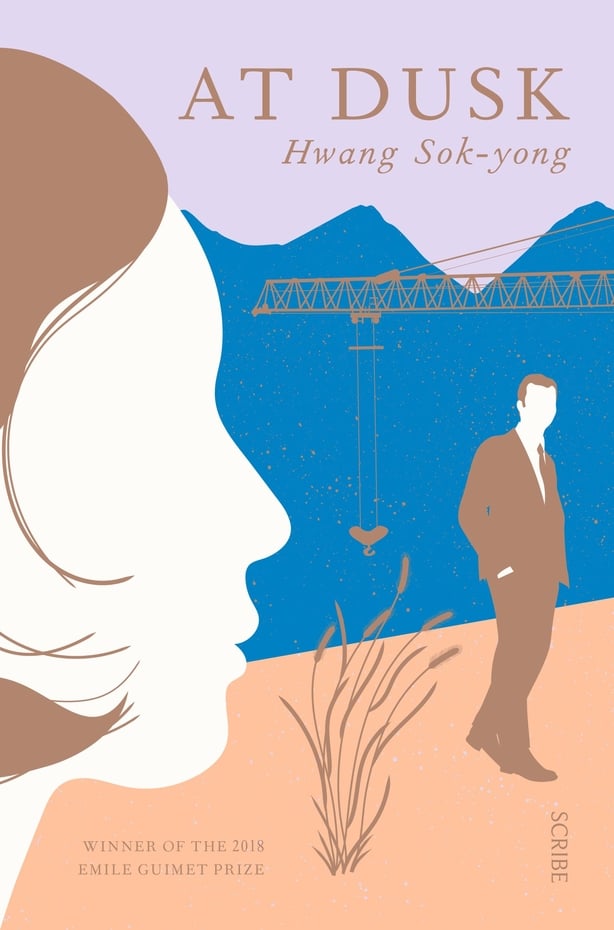
Hwang Sok-yong's story of the Korean archictect who pulled himself up from poverty but left behind him the young girl he loved is wistful, and yet sometimes inscrutable, too - which lends a curiously bitter-sweet element to proceedings.
Shared outside toilets, mud cabins, windows boarded with timber instead of glass - poverty runs like a virus through Sok-yong's deceptively simple story of the sensitive yet wily opportunistic survivor, Park Minwoo. His impoverished boyhood is recalled by the protagonist from a standpoint of hard-earned privilege as he is now a respected architect for the creations he has helped design. These are the high-rise buildings on a Seoul skyline tainted by corruption, although there is no suggestion that he is compromised by any malpractice.
Food is described in detail, its paucity or dilution the ready indicator that reveals so much. There is the family whom Park befriends in which the father is dead, and the oldest of the man's three sons is in prison. Only the eldest lad is served rice and a staple foodstuff called kimchi.
The kimchi, however, is ‘not the proper fermented kind, but rather a handful of outer cabbage leaves salted and sprinkled with a bit of ground red pepper.’ The other boys and their sister eat flour porridge in a broth which does not contain anchovy or beef flavour, but is `plain water with a little soy sauce and sliced squash.’
These neighbouring boys who loom large in Park Minwoo's adolescence live in two rudimentary houses - or cabins more like - in which the dividing wall has been knocked down to make three small rooms. The shoeshine boys who are the mainstay of the family business sleep in one of the rooms.
Rice is in short supply, and school-children are slapped for bringing it to school. The government have been encouraging people to eat more mixed grains and flour and the USA - not perhaps neglectful of a gap in which to wield influence in Asia - have been shipping the white stuff over.
In their slum neighbourhood, Park's father is famous for his fishcakes, which are described in mouth-watering detail. Food is the link, too, when our protagonist falls in love with Soona, the noodle house daughter. The sight of her, walking down the market street to the bus stop every morning in her school uniform, the white collar stiffly ironed, her hair in two long braids, was like sighting a single white crane in the middle of a disaster area. He decides to bring her down some leftover fishcakes to get her to notice him.
Much like country parishes in Ireland in the earlier decades of the last century, Park’s father Kim writes official letters for the illiterate. 'I didn’t find out until later, but we were not nicknamed the 'fishcake house’ as would have been customary but rather the `scholar house.’ Violence breaks out over over shoeshine patches, but and the loss of face if a victim tells the police about a severe beating.
Time moves on, and Park Minwoo progresses in his education, lucky in the people and patrons he meets. Soona, whose existence is marked by exceptional tragedy never forgets her one-time suitor. Her story and his story are told in alternate chapters and the two strands draw together towards the close.
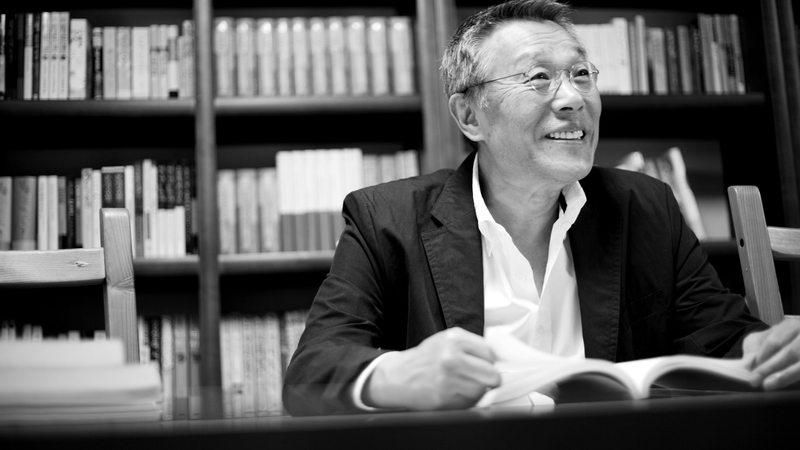
Politics is part of the saga, but its details are not dwelled upon - Hwang Sok-yong is a shrewd story-teller who knows the narrative priorities. In 1993, the writer was sentenced to seven years in prison for making an unapproved trip to North Korea hoping to foster relations between artists in both countries.
Five years later he was pardoned by the new president and released. His work, which includes at least six other novels, is popular in both South and North Korea, Japan, China, France, Germany and the Anglophone lands. He has been shortlisted for France's top literary award for foreign literature, the Prix Femina Etranger.
The poverty, including the confined rooming arrangements, are reminiscent of the family dwelling in Vivek Shanbhag's beguiling novel, Gachar Gochar. In that novel, translated into English from the Kannada language, a family becomes rich and this leads to serious family strife.
A stirring and quietly moving novel, At Dusk won the Emile Guimet Prize in 2018. It would make a great Book Club choice, replete, as it is, with human interest. The 188-page story, translated by Sora Kim-Russell, constitutes a sharply perceptive account of the struggle to maintain body and soul, roughly speaking, in the decades before Chun dooh-hwan's military coup of 1980.