
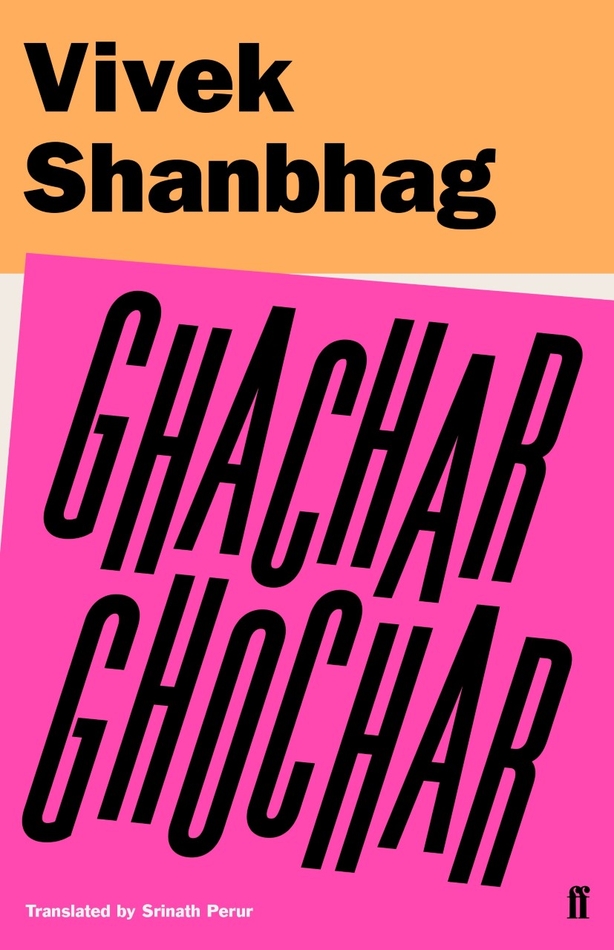
Originally written in the Indian language, Kannada, Ghacahar Ghochar is an illuminating, pithy tale now translated into English which demonstrates with great subtlety how sudden wealth enfeebles and fragments an Indian family.
Translated by Srinath Perur, Gachar Ghochar has the potent feel of great fly-on-the-wall reportage; the genuine blas of what poverty might feel like in a decent family who are making do with little, in a tiny, rented house in Bangalore. In one vivid sequence, each of the tiny rooms and the sparse furniture within and how they facilitate sleeping and dining arrangements are patiently listed and described. Shanbhag's attention to significant detail is striking and yet the novel is a mere 128 pages long.
Poverty too, the story shows, can be about the achievement of pungent little miracles which only occur in straitened circumstances. Miracles like the traditional food which, later in the story, is wistfully recalled in days of stifling, useless wealth, the household now `spoiled’ in the true sense of the word. Wealth seems only to accentuate tensions that might not have stung as much if the family had remained poor.
For more little miracles, take the the memorable passage in which - after hours of anxiety and repeated totting up of figures - an account of the day’s sales of tea leaves finally tallys with the profits, and the family is not left short after all.
For Appa -`father' in Kannada - has been a meticulous, hard-working tea salesman before the unfortunate contaminant of wealth arrives at the family’s door. It all starts when he is laid off from his job, and his youngest brother Venkatachala - known as Chikkappa in the novel, Kannada for `uncle’ - has a Eureka moment. He urges his distraught brother to get into spices. Appa quickly decides to put his pension of 1000,000 rupees towards the business, which will ensure the family get a bank loan, so the venture can get off the ground.
Aside from the felt quality of the respectable poverty, as Amma - the brilliantly drawn 'mother' of the story - and Appa try make ends meet with honour and dignity, there is corresponding credibility about the way sudden riches turn everything `ghachar ghochar' (or tri na chéile, to use another Irish phrase), tangled up, impossible to unravel.
The usage `ghacahar ghochar’ is not in fact drawn from the Kannada language of the original novel but is a phrase which the son - narrator of the piece - learns from his bride Anita, who brings the phrase from her own very different kind of family in Hyderabad. The daughter of a well-respected BA graduate, Anita cannot understand that a family business could be so successful that the only family member who has to work at it is Venkatachala. As Anita sees it, her husband is slothful - as he sees it, there is no need for him to work.
Therein lies the tension corroding the marriage, as the narrator slinks off each day to his favoured coffee house to be served by Vincent, the oracular, gnomic waiter. Meanwhile, Malati is his `unstable’ sister whose marriage to the politely unruffled Vikram ends with much acrimony about who owns what.
Ghacahar Ghochar is a deeply engaging family saga that leaves one wanting more of Vivek Shanbhag’s concise but fluidly imaginative stories.
Ghachar Ghochar is published by Faber & Faber
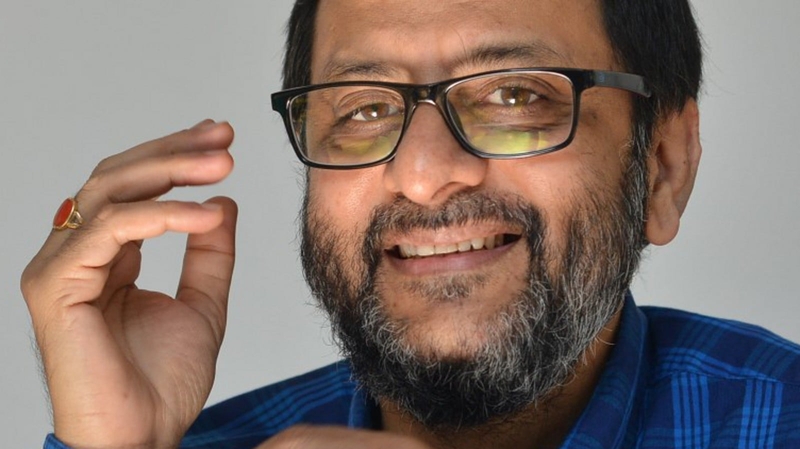
About The Author: Shanbhag Vivek is the author of eight works of fiction and two plays, all of which have been published in the South Indian language of Kannada. Ghachar Ghochar is the first of his books to appear in English. He is the recipient of a Fall 2016 residency on the International Writing Program at the University of Iowa, USA.