

Analysis: Rural low-density development carries consequences that extend well beyond the costs associated with the site itself
There is a growing push to relax the rules around one-off housing in Ireland. The case is often presented as straightforward. In many rural areas, people feel locked out of building homes near where they grew up because planning decisions can seem overly restrictive and inconsistent. In the middle of a housing shortage, any barrier to building starts to look like something that should be removed.
That argument has force, but it also stops short of asking a more difficult question. Not whether people should be allowed to build in rural areas, but what that choice costs and who bears them. Once you move beyond the question of eligibility to build in the countryside, one-off housing starts to look less like a planning issue and more like an economic one.
For instance, at the level of the individual, building a one-off house is entirely rational. Land is typically cheaper further from urban cores and particularly when zoned agricultural. Space is easier to come by often providing larger homes and gardens. It can also feel like one of the few viable routes into home ownership for many.
We need your consent to load this rte-player contentWe use rte-player to manage extra content that can set cookies on your device and collect data about your activity. Please review their details and accept them to load the content.Manage Preferences
From RTÉ Radio 1's Today With David McCullagh, should we be softening one-off house rules for rural communities?
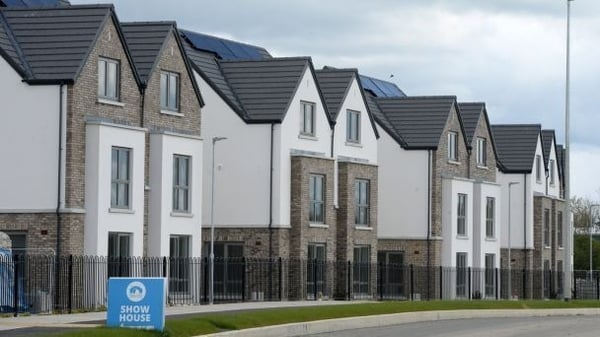
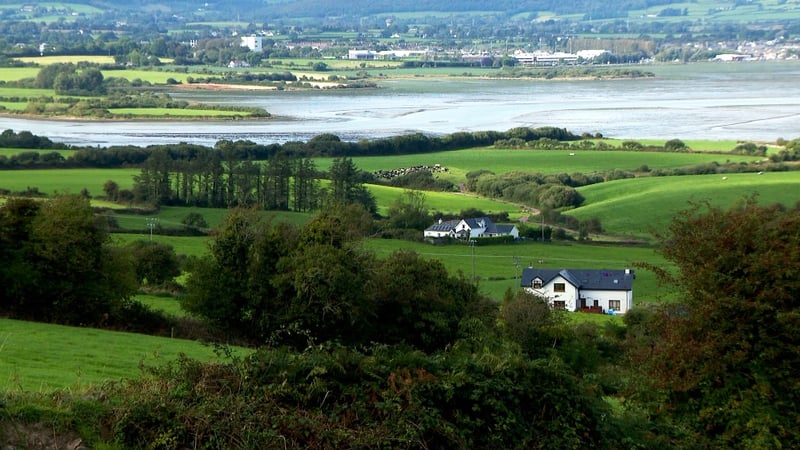
But the price paid by the individual is only part of the story. Rural low-density development carries consequences that extend well beyond the site itself. Public infrastructure must stretch further, with roads, broadband and electricity lines maintained for fewer people. Naturally, public services become more expensive to deliver. Everyday life becomes more dependent on cars, with constant calls for more roads. These are not marginal effects, they accumulate over time and become built into how the public system operates.
A key problem often ignored around the one-off housing debate is that the additional costs on the public purse of such developments are not borne by the individual who makes the decision to build. These are absorbed elsewhere. For a long time, this was acknowledged in general terms but rarely quantified and in the absence of specifics, often brushed aside.
Recently, estimates linked to the Housing Commission suggest that low-density development can add tens of thousands, and potentially well over one hundred thousand euro, to the cost of a single home when compared to more compact forms of development. Even those figures likely understate the full picture.
From RTÉ Archives, how does the bungalow blitz in rural Ireland fit into the national spatial strategy plan? Report by Anne Marie Smyth for RTÉ News in 2002.
It is often argued that those building one-off houses already bear significant costs themselves, particularly through private wells, septic systems, and higher transport expenses. That is true, and it should be acknowledged. But these costs relate primarily to the site itself. They do not reflect the wider cost of delivering infrastructure and services across a dispersed settlement pattern.
Roads must still be maintained over long distances for relatively few households. School transport must travel further to collect fewer students. Emergency services must cover wider areas, increasing response times and costs. These are ongoing system costs that are largely shared, rather than tied to the one-off household. That distinction matters. What appears to be a private housing decision begins to look more like a publicly subsidised decision. This is where the argument shifts from efficiency to fairness.
One-off housing is often justified in terms of rural need, particularly for those whose livelihoods are tied to land. In some cases that remains valid. But the reality is less clear cut. Today, just one in 25 workers in Ireland is employed in agriculture, forestry or fishing, yet last year roughly one in every six new homes built was a one-off house. The gap is hard to ignore. It suggests that what is being framed as rural necessity is often something closer to a preference about where to live rather than a requirement tied to how people earn a living. In my opinion, there is absolutely nothing wrong with that preference, but the key issue is that the preference is not neutral in its costs and effects.
We need your consent to load this rte-player contentWe use rte-player to manage extra content that can set cookies on your device and collect data about your activity. Please review their details and accept them to load the content.Manage Preferences
From RTÉ Radio 1's This Week, Minister of State for Housing John Cummins discusses the Government's new housing plan
Access to one-off housing is uneven. It depends on land, on family connections, and on circumstance. Some can avail of it, but most cannot. Meanwhile, the wider housing system remains under pressure, particularly in towns and cities where supply is constrained and zoned land costs are much higher. Public investment is stretched maintaining dispersed patterns of development, where instead such investment could be directed towards larger numbers of people, making more efficient use of public money and targeting those who are paying higher costs.
From a regional perspective, the contradiction of one-off housing becomes clearer again. If the aim is to support rural areas in a meaningful way, then it requires viable centres. This means places where services can survive, where businesses can operate and crucially where there is enough concentration of people to sustain economic activity. Dispersed one-off housing works directly against that objective. It spreads demand thinly and weakens the towns and villages that policy is supposed to strengthen. This is exactly the problem Ireland 2040 is trying to address.
The National Planning Framework is built around compact growth and better alignment between housing, infrastructure, and transport. Not as an abstract preference, but as a recognition that past and current development patterns are inefficient and costly. Yet at the same time, there are increasing calls to make it cheaper by waiving development levies, including proposals to relax existing restrictions.
We need your consent to load this rte-player contentWe use rte-player to manage extra content that can set cookies on your device and collect data about your activity. Please review their details and accept them to load the content.Manage Preferences
From RTÉ Radio 1's News At One, the number of homes granted planning permission in 2025 increased compared to 2024.
The answer is not to ban one-off housing, nor simply make it easier. People will continue to want to live in rural areas, and in many cases, there are good reasons why they should be able to. The issue is how the system treats that choice. At present, one-off development is underpriced. If those costs were more directly reflected in the decision itself, the incentives would change and so too would the outcomes. Some would still choose it. Others would not. It would be a more honest system and ultimately in the long term public interest.
Until we fix our two-tier planning system, the debate will remain stuck in the wrong place. It will continue to be framed as a question of cultural rights or access, when the real issue is much simpler, it's about who pays.
What would this look like in practice? It would mean making the cost of one-off housing explicit. Instead of relatively modest development charges, there is a need for significantly higher upfront contributions, potentially running into the tens of thousands and in some cases, far more. These would reflect the true cost of infrastructure and service provision that is borne by society.
Additional higher ongoing charges would also likely be required through the mechanism of property tax or service charges that reflects location. The point is not to prevent one-off housing, but to make the cost of it visible and real at the point of decision.
None of this could be introduced overnight, nor should it be. The political and practical constraints are obvious, particularly at a time when cost pressures are already firing tensions around fuel, transport and rural livelihoods. But that does not remove the need to move in the correct direction. Even a gradual shift towards making costs more visible would begin to raise awareness, change incentives and over time improve outcomes.
Follow RTÉ Brainstorm on WhatsApp and Instagram for more stories and updates
The views expressed here are those of the author and do not represent or reflect the views of RTÉ