


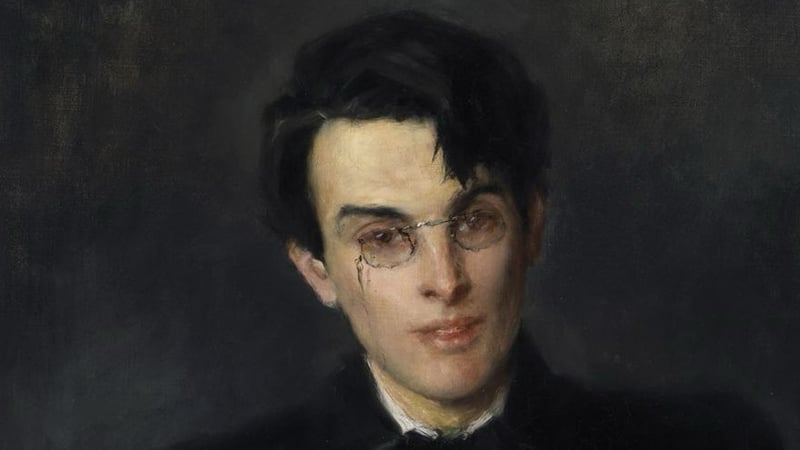
Analysis: The family helped shaped each other, the arts and public life in Ireland and beyond despite creative tensions and financial hardships
By Billy Shortall, TCD
In 1922, the new Irish state organised a major exhibition of Irish art in Paris. In the lead up to the show, which ran as part of the World Congress of the Irish Race international conference (Aonach na nGaedeal), then Minister of Arts George Noble Count Plunkett said to Éamon de Valera that he wanted to see a "propaganda value" from the Exposition D'Art Irlandais.
The Government recognised the propaganda value of the art exhibition in supporting Irish sovereignty within an international forum. A decade later, when the Government were sending Irish art to a contemporary art exhibition in London, J. V. Fahy, the then Secretary General of the Department of External Affairs noted, that his department’s "only concern" with these events is that it provided "a good opportunity for propaganda" by displaying the best of our national art.
In 1933, the Government organised the Exhibition of Irish Art at the Chicago World's Fair in a display of what would be termed today as soft power and cultural diplomacy. Despite the expense of taking part and tariffs preventing trade opportunities, "considerations such as those connected with national publicity and prestige might outweigh the more tangible considerations of trading advantage".
From Centre Culturel Irlandais, Dr Billy Shortall's Liam Swords Foundation Lecture on the World Congress for the Irish Race in Paris
Ireland’s international cultural policy was eventually formalised with the establishment of the Cultural Relations Committee (the precursor to Culture Ireland) in 1949. Minister for External Affairs Sean McBride viewed the promotion of Irish culture abroad as important to "the material and economic development" and a help "in the economic and political tasks which we have to face [in Ireland], whether it be in the field of international politics, foreign trade or tourism".
Global interest in Irish culture today sees Irish visual art, music and dance celebrated widely. One such event, Collaborating in Conflict: The Yeats Family and the Public Arts at the McMullen Museum of Art, Boston College. The thread that connects this current independent exhibition with the early international state-supported shows is the Yeats family: writer and Nobel Prize winner William; artist and printer Elizabeth; artist Jack; and embroiderer Lily.
At the Paris show, the Government organisers selected three of William’s books and a broadside of his poem The Lake Isle of Innisfree. Elizabeth displayed hand-printed books and numerous art prints to designs by various artists, Jack had four oil paintings and some designs, and Lily exhibited seven embroideries. The Yeats’ sisters Cuala Industries displayed over 40 works.
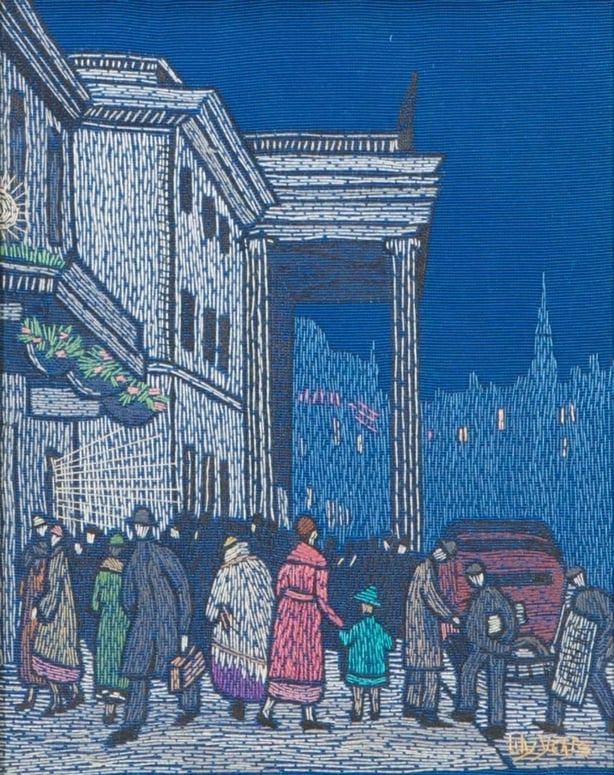
In Paris, the Irish Government aimed to present the unique culture of the new state in the international arena and present a self-defined independent identity to the world. The Chicago exhibition in 1933 and others since have similarly included the Yeats family.
In more recent years, the family’s artistic reputation has focused on William, who has a permanent exhibition in the National Library of Ireland, and Jack, who features prominently in the National Gallery of Ireland. Lily and Elizabeth have been in their brothers’ shadows but ongoing research, an exhibition, and an annual symposium in their honour acknowledge their contribution to Irish culture.
A real strength of the Boston College show is that it gives equal treatment to all family members and acknowledges the artistic contributions of their father John, and William’s daughter Anne. The exhibition explores how three generations of a talented, complicated family shaped each other, the arts, and public life in Ireland and beyond. It demonstrates how the Yeats family’s artistic expression was varied and deeply collaborative.
We need your consent to load this rte-player contentWe use rte-player to manage extra content that can set cookies on your device and collect data about your activity. Please review their details and accept them to load the content.Manage Preferences
From RTÉ Radio 1's Arena, art historian Lyndsey McDougall on the Yeats Sisters Symposium in Dublin
Over 200 paintings, drawings, prints, embroideries, books, illustrated poetry, theatre set designs, sketchbooks and other media, highlight examples of individual artistry and show the siblings drew upon each other’s acumen. These endeavours were often fraught with conflict, resulting in creative tensions and financial hardships.
The exhibition opens by exploring portraiture of family members and representations of the places that were important to them. It moves on to objects illustrating the family’s engagement with youth as a site of education, entertainment, and memory.
Subsequent sections reveal how the Yeats created art and literature through imagination and material practices, as well as how they shaped public life through theatre, publishing and printing, and visual representations of a distinctive Irish identity as the nation established itself post-independence.
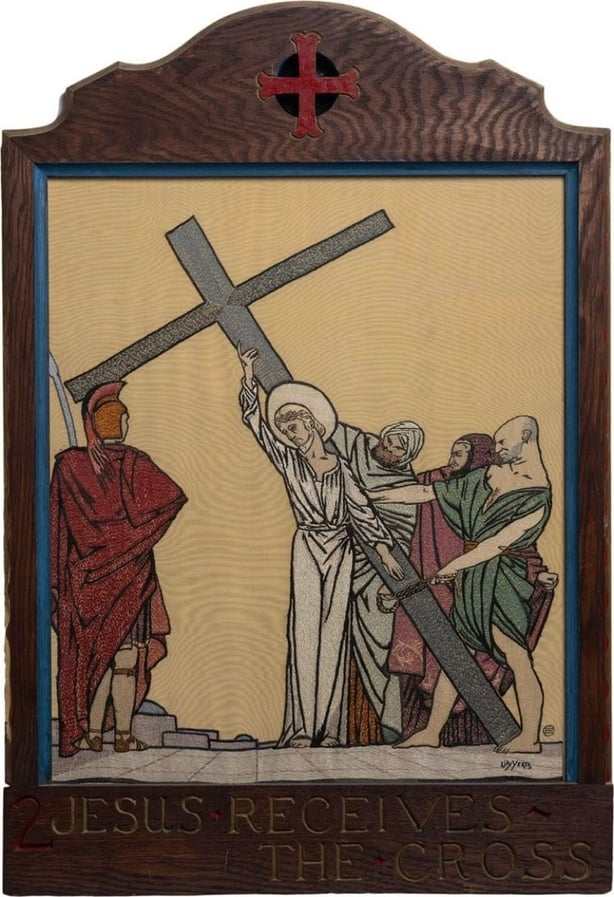
Many of the works on display are borrowed from Irish institutions and private collections, both here and in the United States. For the first time on public museum display will be a recently recovered set of Lily Yeats’ Stations of the Cross embroideries. These were proposed by William to his sister Lily, and he commissioned the young artist Brigid O'Brien to design three of the 14 stations for display during the Eucharistic Congress held in Dublin in 1932.
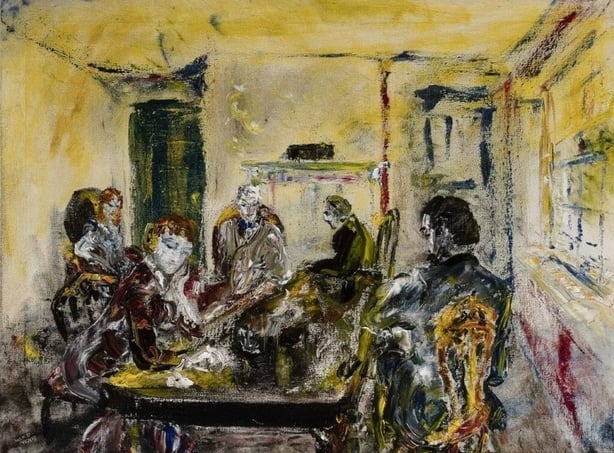
Here, they were purchased and the remainder commissioned by an Irish-American Church benefactor for a Pennsylvania seminary, where they remained in obscurity until their recent acquisition by Boston College. Important paintings by Jack from the National Gallery of Ireland, The Model Sligo, Irish Museum of Modern Art and private US collections, such as the O'Brien Collection in Chicago, are on display, including work once owned by his friend, the Irish revolutionary Ernie O'Malley.
Among the items borrowed from the National Gallery is a fan from 1905 by Elizabeth with a hand-painted landscape and text of her brother’s poem. Elizabeth engaged in various endeavours to supplement her income as a printer, including selling fans through Liberty's department store in London.
One of three manuscript scrapbooks created at Dun Emer (|Leabhar Dún Éimire) in the early 1900s, edited by Elizabeth and borrowed from The Library of Trinity College, contains work by her and her siblings, is on public view for the first time.
The Boston College show, curated by Marjorie Howes, Christian Dupont and Diana Larsen, is in a continuum of international exhibitions of Irish art since the foundation of the state, paints a vivid picture of the Yeats family and celebrates their artistic achievements and cultural engagement with Ireland.
Collaborating in Conflict: The Yeats Family and the Public Arts is at the McMullan Museum of Art, Boston College until 31 May and is accompanied by a fully illustrated catalogue and an education programme.
Follow RTÉ Brainstorm on WhatsApp and Instagram for more stories and updates
Dr Billy Shortall is a TRIARC Visiting Research Fellow in the School of Histories and Humanities at TCD.
The views expressed here are those of the author and do not represent or reflect the views of RTÉ
