The presence of Kilkenny city in the life and work of Irish writer and broadcaster Francis MacManus.
Francis MacManus (1909 – 1965) was the author of eleven novels, four non-fiction books, and a collection of short stories. Working as a teacher in Dublin, he applied for the position of features officer at Radio Éireann in 1947. He would become director of talks and features until his sudden passing in 1965.
A trilogy of novels, 'This House is Mine', ‘Flow on Lovely River’ and ‘Watergate’, published from 1937 to 1942 are set in a Kilkenny village on the banks of the river Nore. Here the city of Kilkenny is presented as
A kind of Xanadu, or pleasure palace, a place of escape
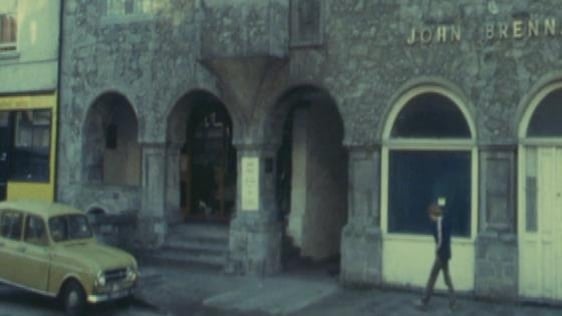
Francis MacManus was born and grew up in Kilkenny, a city he knew and loved so well. Kilkenny’s long history and architectural styles made a deep impression on him. He brings this together with his experience of Kilkenny in the first half of the twentieth century, to his work.
The ecclesiastical makeup of Kilkenny is also an influence, which may well be the reason he leaned in the direction of Florence, and his admiration for the Renaissance writers and poets Dante and Boccaccio.
An aural tour of Kilkenny is provided courtesy of church and school bells belonging to the city’s religious orders in his 1943 novel ‘The Greatest of These'. They appear at the start and end of the book, and at various points throughout, providing
A portrait in sound of the city.
‘Thomas Davis Lecture : Francis MacManus Remembered’ was broadcast on 9 December 1990. The presenter is Seán J White. This programme was the second in a special series of 'Thomas Davis Lectures' on the occasion of the twenty fifth anniversary of the death of Francis MacManus.
The 'Thomas Davis Lectures' series was launched in September 1953 with the aim of introducing the listening public to the best in Irish scholarship.
As General Features Officer, Francis MacManus produced the series from 1953 to 1965.
A lecture series was suggested by Professor T.W. Moody of Trinity College Dublin as a counterpart to the station’s Promenade Concerts, to show that "Radio Éireann was making as conspicuous a gesture to learning as it was to music". The title was named after the 19th century Protestant leader of the nationalist movement, Young Ireland, whose precept was "educate that you may be free".
The first series consisted of six half-hourly broadcasts, focusing on early Irish society. Transmitted on Sunday evenings, the first programme went to air 27 September 1953.
Speakers on the series included Myles Dillon, D.A. Binchy and James Carney, all eminent Celtic Studies scholars. Since then, the lectures, singly or in series, have been broadcast each autumn or winter, and have covered a broad range of subjects from the arts and sciences. These lectures quickly became one of Radio Éireann's most important programme features and have been published in book form.