


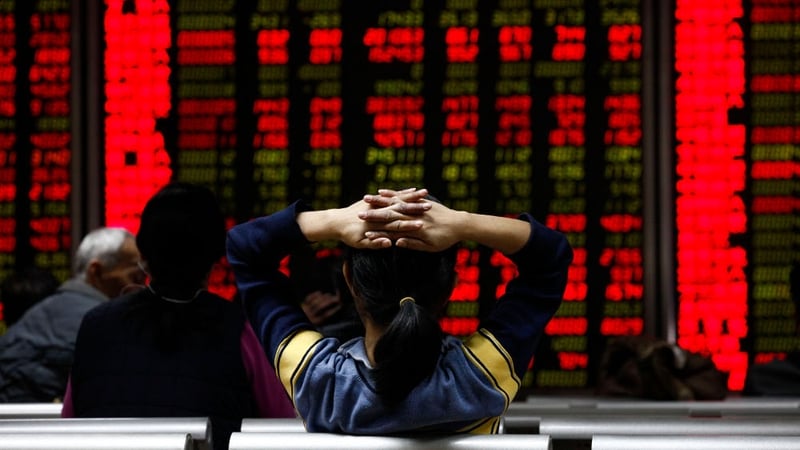
Global markets had a rocky start to 2016 and, while things have settled somewhat in approach to the end of the first quarter, many stocks remain well below the level they stood at on 31 December 2015.
China has been the primary source of concern for markets since the start of the year, but according to Eugene Kiernan, head of investment strategy at Appian Asset Management, it is not the only factor weighing on sentiment.
"It's not just China, I think the first six weeks of this year most stock markets took a pummelling for a number of reasons," he said.
"We had a lot of uncertainty around energy prices and the oil price was quite volatile, that had implications for different sectors, and we also had some concerns over global growth in general."
That negative mood began to turn in mid-February, however, and things seem to be slightly calmer now.
"We have seen a better tone to markets generally, US and elsewhere," he said.
"And if you look at where markets are today compared to where they were at February 11th, they've certainly come on a lot."
But they have probably not come on to the extent hoped by many market watchers and central banks around the world - many of which have undertaken significant policy moves to encourage activity and growth.
Indeed the lack of reaction to the very accommodative policy of central banks - not least in Europe - has led many to wonder why no real impact is being felt.
"Even central bankers would feel as though they themselves should be moving more to the sidelines at this stage and economies should be moving more on their own steam," Mr Kiernan said.
"I think it was very clear what [Mario] Draghi said over a week ago now that monetary policy has its limitations - it can do so much but it does need fiscal policy to come in there and to some degree unleash the animal spirits of consumption and investment."
The news delivered by the ECB and US Federal Reserve was good for markets though, he added, even if it has not led to a massive leap in the short-term.
In terms of the quarter to come, the British referendum on EU membership looms large, with many economic plans hinging on the outcome of that vote.
Mr Kiernan says that this will be the main focal point in the coming months - but there are many other issues that could influence activity in other ways.
"Markets don't have a great history of facing big events until their almost at the door," he said.
“There is a chorus line of other events waiting in the wings for markets to concern themselves about, though.
"We have Brexit, but we also have the quarterly earnings in the US and as well as that we will have the US political cycle and what that might mean for markets - so there's no shortage of events for markets to concern themselves with."
***
MORNING BRIEFS - A three-week rally by leading Asian markets was halted overnight, as traders reacted to uncertainty in oil prices.
Hong Kong's Hang Seng was 0.1% lower by the close of business this morning - though China's Shanghai and Schenzen Indices closed higher.
Oil prices have slipped after a report showed an increase in operations at US rigs - though a barrel of West Texas Intermediate and Brent Crude remains over $40 at present.
The dollar also strengthened against Asian currencies overnight - having slipped on the back of more doveish signals from the US Federal Reserve last week.
***
A British exit from the European Union would cause a "serious economic shock", according to a report by the Confederation of British Industry.
The study by accountancy firm PwC claimed that a Brexit could cost the country as much as £100bn and nearly one million jobs - with a vote to leave having "negative echoes" for many years.
The CBI said savings from reduced contributions to the EU's budget and regulation would be greatly outweighed by the negative impact on trade and investment.
Last week a report by the Centre for Economic Performance at the London School of Economics said that Ireland would be the worst affected by any British exit from the EU.
***
Stocks have fallen in Australia after the country's prime minister recalled parliament and brought the budget forward, setting the scene for an early election.
The ASX 200 was down 0.3% this morning - having fallen by more than half a percent in earlier trade.
Malcolm Turnbull made the move as his labour reform bill has struggled to pass through the country's senate.
He has threatened to call an early election on 2 July if this fails to happen - which has been met with a negative reaction by market traders.
