


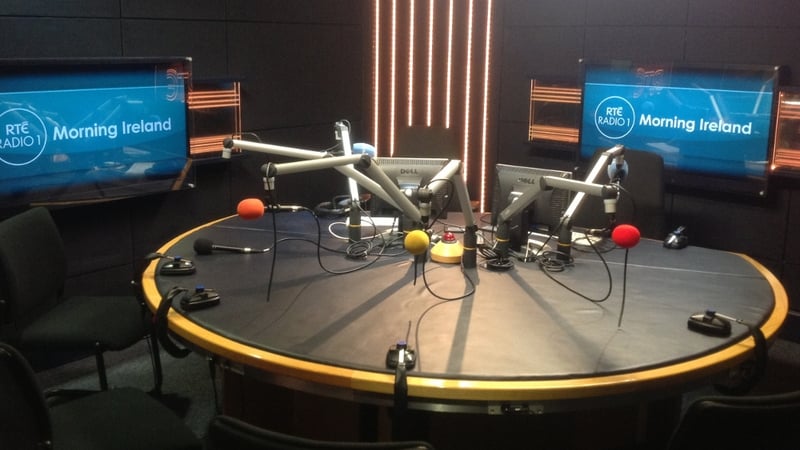
The European Commission will today launch its plans for a so-called Capital Markets Union - which is designed to encourage non-bank lending across the bloc. Under the plan member states would agree a common set of rules on credit rating, solvency and transparency to make it easier for businesses to borrow from equity markets and venture capitalists across the region.
According to Fine Gael's Brian Hayes, MEP for Dublin, a move to non-bank lending in Europe will require a cultural shift for many countries. "We've been talking about this for the past 60 years, about developing strong capital markets in the European Union and finally we're going to do something about it", he said. "In Europe we rely too much on banks - the banks are now all recapitalised, they're under stress tests, they're not going to become the engines for growth and we need new equity markets to help us provide the kind of liquid assets that are there."
Mr Hayes said there was a huge opportunity for the region - and particularly Ireland through its strong financial services sector - if this move was done properly. He said there was a lot that could be learned from certain parts of the region as part of this, particularly from the expertise in Dublin's IFSC.
There are concerns around the plan, however, especially in relation to the potential bubble it could create if too much capital becomes available to businesses down the line. But Mr Hayes does not think this will be an issue, as it will largely go to address the lack of investment that has been seen in many countries since the crisis. "We need to see that gap filled, it's not going to be filled by the banks so we need to find new ways of doing this - that's why the plan is so important," he said.
***
Today is the second and final day of the annual Goffs Orby sale, a key event in the equine calendar. More than 470 thoroughbred yearlings are going up for auction over the two days, with buyers there representing more than 25 countries. International buyers are paying an increasingly keen interest in the Irish market, evidenced by chairman of the China Horse Club's €1.7m purchase of a filly sired by unbeaten racehorse Frankel.
According to Henry Beeby, CEO of Goffs, Ireland's reputation in the horse industry has helped to make this sale an important international event. "Ireland is enjoying a wonderful time on the race tracks at the moment, Irish horses winning at the highest level everywhere, so international investors and international bloodstock and racing enthusiasts need to come to Ireland, so they come to Goffs to buy the very best of Irish bloodstock."
This year's auction is boosted by the fact that the euro is trading at a quite competitive rate, while the sale of multiple yearlings from Frankel has also piqued buyer's interests. Mr Beeby says that the quality of Irish stock is such that every year will see high-profile sales taking place, however he says that the success of the event is ultimately reliant on the strength of the Irish and international economies. "Ultimately we're selling a luxury item, so when the economy is doing well we, we do pretty well and when the economy dips things dip a bit for us as well," he said.
The Irish market is also closely linked with Britain, with the two almost being run as one market. Last year the Orby sale turned-over around €38.5m - that is expected to rise to around €40m at this year's event.
***
MORNING BRIEFS - Property price growth is set to moderate to around 5% by the end of the year, according to MyHome.ie. In its latest quarterly report the property website said that an improvement in supply, along with the Central Bank's mortgage lending restrictions, had helped to slow the growth in prices - particularly in the Dublin area. During the three month period the price of new Dublin listings fell slightly - the first time that has happened in almost three years - while asking prices in the rest of the country were up. The average price of all properties listed on the website was €205,000, while in Dublin the figure was €286,000.
*** A skills shortage may put Ireland's economic recovery at risk, according to a survey by recruitment company Hays. According to the Irish element of the latest Hays Global Skills Index, there is now high demand for workers in IT, engineering and construction. This has led to a growth in the number of unfilled positions. The report says that employers have begun to increase the wages they are offering in order to attract the limited number of workers available, which has led to wage inflation across high skilled areas. Internationally, the report warns about low levels of participation in the global workforce, saying that 11 million more people would have been employed if the participation rate remained at pre-crisis levels.
