


Deutsche Bank profits fall as debt crisis bites
Deutsche Bank, Germany's biggest bank, said today it failed to meet its profit targets in 2011 as the euro zone debt crisis hit earnings at the year-end.
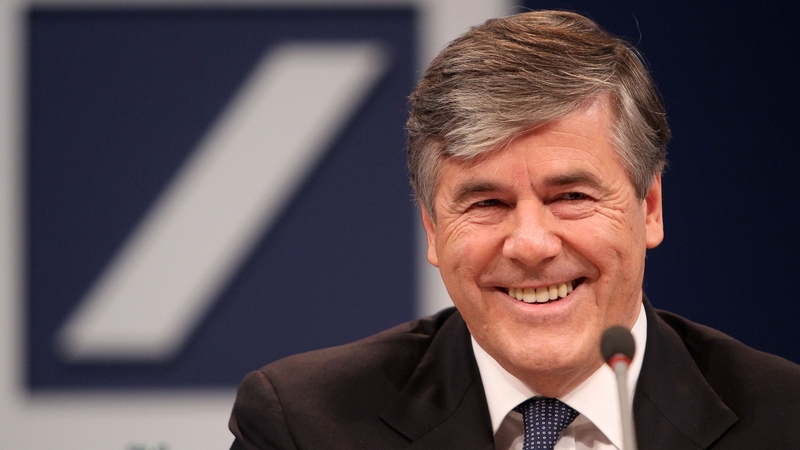
"Overall, 2011 was a good year for Deutsche Bank, although, of course, it was not possible for us to attain our original earnings target," Josef Ackermann told his last annual earnings news conference in his capacity as chief executive.
The 63-year-old Swiss-born manager is stepping down at the end of May after 10 years as one of Germany's most powerful - and at times most controversial - corporate bosses and will be replaced by the German-Indian duo of Juergen Fitschen and Anshu Jain.
Deutsche Bank "again successfully proved its ability to generate respectable results even under difficult market conditions," Ackermann said. "Following the favourable development of the markets in the first six months, we had to face extremely adverse external circumstances in the second half of 2011," he said.
"The sovereign debt crisis in Europe led to mounting uncertainty on the markets around the world and to reticence among clients - above all in Europe - but it also and most recently had an impact on the economy in several countries," he explained.
As a result, the group incurred a loss of €351m at a pre-tax level in the fourth quarter. Only favourable tax effects enabled it to remain in the black at the after-tax level where it posted a bottom-line net profit of €147m, down 76% on the year.
That was worse than expected and Deutsche Bank shares were the biggest losers on the stock exchange in Frankfurt.
Revenues in the investment banking division fell by 26% year-on-year in the October-December period, even if revenues in the classic banking division were up 22%, thanks largely to the inclusion of Postbank, acquired in 2010.
Loan-loss provisions were increased by a third to €540m in the fourth quarter. In addition, Deutsche Bank took additional writedowns of €144m against its holdings of Greek debt and also took a €380m hit for litigation.
Nevertheless, looking at 2011 as a whole, Deutsche Bank's net profit amounted to €4.3 billion, representing an increase of 87% over 2010, and revenues were up at 16% at €33.2 billion.
Ackermann said that the group had even been able to achieve record earnings in its classic banking business, "thus counterbalancing the impact of weak markets in investment banking. "We also significantly strengthened our capital base, boosted our liquidity reserves and reinforced our funding position," he said.
Looking beyond the current year, Deutsche Bank did not provide any concrete forecast, but Ackermann said that "both politically and economically, it will be another very challenging year."
Deutsche Bank boss often a divisive figure
During his 10-year reign at Deutsche Bank, Ackermann has often been a divisive figure. He faced - but eventually emerged unscathed - from criminal prosecution over his role in a scandal over bonuses at the now-defunct Mannesmann group.
He is also under investigation over his testimony in a civil suit connected with the 2002 demise of the media group of the late Leo Kirch. The position as head of Germany's biggest bank is an extremely high-profile one that requires its holder to hobnob with politicians and business leaders.
But Chancellor Angela Merkel came in for sharp criticism at the height of the financial crisis in 2008 for appearing too chummy with Ackermann, even throwing a birthday dinner for him at her offices. His whopping €9.5m salary also raised eyebrows amid a government bailout of the banking sector.
Last month, a letter bomb addressed to Ackermann and sent to Deutsche Bank's headquarters was intercepted and defused.
