


A spokesman for the European Commission has said that speculation about a potential second bail-out for Ireland is "not helpful", given that the first programme is delivering and that Ireland enjoyed positive growth in 2011.
Asked to respond to remarks by the Citigroup chief economist Willem Buiter, the spokesman for Commissioner Olli Rehn, Amadeu Altafaj, said that Ireland had showed strong progress in export growth, banking sector reform, structural reform and in its general fiscal position.
"It is not particularly useful to open a public debate on a successor programme when the first programme is delivering," he told the European Commission's daily news briefing.
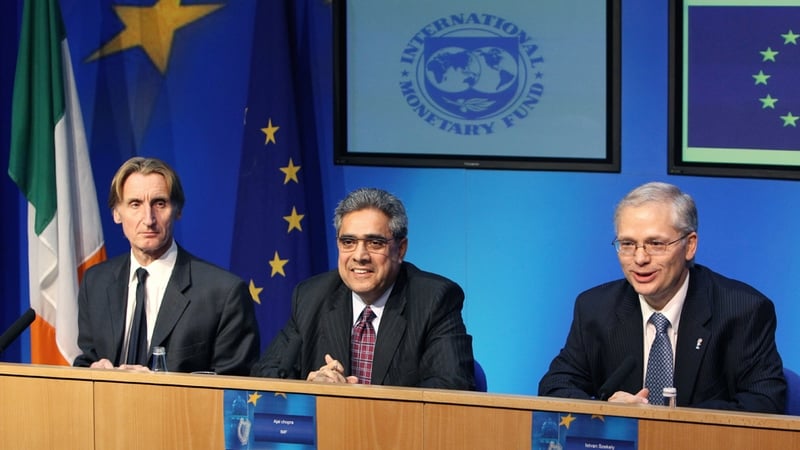
Officials from the IMF, European Central Bank and European Commission today began the fifth review of the loan programme to Ireland.
The mission kicked off with the troika meeting Kevin Cardiff, outgoing secretary general of the Department of Finance. Also present were Brendan McDonagh, CEO of NAMA, and John Corrigan, boss of the National Treasury Management Agency. Two officials from the Central Bank also met the troika officials.
This mission will have a focus on progress on restructuring the banking sector.
Under the EU/IMF deal Ireland has to sell a significant portion of bank assets by the end of next year.
But, with the European banking sector in continuing crisis, buyers are thin on the ground, making one of the targets of the current bail-out difficult to achieve.
2012 "pivotal" for economy - Goodbody
Goodbody Stockbrokers has lowered its forecasts for the Irish economy this year in its latest report.
Its economist Dermot O'Leary says the economy returned to modest growth in 2011, but the recovery is fragile and totally dependent on exports.
He says the current review of the EU/IMF programme must focus on the issues of growth and debt sustainability, and not just austerity.
The Goodbody report says 2012 will be a "pivotal" year for the Irish economy, with a possible referendum on the new EU budgetary deal and an attempt to return to the bond market. Mr O'Leary says, however, that if Irish borrowing costs remain at current levels, Ireland will have to resort to the euro zone's new bail-out fund, the ESM, some time in 2013.
After recent disappointing official figures for the third quarter from the CSO, Goodbody now believes gross domestic product will rise by just 0.7% this year, down from its previous 1.2% forecast.
It also thinks gross national product - seen as a better measure of the domestic economy as it does not include profits from multi-nationals - will fall by 0.8%. Goodbody had previously forecast that GNP would rise by 0.7%.
The report forecasts that domestic demand - spending by consumers and Government - will fall by 2.6% this year.
On arrears, the report forecasts that ECB interest rates will fall to 0.5%, helping homeowners. But it adds that employment and incomes are more important factors in determining the level of arrears.
Mr O'Leary says Ireland will not reach its target of reducing its deficit to 3% of GDP by 2015. He says a restructuring of the €30 billion in promissory notes being used to prop up the former Anglo Irish Bank would reduce Irish debt to more sustainable levels.
His report also argues that the process of reducing the size of the Irish banks should be slowed, as it discouraging the banks from lending to businesses and households. But the report adds that this will require more help from Europe for the Irish banking system.
Meanwhile, Bank of Ireland economist Dan McLoughlin has predicted that the ECB will lower rates to 0.75% in the next few months. He also said he expected the euro to remain between $1.25 and $1.30 in the coming months.
