

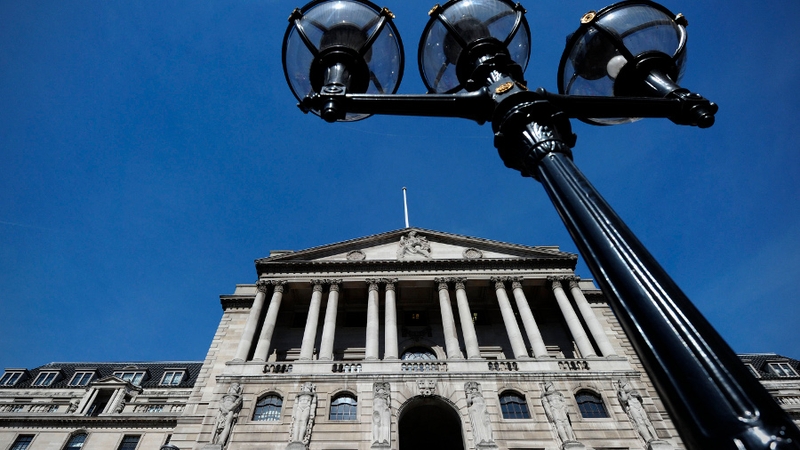
Bank of England policymakers believe the chances of a worst-case outcome for the euro zone crisis have increased, but that now is not the time to increase monetary stimulus further.
All nine members of the Monetary Policy Committee backed maintaining their target level of quantitative easing asset purchases at £275 billion after October's unexpected £75 billion increase, minutes of their November 9-10 meeting show.
Policymakers were split on the likelihood of a further increase when these purchases are completed by the time of February's MPC meeting.
"Some members noted that the balance of risks to inflation in the November inflation report projections meant that a further expansion of the asset purchase programme might well become warranted in due course," the minutes said. "Some other members judged that the risks to inflation around the target were more balanced."
The risks of a worst-case scenario for the euro zone's debt crisis had risen since the decision to restart the BoE's QE programme in October, the minutes said.
"While the worst risks had not so far crystallised, the threat of their doing so had increased, exacerbating the already severe strains in bank funding markets and financial markets more generally," the minutes said.
But increasing QE now was not the answer. The MPC said the market could not tolerate a substantially faster pace of purchases than the BoE was currently undertaking, and that there was little merit in fine-tuning due to the scale of medium-term economic uncertainty.
Official data last week showed that consumer price inflation eased in October for the first time since June, lending support to the BoE's expectation that inflation will hit its 2% target by the end of next year.
Moreover, in its latest inflation report the central bank paved the way for another cash boost to shore up the struggling economy, saying that the euro zone crisis had forced it to slash its growth and inflation forecasts.
BoE Governor Mervyn King said conditions had deteriorated since August and that Britain's economy could stagnate until the middle of next year.
The minutes gave a similarly downbeat outlook. Third-quarter growth of 0.5% overstated the strength of the UK economy, and early indicators were pointing to stagnation in the fourth quarter, though not to a material contraction, they said.
