


US president Barack Obama has cut estimates for growth but projected lower deficits in the years ahead.
Mr Obama, who must curb high unemployment to improve his chances of winning re-election in 2012, is to give a major speech next week on how he plans to boost hiring and economic growth.
In its mid-year review of Obama's annual budget, the White House gave some hints of what he will lay out in his September 8 jobs speech.
It could include a mixture of tax cuts aimed at middle class families, infrastructure spending and aid for the long-term unemployed.
"These will build on the actions the President has been urging Congress to complete that will strengthen the economy and create jobs, but also include new measures that will accelerate job growth in the short term," the White House said.
The lower estimates for US growth released show the need to kick-start the economy, White House budget chief Jack Lew said on a conference call with reporters.
The announcement comes as new figures show that the pace of growth in the US manufacturing sector slowed to a crawl in August. But the performance was not as weak as economists had forecast, as many had been expected the first fall in activity since July 2009.
The Institute for Supply Management said its index of national factory activity edged down to 50.6 from 50.9 in July. Any figure above 50 means that activity grew. Economists had expected a figure of 48.5.
The figure for new orders improved to 49.6 from 49.2 in July, while the employment gauge dipped to 51.8 from 53.5.
No big changes in US jobless claims
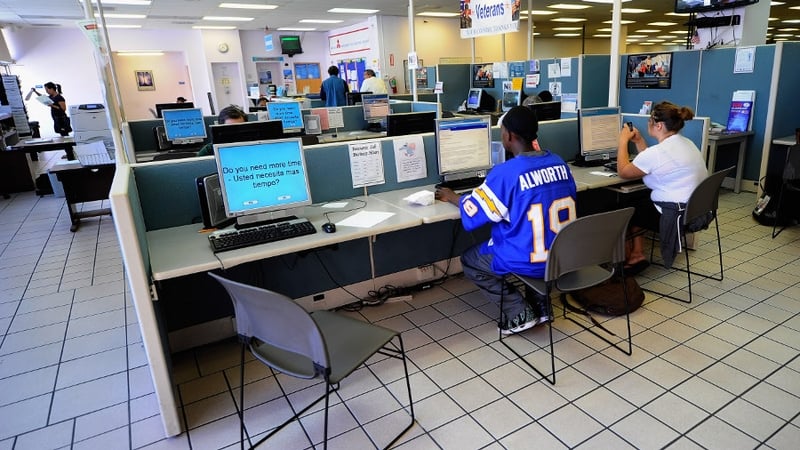
The number of Americans filing new claims for unemployment benefits fell last week, showing little sign of a pick-up in lay-offs in the wake of a slump in business and consumer confidence.
Initial claims for state unemployment benefits dropped 12,000 to a seasonally adjusted 409,000, the Labor Department said. While the figure still points to a jobs market struggling to find strength, it remains well short of a recession signal.
While the claims data have no bearing on August's closely-watched employment report to be released on Friday, it showed no evidence that businesses responded to the recent financial market turmoil by aggressively laying off workers.
Other reports suggested consumers also did not pull back in August. Some top US retailers today reported better than expected sales last month, despite sagging consumer confidence and Hurricane Irene.
The four-week moving average of jobless claims, considered a better measure of labour market trends, rose 1,750 to 410,250 last week.
A second report from the Labor Department underscored the US economy's lingering weakness, with non-farm productivity falling at a 0.7% annual rate in the second quarter - the biggest decline since the fourth quarter of 2008. That was a downward revision to the previous estimate of a 0.3% fall and the second straight quarterly decline.
The report showed labour costs growing by much stronger than previously estimated. Unit labour costs grew at by 3.3% in the second quarter rather than 2.2%. But the revised pace is still slower than the 6.2% rate in the first quarter, indicating wage pressures remain too well contained to stoke a broader rise in inflation.
