


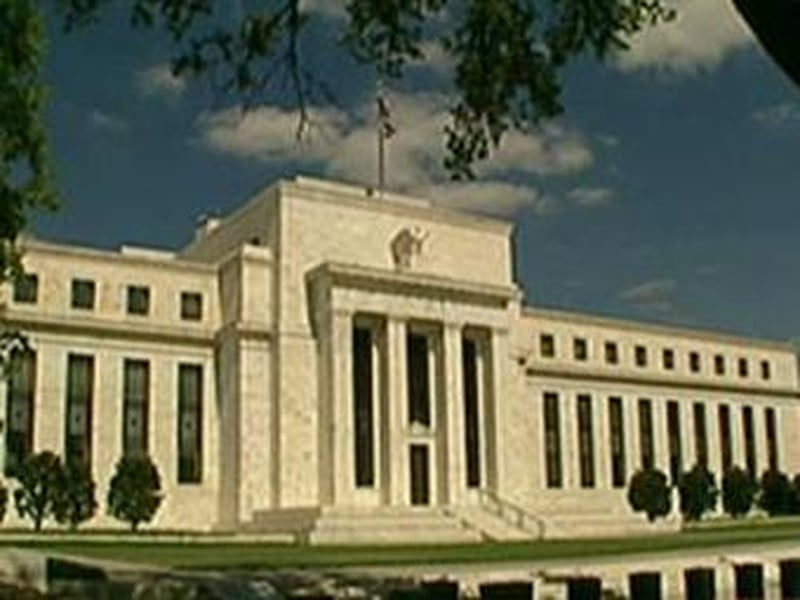
The US economy has further weakened on several fronts and businesses struggled to pass on their own rising costs to customers, the Federal Reserve said last night in its Beige Book survey.
'Economic conditions have weakened since the last report' in early March, the central bank said in its survey of 12 Fed regional bank districts.
The report, to be used at the upcoming central bank policy meeting April 29-30, said that nine regional banks reported a slowdown in economic activity, while three described activity as 'mixed or steady'. The Fed's Beige Book has reported a slowing economic pace since November.
Consumer spending, which drives two-thirds of US economic output, was 'softening across most of the country,' the report said. In the troubled housing sector, construction remained 'generally anemic' and activity in the commercial sector had slowed.
Many districts reported 'some deceleration in consumer loan demand, tightening in lending standards, and deterioration in asset quality,' it said.
The labour market was characterised mainly as 'weakening' since the March report, and in most regions wages remained stable or slightly higher.
On the inflation front, businesses in all the districts continued to experience a broad rise in costs, particularly for food products, fuel and energy, and many raw materials.
Most manufacturers have or are planning to increse prices in response to rising input cost, while some firms' response has been more mixed, 'in part due to differences in competitive pressures.'
'On balance, input costs have risen more rapidly than output prices, putting pressure on margins for many firms,' the Beige Book said.
The weaker dollar led to increased US tourism in some districts, and the Boston Fed reported increased travelers from Europe and Asia. 'However, there is concern about the impact on domestic travel of the unsettled economy, weak consumer confidence, high fuel costs, and the rising price of food,' it said.
The book said car sales were generally reported to be 'flat or declining,' while non-car sales were seen as 'sluggish or declining' in 10 Fed districts.
The Fed is widely expected to lower interest rates again at the end of the month. The central bank has slashed three percentage points off its base federal funds rate since September, bringing it to 2.25%, in hopes of stimulating a sluggish economy and countering a credit squeeze and related housing slump.
