


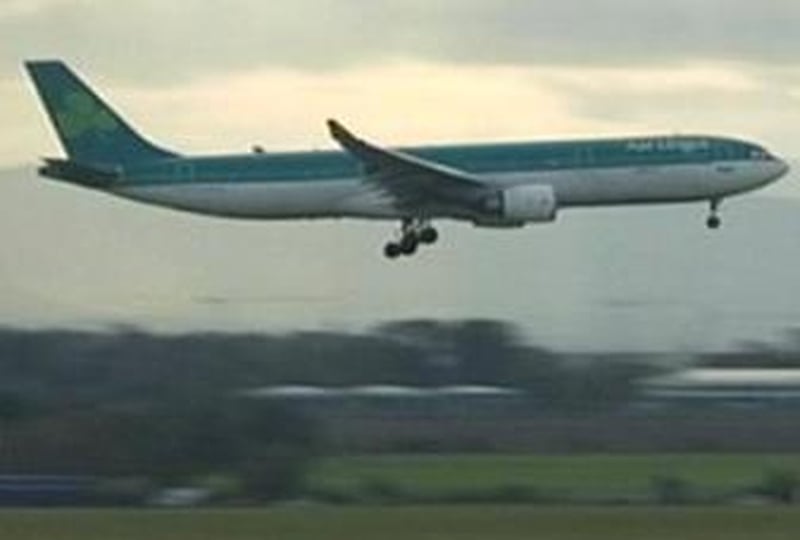
Ryanair chief executive Michael O'Leary has admitted his bid for Aer Lingus is 'dead'.
He said he would be appealing the European Commission’s decision to prohibit his takeover attempt to the Court of First Instance. Mr O'Leary said an appeal would take between 18 and 24 months.
He said Ryanair had received a letter from the European Commission saying it had no power to force it to sell its 25% stake in Aer Lingus.
Mr O'Leary said Ryanair would retain its shares in Aer Lingus.
He added Aer Lingus shares would fall from their current level of €2.60 to €1.50 if Ryanair sold its shareholding.
The Commission's competition watchdog said the merger would have harmed consumers by removing the current 'vigorous' competition between the two airlines. Aer Lingus has welcomed the decision.
It said a merger would have created a monopoly or a dominant position on 35 routes operated by both airlines.
The Commission said its investigation had shown that measures offered by Ryanair to address competition concerns were 'inadequate'.
In particular, it said the limited number of airport slots offered would not make up for the pressure the two airlines were currently exerting on each other.
Competition Commissioner Neelie Kroes said the decision to block the merger was 'essential to safeguard Irish consumers'.
The Commission also said its investigation revealed that most airlines were 'unlikely' to compete directly against a merged Ryanair/Aer Lingus in Ireland.
Ryanair had attacked the expected decision yesterday, saying it went against previous EU competition policy in the aviation sector.
But the Commission said this case was different, as it was the first time it assessed a proposed merger of the two main airlines in a single country. It also described the number of overlapping routes as 'unprecedented'.
The Commission also referred to Ryanair's claim that it would lower Aer Lingus's short-haul fares by 10% for a year, describing this as a 'headline-grabbing' figure which would be almost impossible to monitor.
