


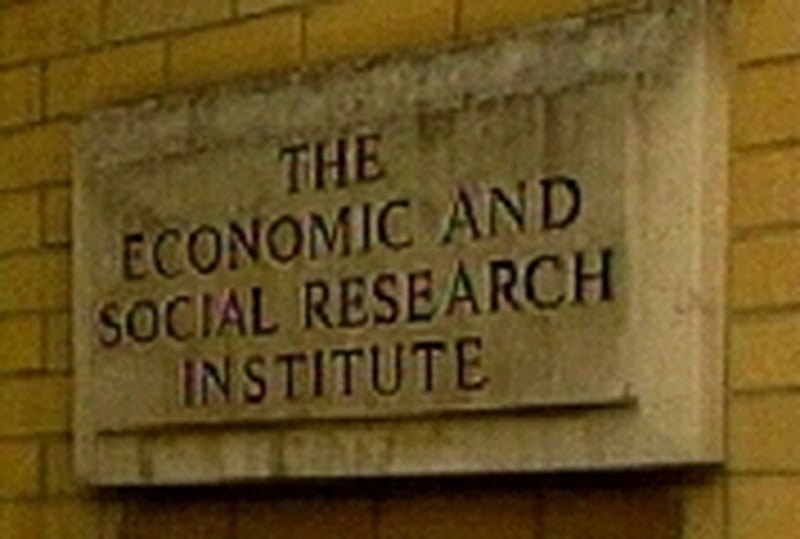
The Economic and Social Research Institute is urging the Government not to allow immigrants from Romania or Bulgaria to enter the country freely when those countries join the EU in January.
In its latest economic commentary, the institute says we do not know enough about the impact of immigration and that there is a need for caution.
The ESRI report says immigration has been very positive for the Irish economy. Those who have arrived in recent years are on average more highly educated than our own population, and they have boosted the nation's productivity, according to the ESRI.
But the report says that, despite this positive experience, it is now time to tighten up. The institute notes that the immigrant population in the UK grew by two percentage points over a 30-year period but that in Ireland it has now grown by three points in just four years.
The ESRI is calling for caution, for the immigration situation to be monitored on an ongoing basis, and for immigration policy to be carefully reviewed. Allowing unrestricted immigration from Romania and Bulgaria from January would be irrevocable, and the ESRI says that the Government should avoid any such decision.
Meanwhile, the institute is forecasting continued robust economic growth of close to 6% this year and about 5% next year. The main reason for the lower growth in 2007 is the knock-on effect of a slowdown in the US, which will dampen Ireland's export markets.
The ESRI highlights, however, that there is a real possibility of under-estimating the pace of the US economic slowdown. The persistently high current account and budgetary deficits in America imply that the threat of a much more significant slowdown is 'high'.
The ESRI predicts that the ECB will not be too keen to raise interest rates in the face of slower US economic growth. As a result it has reduced the number of interest rate increases it is expecting next year. Previously, the Institute had estimated that European interest rates would peak at 4%, incorporating two quarter point increases in the first half of 2007. Now it foresees only one interest rate increase in 2007 with rates peaking at 3.75%.
The big factors driving Ireland's continued strong growth in 2007 will be personal consumption and investment. Personal consumption, according to the institute, will grow by 6.8% this year and by 7.4% next year, boosted by SSIA money.
The institute expects 92,000 new jobs to be created this year followed by 71,000 additional jobs next year. It raises concerns about the fact that most of the jobs growth will continue to occur in non-export sectors, including construction, the public sector, as well as retail and wholesale.
Inflation, according to the ESRI, will peak at 5.5% by the end of this year but will ease back to an average of 3.6% next year. Easing oil price pressures, a slower pace of mortgage rate hikes in 2007, as well as slightly slower economic growth, will all help to ease inflationary pressures.
