
This week it was hard not to feel the chill echoes of the Covid-19 pandemic that ravaged Europe and almost crippled its economy in 2020-21.
"If this [Iran] war escalates into a major regional conflict," Chancellor Friedrich Merz told a news conference in Berlin on Monday, "it could burden Germany and Europe even more than we experienced most recently during the Covid-19 pandemic or at the beginning of the war in Ukraine."
Member states are haunted by both events - capitals ended up competing for limited health and energy supplies.
The longer the war continues, the harder it may become for Europe to maintain its indifference over how to unblock the Strait of Hormuz.
"It's very hard for Europeans to just criticise the American and Israeli war and to say 'this is not our war'," says Oana Lungescu, distinguished fellow at the Royal United Services Institute (RUSI).
"Indeed, it is not their war. They did not choose it and were not consulted about it. But the impact does affect them very significantly and we can see that in terms of petrol prices and inflation in Europe and around the world."
On Tuesday, Dan Jørgensen, the EU energy commissioner told ministers during an emergency video-conference that, while Europe’s energy reserves were healthy enough, gas prices had risen by 70% and oil by 60%.
"In financial terms, 30 days of conflict have already added €14 billion to the [European] Union's fossil fuels import bill," he said.
Europe gets most of its oil and gas from non-Gulf suppliers, but the problem with oil is that there is one global price, and the problem with gas is that there are now more countries bidding for a diminished supply.
"This situation threatens to impose further costs on our industries and our households," said Mr Jørgensen.
"We should be under no illusion that the consequences of this crisis for the energy markets will be short-lived. Because they won't."
Senior EU officials have cautioned against panic, and there were eyebrows raised at Mr Jørgensen’s reference to the check list of demand-saving measures issued by the International Energy Agency (IEA), such as working from home, avoiding air travel, restricting vehicle traffic through number plate rotations and so on.
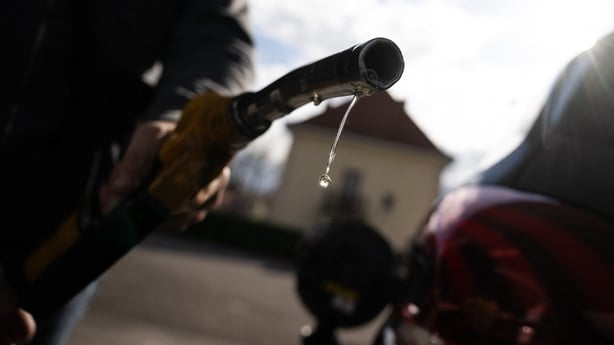
By Friday, Mr Jørgensen had told the Financial Times that the Commission was considering fuel rationing and releasing more oil from emergency reserves.
Member states would have to ruthlessly monitor gas and oil reserves and to coordinate with other capitals as much as possible.
On Tuesday, the Commission took legal action against Slovakia for charging motorists with foreign number plates higher diesel prices at forecourts.
Bruegel, a Brussels-based think-tank, issued a sharp warning about gas in particular.
Even though the EU gets only 4% of its overall gas needs from Qatar (and 8% of its LNG), the war is hitting global supply.
Since LNG is mostly shipped, tankers carrying gas can easily change course if there is a more attractive price elsewhere.
"With Qatar’s capacity offline, there is little room for the EU to diversify its import mix further," concluded the Bruegel report.
"New LNG supplies from Australia are limited because they have historically been directed to Asian markets. Additional export capacity, primarily in the US and Canada, is insufficient to replace lost volumes fully."
This has a direct implication for electricity prices in Ireland and other member states heavily reliant on gas.
"Higher gas prices feed into electricity prices through marginal pricing: the most expensive [power] plant needed to serve the last consumer sets the market price for all. Countries that rely more on gas for power generation, such as Italy and Ireland, are in principle more affected by surging gas prices."
Italy is in a particular bind.
Qatar cancelled a long-term LNG contract two weeks ago, meaning Rome has to find a replacement in a tightening global market.
By contrast, Spain’s average electricity price for 2026 will be roughly €66 per megawatt hour (half that of Italy) thanks to its investment in renewables.
Italian prime minister Giorgia Meloni’s push to suspend Europe’s Emissions Trading System (ETS), through which industry and power-generators pay to produce carbon (a heavy premium for Italy because of its reliance on gas), has so far fallen on deaf ears.
The best the European Commission came up with this week was a proposal to stop the annual cancellation of unused carbon-emitting permits.
Instead, the permits would be placed in a reserve fund to be released into the market when there is a spike in carbon prices.
"The Commission’s assessment is the right one," argues an EU diplomat.
"If anything, this whole situation underlines the importance of energy independence: today it’s the Strait of Hormuz, next time it’ll be something else.
"As long as we're so dependent on fossil fuels from elsewhere, we make ourselves vulnerable to these kinds of price or supply fluctuations."
The Commission also took a cautious approach on the fertiliser issue, much to the dismay of the Irish Government.
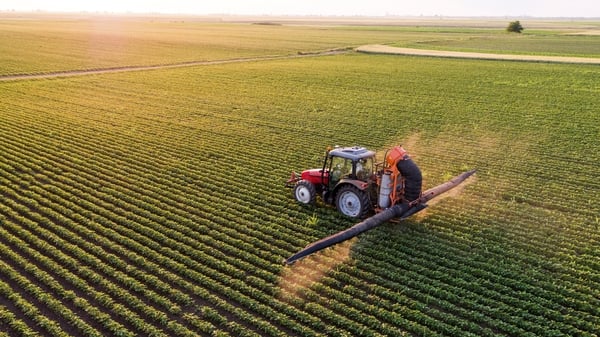
One third of the world’s ammonia and urea - essential in the production of artificial fertiliser - passes through the Strait of Hormuz.
Since natural gas is also an essential ingredient, there is a double hit on price and availability.
Ironically, Irish importers had purchased large volumes of fertliser late last year ahead of the EU’s Carbon Border Adjustment Mechanism (CBAM) entering into operation on 1 January.
CBAM is designed to disincentivise European industry from sourcing carbon-heavy goods from overseas as a way to circumvent the carbon tax imposed through the ETS (a practice known as "carbon-leakage").
That means imported fertiliser, which is energy intensive, carries a CBAM premium.
Irish officials have said those fertiliser reserves will last until mid-April, at which point they will meet only 60% of farmers’ needs during the sowing season.
Ahead of a meeting of agriculture ministers on Monday, Minister for Agriculture Martin Heydon said Ireland was keen on a legal mechanism that would allow for the suspension of CBAM for imported fertilisers as a way to keep prices low, even if the benefit would only realistically be felt next year.
Officials were hopeful that Europe’s agriculture commissioner Christophe Hansen was sympathetic.
In the event, Mr Hansen held back.
European industry had heavily invested in reducing carbon inputs and so suspending CBAM for fertilisers would undermine those investments to the benefit of non-EU producers.
He told a news conference on Monday evening that 70% of European farmers had stocked up on fertiliser ahead of 1 January.
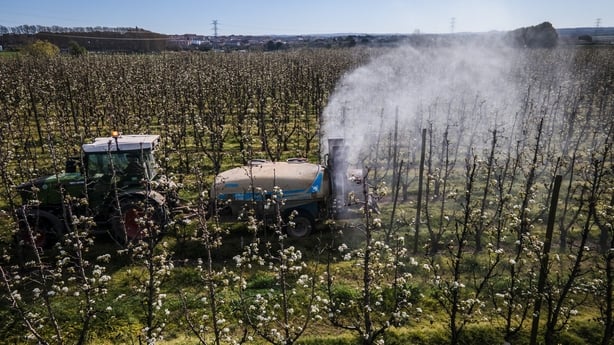
For that reason, he said, they would not face an immediate problem heading into the sowing season, although things would get worse as the year progresses.
He said he would convene a meeting of national experts, farm organisations, fertiliser importers and Commission officials on 13 April.
While a review of CBAM and fertilisers would continue, he admitted, suspension "risks worsening our dependency on imports. Discussion around this will only increase the uncertainty and [that] is not going to help us."
A Government source responded: "If that’s the case, importers will have to go off and buy it in at the higher price. Simple as that. They've been holding off."
"There was consensus [among EU agriculture ministers] around the table that there was a serious potential around the price and future supply of fertilisers. We will continue to engage with the Commission on this issue," the source added.
Mr Hansen did say that revenues raised through CBAM could go towards "stabilising" the price of fertiliser or to "limit the damage", but for now the emphasis is on a more "intensive" effort to boost domestic fertiliser production and to use more bio-based options.
One senior EU source was sympathetic.
"Farmers are limited as to how much bio-fertiliser they can use [due to the Nitrates Directive], so they need additional products."
If the potential lingers for antagonism between sectoral groups and the Commission on fertiliser, and between member states on energy supplies, US President Donald Trump’s war in the Gulf appears to have forged greater European unity on the security and defence front.
Put bluntly, Mr Trump’s relentless sneering and insults directed at European and NATO allies have further stiffened those spines that were already strengthened by the Greenland episode, when European leaders showed they were prepared to countenance both a genuine military and trade response to Mr Trump’s threats to take the island by force and to slap tariffs on those countries who had contributed military assets to a Danish mission.
"Greenland focused a lot of minds," says a senior EU official.
"It was too close for comfort."
Trumpian rage
European defiance of Mr Trump appears to have deepened this week.
Having already denied the US military the use of jointly-managed airbases to launch missions to Iran, Spain closed its airspace completely.
On Tuesday, even Italy, a much closer friend of the Trump Administration, refused US bombers access to the Sigonella airbase in Sicily because access for a non-logistical mission would have required, under a US-Italy treaty, approval from the Italian parliament.
The controversy prompted a nervous response from the office of prime minister Giorgia Meloni.
"Each request is carefully examined, case by case, as has always been the case in the past," the statement said.
"There have been no critical issues or friction with international partners. Relations with the United States, in particular, are solid and based on full and loyal cooperation."
Earlier in the week, France closed its airspace to flights carrying military supplies, while on Thursday Austria announced it had banned US overflights due to its policy of neutrality.
Austrians "want nothing to do with Trump’s policy of chaos and his war, which will bring us the next energy crisis," wrote vice-chancellor Andi Babler on X.
While such actions play well with public opinion, European leaders know there may be a limit to their ability to provoke Trumpian rage.
The US president has intensified his rants about NATO’s reluctance to get involved militarily in the Strait of Hormuz.
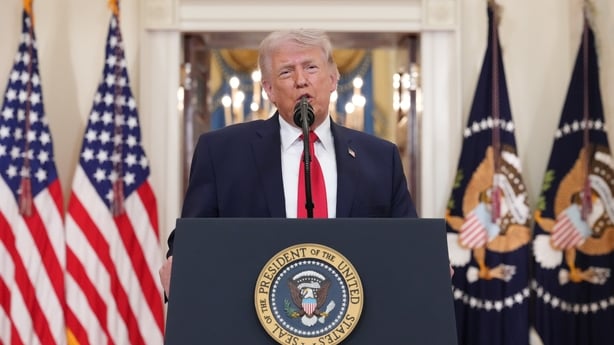
He has threatened to stop selling weapons to Ukraine and to pull out of NATO entirely, prompting secretary general Mark Rutte to get a number of alliance leaders to jointly offer, on 19 March, to "contribute to appropriate efforts to ensure safe passage through the Strait [of Hormuz]."
According to the Financial Times, Mr Rutte made multiple phone calls to Mr Trump and secretary of state Marco Rubio in the days leading up to the statement.
"Rutte is one of the few European leaders, if not the only leader, who is in constant contact with President Trump, but also Prime Minister [Keir] Starmer, [French] President [Emmanuel] Macron, [German] Chancellor [Friedrich] Merz and others to find a platform that responds to the informal requests by the United States, and also to the interests of allies and partners around the world," said Ms Lungescu.
"He's working the phones behind the scenes to find an off-ramp, something that can answer both the concerns of the US and those of the Europeans and others around the world."
Yet, Mr Trump’s threats about Ukraine and NATO continued right up to this week.
Read the latest Middle East stories
An exasperated Emmanuel Macron warned him against uttering daily and contradictory messages about the war and undermining the collective security at the heart of the NATO alliance.
"If you cast doubt on your commitment [to NATO’s collective security] every day, you erode its very substance," he told reporters in South Korea.
He added that it would only be possible to re-open the Strait of Hormuz with the involvement of Iran.
Yesterday, a container ship passed through the Strait having declared via its Automatic Identification System (AIS) that it was French-owned, raising the question as to whether Iran had now considered France as a non-hostile country on the same basis by which Chinese vessels had been granted safe passage.
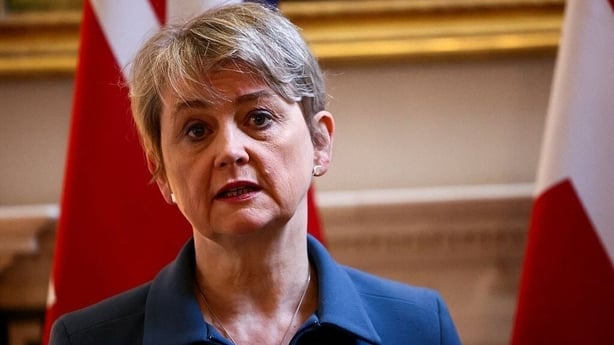
On Thursday, the UK Foreign Secretary Yvette Cooper hosted a virtual meeting with the foreign ministers of 41 countries, many of them European and NATO allies, but including Japan, Australia and South Korea.
They pledged to coordinate whatever "political and diplomatic" efforts that might help reopen the strait, but only once the shooting stops.
This is not, however, a NATO-driven process and indeed there has been no formal request from the Trump Administration to the alliance for help.
Next week, there will be a follow-up meeting to the conference call involving British and French military staff at the UK’s Permanent Joint Headquarters (PJHQ) in Northwoods outside London.
This will be a ‘coalition of the willing’-type initiative, similar to that envisaged for Ukraine.
"It is entirely understandable why European NATO allies are reluctant to support Donald Trump’s war against Iran," says Liana Fix, senior fellow at the European Council on Foreign Relations (ECFR).
"[However] high energy prices and the risk of migration flows from a destabilised region are real.
"If Europe stays out, it will have no influence over the outcome, undermining its ambition to be a global actor. Limited contributions, politically, diplomatically, or military, should be on the table."
Nor is there much point in Europe maintaining its diplomatic froideur in the expectation that things will blow over in a couple of weeks.
In the face of the pandemic, there was a massive global race to find a vaccine that could defeat the virus, with no expense spared.
The war in the Gulf, by contrast, involves protagonists brutally indifferent to everything but their own narrow interests.
Iran’s revolutionary Islamist regime, facing an existential threat, appears to have found a winning formula: blocking the Strait of Hormuz provides unbeatable leverage since Mr Trump panics in the face of high energy prices at home.
Selectively bombing Gulf oil and gas infrastructure (which will take years to repair) provides a further deterrent against future attacks by the US and Israel.
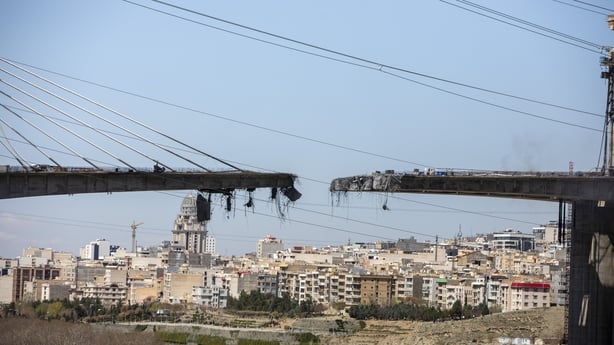
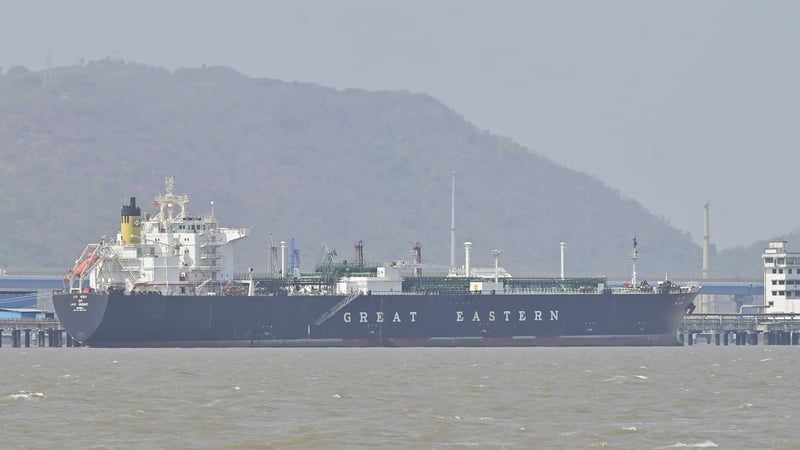
So far, Iran has struck 22 vessels in the Gulf and 2,000 ships remain stranded, according to the United Nations.
There have been attacks on the Ras Laffan LNG complex in Qatar, and on the Yanbu and Fujairah oil terminals in Saudi Arabia and the United Arab Emirates (UAE).
"In this environment, no ship dares pass through the strait without Iranian permission, and insurance is very expensive or impossible to obtain," writes Samantha Gross, director of energy security at the Brookings Institution.
"But since the strait is not physically blocked, Iranian oil is still reaching markets, in even larger quantities than before the conflict."
NATO and the Middle East
That Mr Trump wants European and Asian militaries to sort out the Strait of Hormuz problem strongly suggests a fear that the costs in terms of US blood and treasure will sink his poll numbers ahead of the November mid-term elections.
"In some way or another, NATO and Allied military planners need to be involved to see what the mission would be, what would be required, who would be able to provide those capabilities, when and where?" argues Ms Lungescu.
"The answer to those questions is complicated as long as the conflict lasts."
There have been suggestions that the Europeans could provide mine-sweepers, since the continent’s waters are still bedevilled by World War II mines, but clearing Iranian mines from the Strait of Hormuz will be a slow and dangerous process, and such vessels - essentially sitting targets - will undoubtedly require US navy frigates for protection.
Despite proclamations of it being a defensive and Europe-centric alliance, NATO has had a presence in the Middle East in one way or another since the US invasion of Iraq in 2003, an event which deeply divided the alliance.
In 2010, NATO developed a ballistic missile defence programme in response to Iran’s and North Korea’s missile threats.
That programme has been activated four times in response to Iranian missile attacks on Turkey, a NATO member, in recent weeks.
"It's not a matter of if, but when," writes Marcin Terlikowski of the Polish Institute of International Affairs (PISM) for Carnegie Europe.
"NATO allies will get involved, in one way or another, in stabilising the Middle East. And it will be neither surprising nor unprecedented."
Five weeks of war have rendered a certain amount of clarity: the Tehran regime is more resilient than was thought; the US and Israel were right to see Iran’s ballistic missile and drone capabilities as a threat to the region; Iran has realised that the threat works.
None of this clarity provides an imperative, according to the logic of competing interests, to end the war soon.