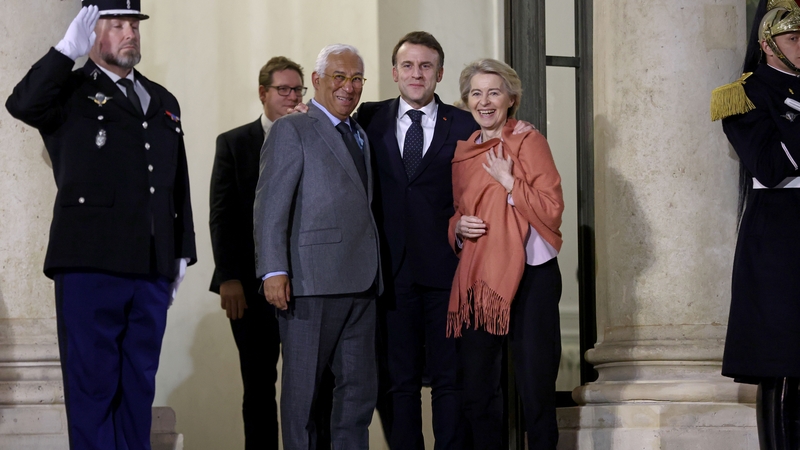

Ukraine "deserves peace through strength", the European Commission President has said amid a difference of opinion about the idea of deploying peacekeepers to Ukraine following an informal summit of European leaders in Paris.
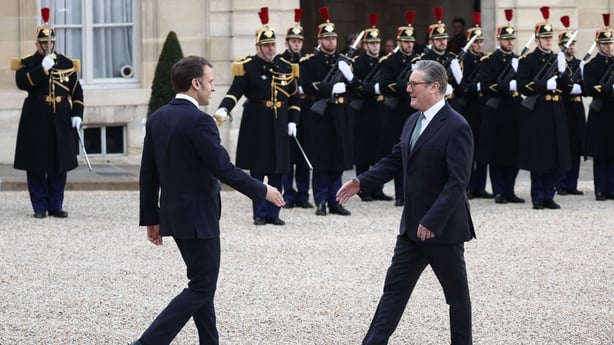
Key European leaders, who met at the Élysée Palace for emergency talks, called for higher spending to ramp up the continent's defence capabilities but remained split the deployment of peacekeepers in Ukraine to back up any peace deal.
Ursula von der Leyen said the talks "reaffirmed that Ukraine deserves peace through strength", adding "Europe carries its full share of the military assistance to Ukraine".
"At the same time we need a surge in defence in Europe," she added.
The Paris meeting was called by French President Emmanuel Macron after US President Donald Trump arranged bilateral peace talks with Russia, excluding European allies and Ukraine from negotiations to end the war that are scheduled to begin in Saudi Arabia.
Senior US officials including Secretary of State Marco Rubio, National Security Adviser Mike Waltz and Special Envoy Steve Witkoff are due to meet Russian Foreign Minister Sergei Lavrov for talks in Riyadh focused on ending the war in Ukraine and on Russia-US ties.
Mr Macron spoke by phone last night to Saudi Crown Prince Mohammed bin Salman.
According to an Élysée statement, the two men discussed Saudi Arabia's intermediary role and what role the European Union would have in any negotiations, should they reach a serious phase.
European officials were left stunned by the Trump administration's moves on Ukraine, Russia and European defence in recent days, and must now confront the reality of a future with less US protection.
The US decision to go it alone with Russia has sparked a realisation among European nations that they will have to do more to ensure Ukraine's security.
The 27-nation EU has held a host of summits on Ukraine but has been unable to take any initiative to end the war as Russia has resisted an unprecedented barrage of economic and diplomatic sanctions.
British Prime Minister Keir Starmer, who ahead of the meeting said he was willing to send peacekeeping troops to Ukraine, said there must be a US security commitment for European countries to put boots on the ground.
He said it was too early to say how many British troops he would be willing to deploy.
Britain is not an EU member but has been a leading supporter of Ukraine.
A peacekeeping force would not only raise the risk of a direct confrontation with Russia, which launched its full-scale invasion of Ukraine in 2022, but also stretch European armies, whose arsenals have been depleted by supplying Ukraine and decades of relative peace.
There are also difficult questions about how some European nations, whose public finances are groaning, will pay for such expanded military commitments.
Mr Starmer's push for peacekeepers appeared to draw a dividing line between participants in Paris.
German Chancellor Olaf Scholz said there could be no peace deal without Ukraine's consent, but said talk of a German peacekeeping mission in Ukraine was "highly inappropriate" without any peace deal in hand.
Instead, he said European nations spending over 2% of their gross domestic product on defence should not be blocked by European Union budget rules.
We need your consent to load this rte-player contentWe use rte-player to manage extra content that can set cookies on your device and collect data about your activity. Please review their details and accept them to load the content.Manage Preferences
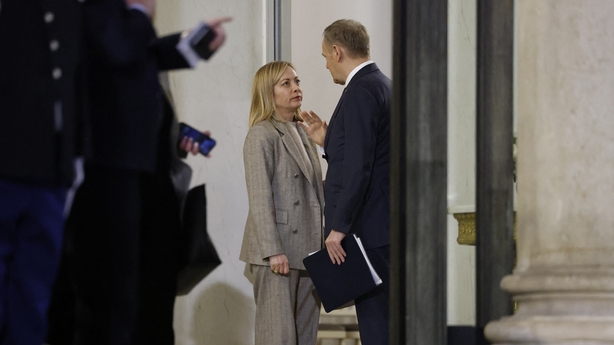
Italian Prime Minister Giorgia Meloni said she was also against the peacekeeping plan, according to sources in her office.
"It was useful to discuss today the various hypotheses on the table. The one that foresees the deployment of European soldiers in Ukraine seems to me to be the most complex and perhaps the least effective, and on this too I voiced Italy's doubts," she said, according to the sources.
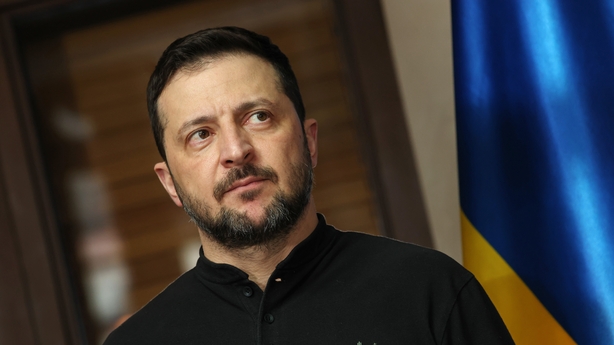
Denmark's Prime Minister Mette Frederiksen said she was open to discussing troop deployments and that Europe must boost its support for Ukraine while ramping up domestic defence spending.
"Russia is threatening all of Europe now, unfortunately," Mr Frederiksen told reporters.
Mr Scholz and Polish Prime Minister Donald Tusk said the EU's stringent fiscal rules should be loosened to allow more spending on defence without countries falling foul of the EU's deficit rules.
Mr Tusk said there was "confirmation ... that defence spending will no longer be treated as excessive spending, so we will not be at risk of the excessive deficit procedure and all its unpleasant consequences".
Ahead of US-led negotiations to end the war, Russia ruled out conceding territory, while Ukrainian President Volodymyr Zelensky dismissed the US-Russia talks taking place without him.
Mr Trump stunned Ukraine and European allies last week when he announced he had called Russian President Vladimir Putin, long ostracised by the West, to discuss ending the war without consulting them.
Read more: Saudi Arabia hosts US-Russia talks, no seat for Ukraine
The phone call between Mr Trump and Mr Putin left the transatlantic relationship in disarray, with European capitals still trying to ascertain the degree to which the EU and Ukraine will be involved in any negotiations which could have a major bearing on the future security of the European continent.
Keith Kellogg, the US President's Ukraine envoy but who is not in Saudi Arabia, said he would visit Ukraine for three days from Wednesday.
Asked whether the US would provide a security guarantee for any European peacekeepers, Kellogg said: "I've been with President Trump, and the policy has always been: You take no options off the table."
Russia says no point in inviting Europeans to Ukraine talks
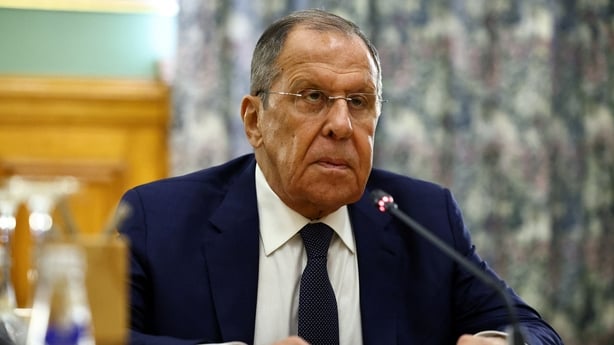
Russian Foreign Minister Sergei Lavrov said he saw no reason for Europeans to take part in Ukraine truce talks, accusing them of wanting to "continue war" in Ukraine.
"I don't know what they would do at the negotiating table... if they are going to sit at the negotiating table with the aim of continuing war, then why invite them there?" Mr Lavrov told a press conference in Moscow.
The foreign minister said Europe had "its chance" at resolving the conflict from 2014 - when Russia annexed the Crimean peninsula and backed pro-Russian armed separatists in the east - and that the bloc had failed.
The United States has said that it wants both Russia and Ukraine to make concessions if ceasefire talks ever materialise.
But Mr Lavrov insisted Russia would not compromise on territory it has seized in eastern and southern Ukraine, saying there could not even be a "thought" of that during negotiations.
The Kremlin in 2022 claimed to have annexed four Ukrainian regions - Luhansk, Donetsk, Kherson and Zaporizhzhia - despite not having full control of them.
Additional reporting AFP, Reuters