



Home heating oil prices have reached €880 for a fill of 500 litres.
The prices were below €500 before the conflict in the Middle East began last weekend.
Meanwhile, the price of a litre of petrol has reached €1.90 at some service stations while the cost of diesel has reached €2.08 at some forecourts.
It comes against the backdrop of a slump in global stock markets as energy prices soared amid supply disruptions from the Middle East.
Oil prices rocketed above $100 a barrel for the first time since Russia's invasion of Ukraine in 2022, after Iran retaliated to US-Israeli strikes by targeting sites in crude-producing Gulf nations.
After increasing by around 30% during Asian trading, international benchmark Brent and the main US oil contract WTI both pared gains and slid back under $100 per barrel.
The jump in prices was even more vertiginous than after Russia's 2022 invasion of Ukraine, when oil touched $130.50 per barrel.
Iran marked the appointment of Ayatollah Mojtaba Khamenei to replace his father as its supreme leader with a new barrage of missiles against Israel and the Gulf states, adding to concerns about energy infrastructure as well as a long conflict.
"The overnight panic in oil has eased for now as the price reverses its madcap gains above $100 but the underlying reasons for the shock move remain in place," said Chris Beauchamp, chief market analyst at online trading and investing platform IG.
"It is now open season on oil infrastructure across the region, which puts a near-term floor under the price well above the pre-war highs," he said.
Brent is currently up around 38% from right before the war and up 64 percent from the start of the year.
WTI has climbed 43% since the eve of the war and 67% since the start of the year.
Iranian retaliatory attacks have all but halted maritime traffic through the Strait of Hormuz through which a fifth of global crude oil and liquefied natural gas pass.

Asian stocks fell sharply as oil prices spiked.
But equities in Europe and on Wall Street cut their losses as oil prices gave up their gains, even as G7 nations held off releasing oil from their strategic reserves.
The Nasdaq Composite even pushed higher in midday trading in New York.
Investors nevertheless remain worried that a spike in energy prices would trigger inflation and slow growth.
"The surge higher for the price of oil is significantly increasing stagflation risks for the global economy and could trigger a deeper sell-off in global equity markets," said analyst Lee Hardman at Mitsubishi UFJ financial group
Stagflation refers to a period of high inflation coupled with economic stagnation.
Central banks are forced to raise interest rates to deal with inflation, thus hindering growth.
The prospect of interest rates being kept elevated, or even raised to combat inflation, pushed government bond yields higher on Monday.
Trade Nation analyst David Morrison noted that investors now expect just one interest rate cut from the US Federal Reserve this year, compared to two cuts just last week, while the European Central Bank is now tipped to hike rates sharply instead of holding them steady.
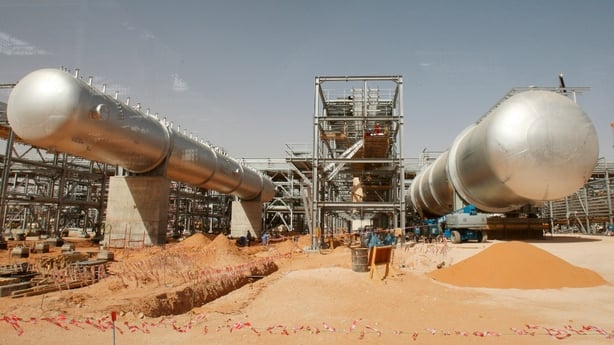
US Senate Democratic Leader Chuck Schumer has called on US President Donald Trump to release strategic petroleum reserves, and a French government source said today that the Group of Seven nations would also discuss this.
Saudi Aramco has begun cutting output at two of its oilfields, sources said. Analysts said last week they expected OPEC heavyweights including the United Arab Emirates to have to cut production soon as they run out of oil storage.
Iraqi oil production from its main southern oilfields has fallen by 70%, sources said, with crude storage having reached maximum capacity.
The Kuwait Petroleum Corporation also began cutting oil output on Saturday and declared force majeure on shipments, though it did not say how much production it would shut.
Saudi Aramco, which can divert some flows via the Red Sea port of Yanbu, has offered more than four million barrels of Saudi crude in rare tenders to counteract Hormuz being shut.
In gas markets, giant LNG exporter Qatar had already stopped production after attacks on key infrastructure.
A fire broke out in the UAE's Fujairah oil industry zone resulting from falling debris, with no injuries reported.
Refinery disruptions add to fuel supply cuts, with Bahrain's BAPCO announcing a force majeure following a recent attack on its refinery complex. Saudi Arabia has already shut its biggest oil refinery.
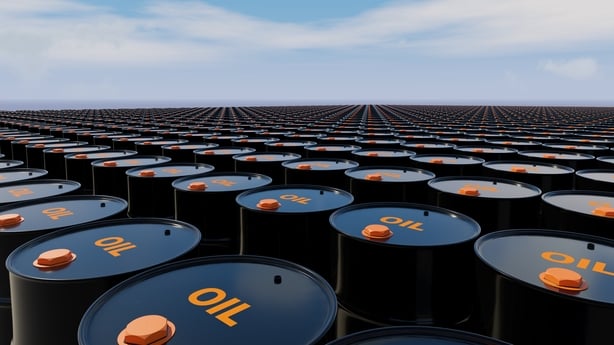
The European Union has been diversifying its oil and natural gas supplies ever since Russia's invasion of Ukraine, but a number of member states still rely on crude oil and LNG from the Gulf.
High energy prices across the EU had already been identified as a drag on European competitiveness.
The current conflict in the Middle East could not have come at a more challenging time.
Energy markets are particularly nervous because the crisis is unfolding around the Strait of Hormuz, through which roughly one-fifth of the world's oil supply normally passes.
Disruptions in tanker movements and rising security risks have already slowed shipping activity, leaving Asian buyers especially vulnerable given their heavy reliance on Middle Eastern crude.
"Unless oil flows through the Strait of Hormuz resumes soon and regional tensions ease, upward pressure on prices is likely to persist," said Vasu Menon, managing director for investment strategy at OCBC in Singapore.
Iraq and Kuwait have begun cutting oil output, adding to earlier liquefied natural gas reductions from Qatar, as the war blocked shipments from the Middle East.
Analysts expect the United Arab Emirates and Saudi Arabia will have to also cut output soon as they run out of oil storage.
Also boosting prices is the appointment of Mojtaba Khamenei to succeed his father Ali Khamenei as Iran's supreme leader, signalling that hardliners remain firmly in charge in Tehran a week into its conflict with the US and Israel.
"With the appointment of the late leader's son as Iran's new leader, US President Donald Trump's goal of regime change in Iran has become more difficult," said Satoru Yoshida, a commodity analyst with Rakuten Securities.
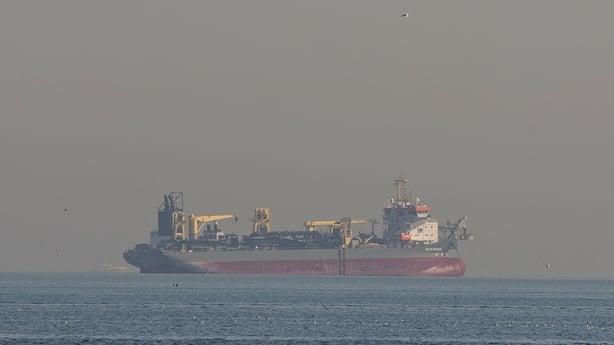
"That view accelerated buying, as Iran is expected to continue its closure of the Strait of Hormuz and attacks on other oil-producing nations' facilities, as seen last week," he said, predicting WTI could rise to $120 and then $130 a barrel in a relatively short period.
Iraqi oil production from its main southern oilfields has fallen by 70% to just 1.3 million barrels per day as the country is unable to export oil via the Strait of Hormuz due to the Iran war, three industry sources have said.
Crude storage has reached maximum capacity, said an official with the state-run Basra Oil Company.
Kuwait Petroleum Corporation began cutting oil output on Saturday and declared force majeure on shipments, though it did not say how much production it would shut.
We need your consent to load this rte-player contentWe use rte-player to manage extra content that can set cookies on your device and collect data about your activity. Please review their details and accept them to load the content.Manage Preferences
