


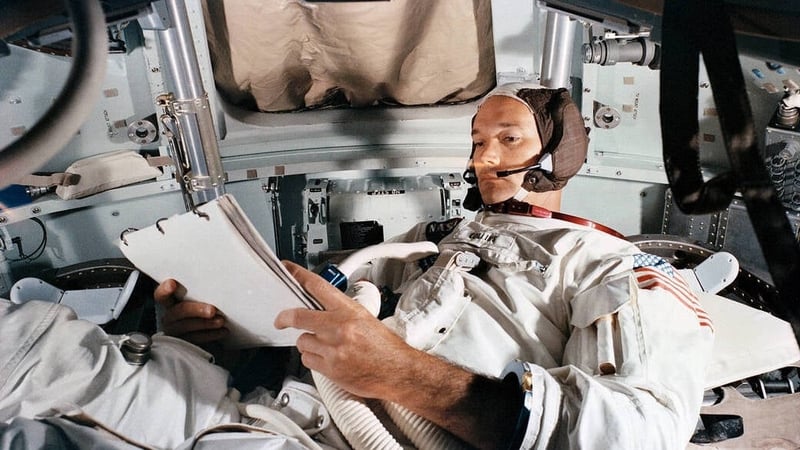
American astronaut Michael Collins, who stayed behind in the command module of Apollo 11 on 20 July 1969, while Neil Armstrong and Buzz Aldrin travelled to the lunar surface to become the first humans to walk on the moon, has died at the age of 90.
A statement released by his family said Collins died of cancer.
Often described as the "forgotten" third astronaut on the historic mission, Collins remained alone for more than 21 hours until his two colleagues returned in the lunar module.
He lost contact with mission control in Houston each time the spacecraft circled the dark side of the moon.
"Not since Adam has any human known such solitude as Mike Collins," the mission log said, referring to the biblical figure.
He wrote an account of his experiences in his 1974 autobiography, "Carrying the Fire," but largely shunned publicity.
"I know that I would be a liar or a fool if I said that I have the best of the three Apollo 11 seats, but I can say with truth and equanimity that I am perfectly satisfied with the one I have," Collins said in comments released by NASA in 2009.
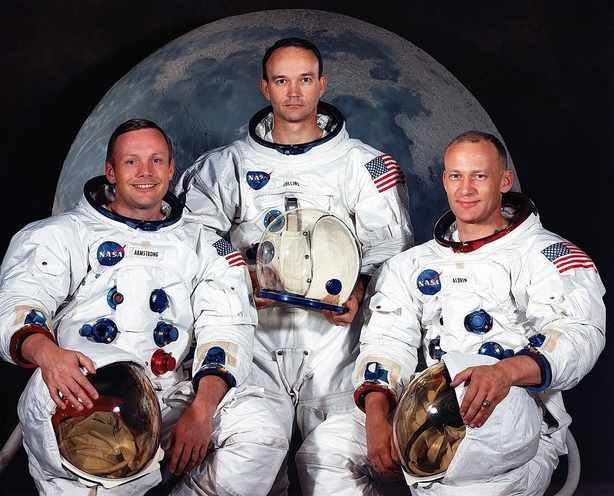
Michael Collins' grandfather was from Dunmanway in Co Cork.
Collins himself was born in Rome on 31 October 1930 - the same year as both Armstrong and Aldrin.
He was the son of a US Army major general and, like his father, attended the US Military Academy at West Point, New York, graduating in 1952.
Like many of the first generation of American astronauts, Collins started out as an Air Force test pilot.
In 1963, he was chosen by NASA for its astronaut programme, still in its early days but ramping up quickly at the height of the Cold War as the United States sought to push ahead of the Soviet Union and fulfill President John F Kennedy's pledge of landing a man on the moon by the end of the decade.
Collins' first voyage into space came in July 1966 as pilot on Gemini X, part of the missions that prepared NASA's Apollo programme.
The Gemini X mission carried out a successful docking with a separate target vehicle.
His second, and final, spaceflight was the historic Apollo 11.
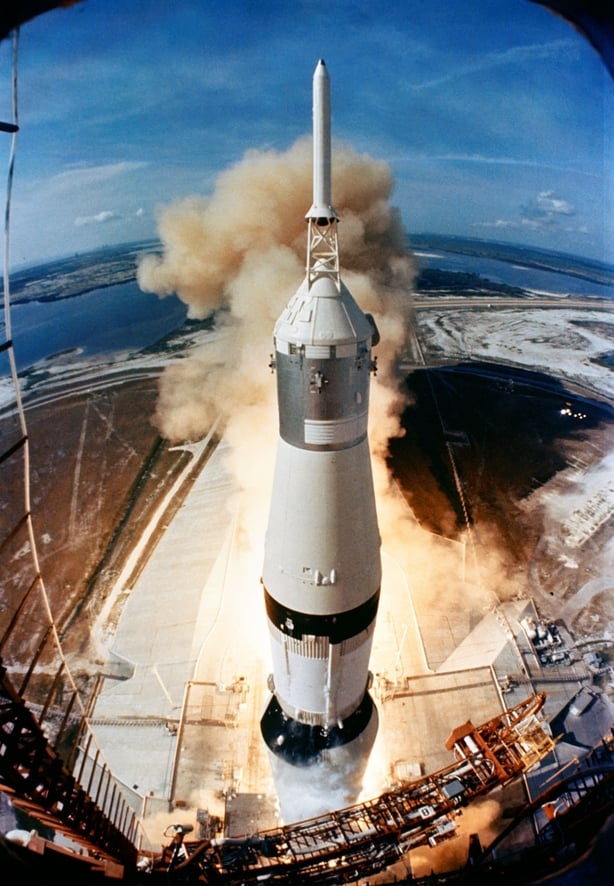
He avoided much of the media fanfare that greeted the astronauts on their return to Earth, and was later often critical of the cult of celebrity.
After a short stint in government, Collins became director of the National Air and Space Museum, stepping down in 1978.
He was also the author of a number of space-related books.
His strongest memory from Apollo 11, he said, was looking back at the Earth, which he said seemed "fragile".
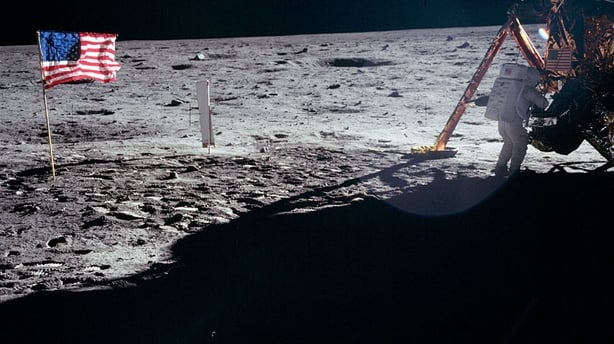
"I really believe that if the political leaders of the world could see their planet from a distance of 100,000 miles, their outlook could be fundamentally changed. That all-important border would be invisible, that noisy argument silenced," he said.
His family's statement said they know "how lucky Mike felt to live the life he did".
"Please join us in fondly and joyfully remembering his sharp wit, his quiet sense of purpose, and his wise perspective, gained both from looking back at Earth from the vantage of space and gazing across calm waters from the deck of his fishing boat."
Family Statement on Passing of Astronaut Michael Collins pic.twitter.com/6OAw7CzFaz
— Michael Collins (@AstroMCollins) April 28, 2021
US President Joe Biden said his prayers were with the Collins family.
"From his vantage point, high above the Earth, he reminded us of the fragility of our own planet, and called on us to care for it like the treasure it is," Mr Biden said in a statement. "Godspeed, Mike."
