


Police chokeholds will be banned in the US, except when an officer's life is in danger, President Donald Trump said today, as the administration prepares reforms following the recent death of an unarmed black man in custody.
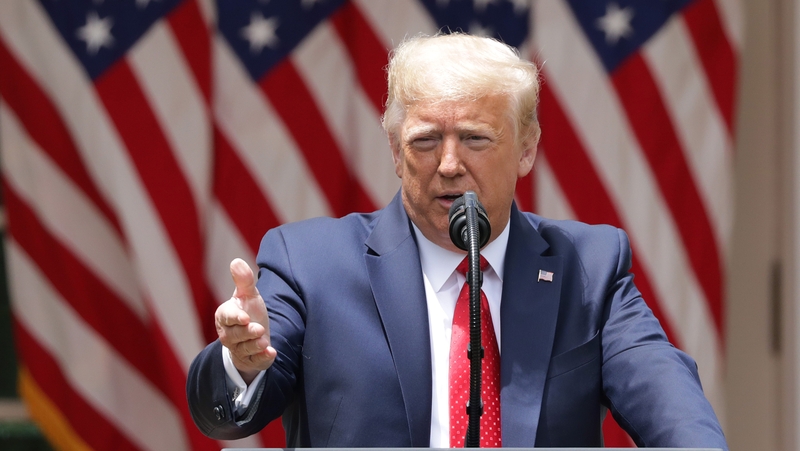
"As part of this new credentialing process, chokeholds will be banned except if an officer's life is at risk," Mr Trump said in the White House Rose Garden, prior to signing an executive order on law enforcement reforms.
"Additionally we're looking at new advanced and powerful, less lethal weapons to help prevent deadly interactions," he added.
Mr Trump, facing criticism that his policies and inflammatory rhetoric have aggravated a racial divide in the United States, signed the order aimed at improving police practices and said that "Americans want law and order".
After weeks of protests against racism and policy brutality prompted by the death of George Floyd, a black man killed on 25 May in police custody in Minneapolis, Mr Trump offered a policy response to rising concerns about racial injustice going into the 3 November election in which he is seeking a second term.
"Americans want law and order, they demand law and order," Mr Trump said.
Police chokeholds will be banned in the US, except when an officer's life is in danger, President Donald Trump has said | More: https://t.co/PLzRrkvrPo pic.twitter.com/KZTxkalRX7
— RTÉ News (@rtenews) June 16, 2020
The Republican president offered his condolences to the families of victims of recent police and other violence, and vowed to pursue justice.
In his public comments and on Twitter, Mr Trump has called for crackdowns on protesters and emphasised a forceful and militarised response to the social unrest sparked by the death of Mr Floyd and others. Opinion polls show widespread concerns among Americans about police brutality.
The executive order encourages police departments to employ the latest standards for use of force, improve information sharing so that officers with poor records are not hired without their backgrounds being known, and add social workers to law enforcement responses to non-violent cases involving drug addiction and homelessness, officials said.
Mr Trump reiterated today that he opposes calls to "defund the police" by reimagining or even dismantling police departments. Leading Democrats, including presumptive presidential nominee Joe Biden, have not embraced such calls, but Republicans have jumped on the issue.
We need your consent to load this rte-player contentWe use rte-player to manage extra content that can set cookies on your device and collect data about your activity. Please review their details and accept them to load the content.Manage Preferences
The Democratic-led House of Representatives is expected to vote later this month on sweeping legislation put forward by the Congressional Black Caucus to rein in police misconduct.
Senate Republicans are expected to unveil their own legislation tomorrow that concentrates more on data collection than on policy changes in areas involving lethal force.
Democrats want to allow victims of misconduct and their families to sue police, an idea that Republicans oppose. Republicans, meanwhile, are pushing to reduce job protections for members of law enforcement unions. The two sides also are at odds over a Democratic proposal for an outright ban on police chokeholds.
Some Republicans say the two sides are so far apart on key issues that no final action is likely until after the 4 July holiday.
Attorney General William Barr, Senate Majority Leader Mitch McConnell and Senator Tim Scott, who is developing the Republican legislation, attended today's White House signing.
One civil rights group said Mr Trump's action did not go far enough.
"While the order takes some steps forward, it is an inadequate response to a nation demanding sweeping, bold action," Vanita Gupta, head of the Leadership Conference on Civil and Human Rights, said in a statement.
