
The European Commission has brought forward a legal proposal to potentially use up to €210 billion in frozen Russian assets to fund Ukraine in the coming years.
The plan would provide for an initial €90 billion, which would be covered either by using immobilised Russian assets or through EU borrowing on the international markets.
The commission's preference, and that of most member states, is to convert frozen Russian assets into a loan for Ukraine that would be repaid only when Moscow started to make war reparations to Kyiv.
The so-called Reparations Loan has been opposed by Belgium, which hosts Euroclear, a securities depository that holds the vast majority of the Russian assets.
Under the proposal, the commission suggests using an emergency provision within the EU treaty to prevent the measure being blocked by Hungary.
Russian assets were frozen within days of Moscow’s invasion of Ukraine in February 2022.
They have remained immobilised due to EU sanctions. Since those sanctions have to be rolled over every six months, there is a risk that Hungary or Slovakia - both friendly to Russia - could veto their rollover, thus putting the loan to Ukraine at risk.
Under the proposal, the EU would invoke Article 122 of the EU treaties, essentially removing the veto on the basis that huge liabilities in having to repay the Russian assets would inflict economic harm on the EU.
That would mean the assets remaining under sanction via a weighted majority vote, rather than the normal unanimity procedure, thus depriving Hungary of its veto.
The other proposal - to fund Ukraine through borrowing on the international markets - would require unanimity, and would therefore most likely be blocked by Hungary.
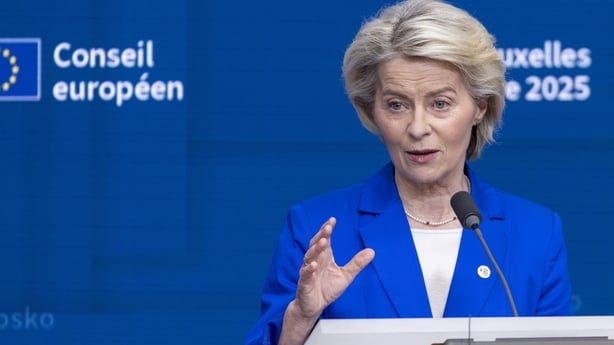
"We are proposing to cover two-thirds of Ukraine’s financing needs for the next two years," said Commission President Ursula von der Leyen.
"That’s €90 billion. The remainder would be for international partners to cover.
"Since pressure is the only language the Kremlin responds to, we can also dial it up," she said. "We have to increase the costs of war for [Russian President Vladimir] Putin's aggression and today's proposal gives us the means to do this."
The legal text will now be subject to negotiations between the commission and EU member states.
In October, EU leaders committed to meeting Ukraine’s financial and military needs for the next two years.
Ukraine is expected to run out of cash next April as Russia continues its onslaught.
The Commission President said the proposal had taken into account almost all the concerns raised by Belgium. The proposal would now also cover other financial institutions in the EU that hold such assets, von der Leyen said.
President von der Leyen said she had informed US Treasury Secretary Scott Bessent that the EU would pursue such a course of action, saying the proposal was "positively received".
Hours before the commission set out its legal proposals, Belgian Foreign Minister Maxime Prevot said they fell short of Belgium's requirements.
"We have the frustrating feeling of not having been heard. Our concerns are being downplayed," Ms Prevot told reporters at a meeting of NATO foreign ministers in Brussels.
"The texts the Commission will table today do not address our concerns in a satisfactory manner."
Belgium has demanded that other EU countries guarantee to cover all legal costs arising from Russian lawsuits against the scheme.
It also wants them to guarantee they would help provide money quickly to pay Russia back if a court ever ruled Moscow must be refunded.
Additional reporting by Reuters