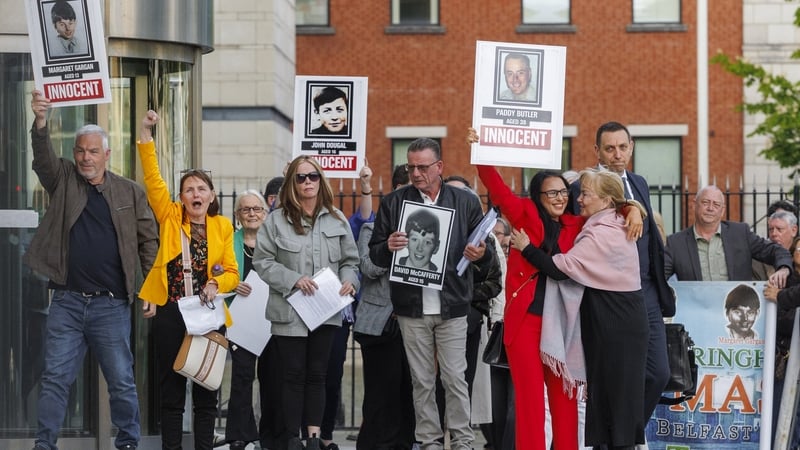

The families of those killed in the Springhill shootings have welcomed the apology of UK Prime Minister Keir Starmer describing it as a significant and long-overdue acknowledgment of the truth established by the Springhill inquest.
Earlier, Mr Starmer apologised on behalf of the British government to the families of five people who were shot dead in west Belfast in 1972.
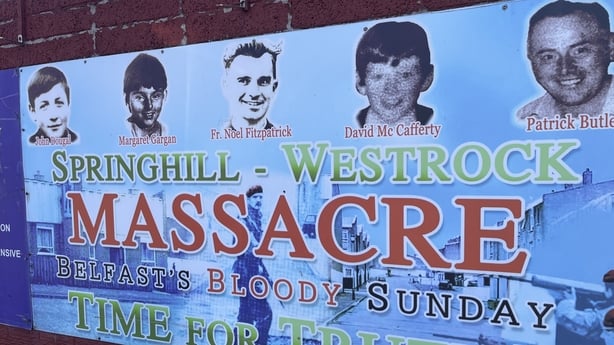
Speaking at the start of Prime Minister's Questions, Mr Starmer said: "The findings of the recent Springhill inquest into the tragic deaths in July 1972 of Father Noel Fitzpatrick, Patrick Butler, Margaret Gargan, David McCafferty and John Dougal are sobering.
"While the circumstances in which the events occurred were undoubtedly challenging, it is the duty of the state to hold itself to the highest standard.
"The government accepts and deeply regrets these findings, and recognises their gravity.
"On behalf of the government, I want to apologise unreservedly to the families for what happened and for the grief and trauma that they have endured since the tragic deaths of their loved ones."
A coroner concluded in April that British Army soldiers "did not use reasonable force" in the shooting of the Catholic priest, a father-of-six and three teenagers at Springhill/Westrock on 9 July 1972.
Mr Justice Scoffield said Father Noel Fitzpatrick, 42, father-of-six Patrick Butler, 38, and teenagers David McCafferty and Margaret Gargan were unarmed and posed no risk when they were shot.
The coroner said he was unable to conclude whether the other teenager, 16-year-old John Dougal, was armed when he was shot.
He said the teenager was a member of the junior wing of the Provisional IRA but added that on balance he concluded that John had not progressed into the ranks of the adult IRA.
The coroner said even if the teenager had been in possession of a firearm, he was not using it and was likely to have been running away when he was shot in the back.
The families of those killed had called for a public apology and had recently criticised the government over its "silence" after the inquest findings.
In a statement today, the Springhill families said they carried not only the pain of loss but also the burden of challenging false narratives, seeking answers and pursuing justice.
A spokesperson for the families said they welcome Mr Starmer's apology and the acknowledgment of the profound wrong that was done to their loved ones and families.
They said they campaigned for truth, accountability and recognition for more than half a century and added that findings of the inquest "established the facts and cleared the names of those who were unjustly killed".
"This apology cannot undo the loss, the grief, or the decades during which families were forced to fight for the truth.
"However, it represents an important acknowledgment of the findings of the court and of the suffering endured by generations of families," they added.
"Today we remember Patrick Butler, Father Noel Fitzpatrick, Margaret Gargan, David McCafferty and John Dougal.
"We also remember our family members who dedicated their lives to this campaign but did not live to witness this moment," they said.
The families paid tribute to their legal representatives in particular Pádraig Ó Muirigh, campaigners, witnesses and those who supported them.
They said they hope such events are never repeated and that future generations understand the human cost of conflict and the importance of confronting the truth.
Mr Starmer wrote to the families individually to personally apologise for what happened and the grief and suffering they endured.
Commenting on the apology, Northern Ireland's Sinn Féin First Minister Michelle O'Neill said: "Nothing can undo the pain and loss experienced by those who lost loved ones that day. But acknowledgment matters.
"The Springhill families deserve the truth, and they deserve to have that truth publicly recognised.
"The Springhill families now join the families of Bloody Sunday and Ballymurphy, whose determined campaigns secured official findings and public acknowledgement of the circumstances surrounding the deaths of their loved ones.
"These moments matter not only because they recognise individual loss, but because they affirm and expose the actions of the British army against the Springhill community.
"While today marks an important and significant moment for the Springhill Families, there remain many families who continue to wait for truth, accountability and acknowledgement where their loved ones were killed as in a manner similar to Bloody Sunday, Ballymurphy and Springhill."
The solicitor representing four of the five Springhill families said the reaction from families to the Prime Minister's apology was "largely positive".
Pádraig Ó Muirigh said; "We gathered today, we had short notice that the Prime Minister would be on his feet to make an address on this issue, and I think the reaction was largely positive."
Speaking on RTÉ's News at One, Mr Ó Muirigh said the key thing for the families was "an evidence-based findings" that vindicated them, which they received at the recent inquest.
He added that acknowledgement was also important in terms of how legacy issues are addressed.
"This is a welcome development today particularly in light of five decades of their loved ones being vilified and also the wider community being vilified."