


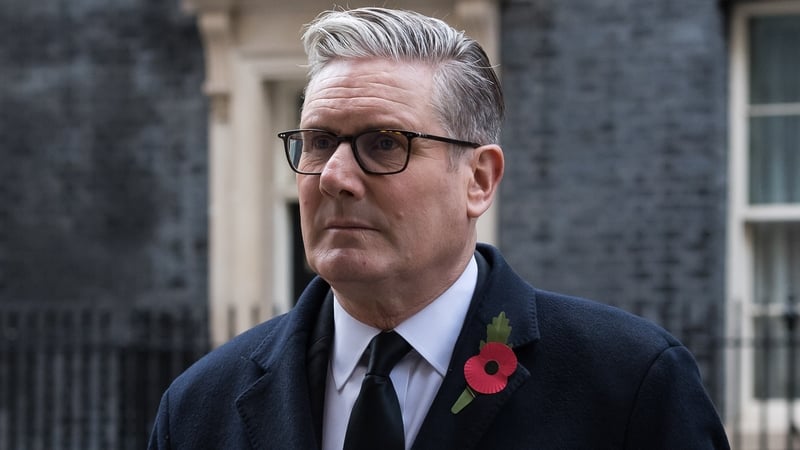
British Prime Minister Keir Starmer has pledged to act in "months, not years" to protect young people from addictive social media platforms, amid calls for a ban for under-16s.
Mr Starmer said his Government must make sure it does not cut off "sensible, good access" to news for young people.
A three-month UK consultation on banning children from social media and restricting infinite scrolling is to be launched in March.
Supporters of the Australian-style ban have said parents are in "an impossible position" with regard to the online harms to which their children are being exposed. Spain, Greece and Slovenia have have since said they plan similar bans.
Meanwhile, other online-safety campaigners have called for big tech firms to be regulated like banks, with a "conduct-based regime that holds senior managers accountable for product safety risks".
During a visit to a community centre in London, the prime minister pledged to stand alongside concerned parents, referencing his own teenage children.
Mr Starmer said: "I don't think there’s a parent in the country who isn’t worried about this.
"The status quo, things as they are now, is not good enough. Nobody can make the argument that things can be left as they are. They can’t, they’re not protective of children, and we intend to act."
In a bid to bolster online safety the Government has also proposed to restrict children’s access to virtual private networks (VPNs) and AI chatbots.
Mr Starmer continued: "We’ve taken the powers to make sure we can act within months, not years.
"We also need to act very quickly, not just on the age concern, but on the devices and applications that make the sort of auto-scrolling, the constant glueing to the machine that you can never stop scrolling."
Mr Starmer had earlier said in a statement that "Technology is moving really fast, and the law has got to keep up."
The new powers are likely to lead to reduced parliamentary scrutiny of future curbs.
More AI chatbots will also be covered by a ban on creating sexualised images without the subject's consent, the UK government said, following measures taken against Elon Musk's Grok.

These will be introduced as an amendment to existing crime and child protection legislation being considered by the UK parliament.
While aimed at shielding children, such measures often have knock-on implications for adults' privacy and ability to access services, and have led to tension with the US over limits on free speech and regulatory reach.
Websites such as image-hosting site Imgur, used to make memes and provide images for many general online discussion forums, blocked access to all British users last year and gave them blank images instead, after tighter age-verification rules.
Some major pornography websites have also blocked access for British users rather than verify their age, which they said was invasive of privacy and potentially insecure.
However, such geographic restrictions can be circumvented by using readily available virtual private networks, and the British government said its consultation on child safety would include potential age restrictions for VPNs.
