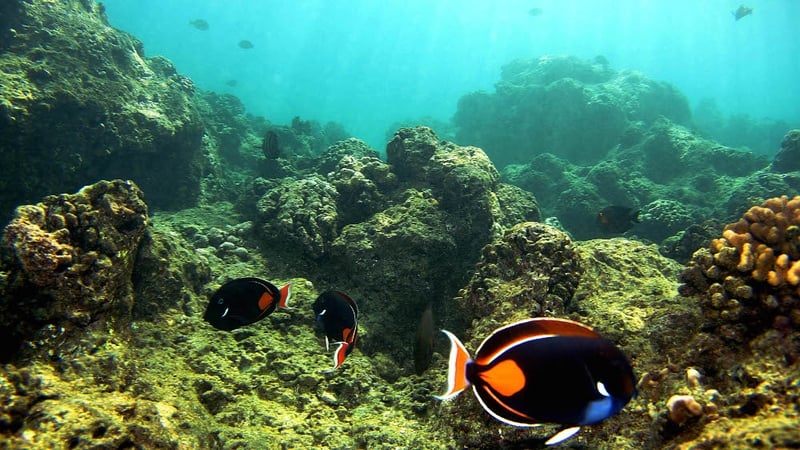
The largest ever survey of coral health has found that dynamite fishing and pollution, but mostly global warming, wiped out 14% of the world's coral reefs from 2009 to 2018.
The report by more than 300 scientists in the Global Coral Reef Monitoring Network said worst affected were corals in south Asia and the Pacific, around the Arabian Peninsula, and off the coast of Australia
it said the damage left graveyards of bleached skeletons where vibrant ecosystems once thrived.
CEO of the Australian Institute of Marine Science and co-author of the report, Paul Hardisty, said in a statement: "Climate change is the biggest threat to the world's reefs."
Oceans absorb more than 90% of the excess heat from greenhouse gas emissions, shielding land surfaces but generating huge, long-lasting marine heatwaves that are pushing many species of corals past their limits of tolerance.
A single so-called bleaching event in 1998 caused by warming waters wiped out 8% of all corals.
Coral reefs cover only a tiny fraction - 0.2% - of the ocean floor, but they are home to at least a quarter of all marine animals and plants.
Besides anchoring marine ecosystems, they also provide protein, jobs and protection from storms and shoreline erosion for hundreds of millions of people worldwide.
The report said the value of goods and services from coral reefs is about €2.33 trillion per year, including €31 billion in tourism.
Loss of coral from 2009 to 2018 varied by region, ranging from 5% in East Asia to 95% in the eastern tropical Pacific.
UNEP executive director Inger Anderson said. "Since 2009 we have lost more coral worldwide than all the living coral in Australia.
"We can reverse the losses, but we have to act now."
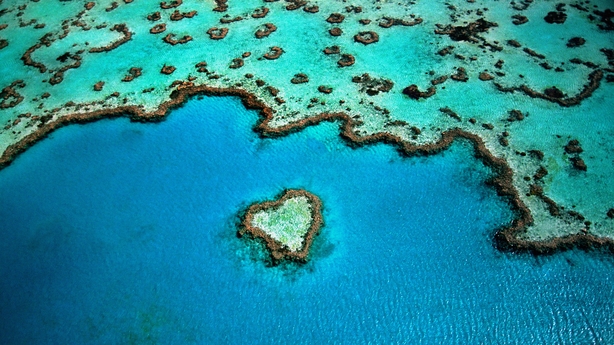
The UN's climate science advisory panel, the IPCC, projects with "high confidence" that global warming of 1.5C above pre-industrial levels will see 70% to 90% of all corals disappear.
In a 2C world, less than 1% of global corals would survive. Earth's average surface temperature has already increased by 1.1C above that benchmark.
The report, titled "Status of Coral Reefs of the World: 2020", found reasons for cautious optimism.
Paul Hardisty said: "Some reefs have shown a remarkable ability to bounce back, which offers some hope for the future recovery of degraded reefs."
East and Southeast Asia's "Coral Triangle", which contains nearly 30% of the world's coral reefs, were hit less hard by warming waters over the last decade, and in some cases showed recovery.
This resilience could be due to species unique to the region, potentially offering strategies for boosting coral growth elsewhere, the authors said.
Based on nearly two million data points from 12,000 sites spanning 73 countries and 40 years, the report is the sixth such global survey and the first since 2008.
To measure change over time, the researchers contrasted areas covered by healthy live hard coral with areas taken over by algae, a sign of coral distress.
The report was undertaken with support from UNEP and the International Coral Reef Initiative, a partnership of governments and research organisations focused on preserving corals reefs and related ecosystems.