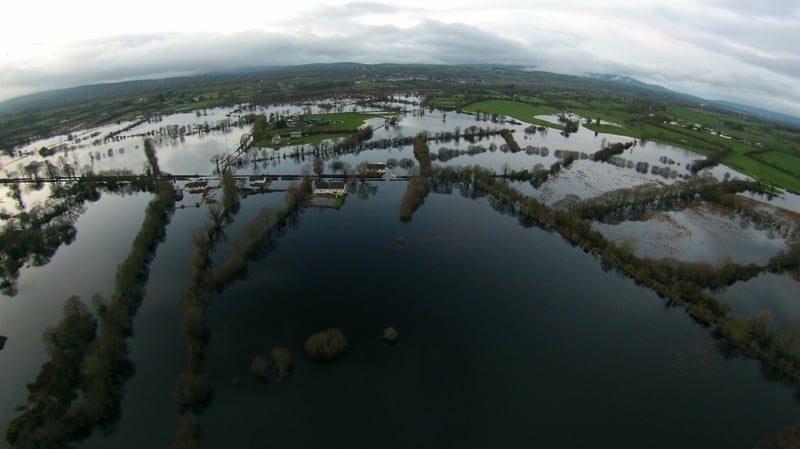
The timing of river flooding in Ireland and across Europe has been altered by climate change, a new study by Irish scientists and international colleagues has found.
Unless adaptation measures are put in place, these changes to flooding seasonality could have a significant impact on agricultural yields, water supplies, hydroelectric power production and other infrastructure, the experts warn.
The analysis was based on data gathered from 4,262 hydrometric stations in 38 countries between 1960 and 2010.
The scientists, including Dr Conor Murphy from Maynooth University’s Irish Climate Analysis and Research UnitS or ICARUS, also compared precipitation, soil moisture and temperature data to explore potential drivers of flood changes.
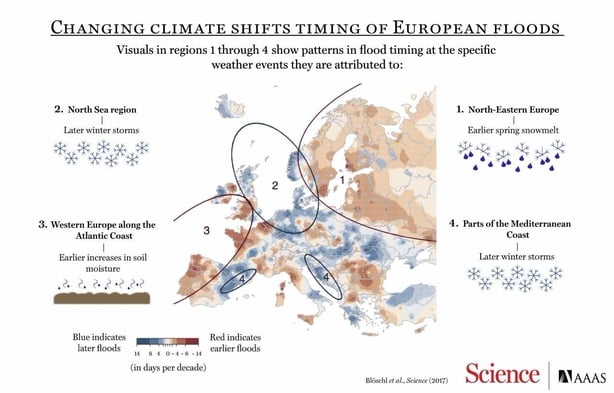
In their paper, published in the journal Science, the research team found that in western and northeastern parts of Europe, rivers are reaching peak flooding earlier in the spring.
However, in the North Sea region and parts of the Mediterranean coast the study revealed water levels were peaking later than previously in the season.
The scientists say their findings are the first clear signal that flooding shifts are a consequence of the climate change caused by human activities.
Half of the stations along the North Atlantic coast from southern Ireland as far south as Portugal saw peak flooding take place 15 days earlier over the five decade period.
According to the team, this is mostly due to the soil reaching its maximum possible moisture content earlier than before.
In the northeast of the continent, about half of the stations saw a shift in the peak flooding time to at least eight days earlier because warmer climate is causing more snow to melt sooner than before.
While in the North Sea region and parts of the Mediterranean, the flooding is taking place more than eight days later than previously in around 50% of the stations because of delayed winter storms caused by polar warming and other changes.
We need your consent to load this Facebook contentWe use Facebook to manage extra content that can set cookies on your device and collect data about your activity. Please review their details and accept them to load the content.Manage Preferences
River flooding is a major global problem that costs an estimated $104 billion each year and impacts on more people than any other natural hazard.
Experts fear the problem, and therefore the cost, will increase as climate change worsens and economic growth lifts activity in developing countries.
The scientists warn if the trend in changing flood timing continues considerable economic and environmental consequences may arise.
Earlier spring flooding in northeastern and western Europe could limit the replenishment of reservoirs for example.
Later winter floods in areas around the North Sea would lead to softer ground for spring farming operations, enhanced erosion and higher soil compaction they add.
While a warming climate was expected to have an impact on the magnitude and timing of river flooding, until now hard evidence had not been found.