


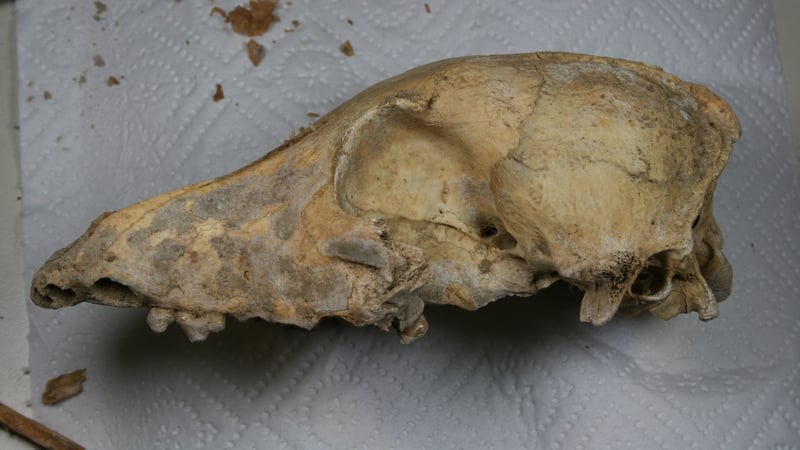
Modern dogs have a similar genetic make-up to their ancient ancestors, a new international study involving Irish-based scientists has found.
The research findings also point to the likelihood that all modern dogs descended from the same geographical area.
The insights about the connection come from a whole genome analysis of the remains of three ancient dogs.
Two are 7,000 and 4,700 years old respectively (Early and End Neolithic period) and were found in Germany.
One of those was associated with an early European farming community.
The third set of canine remains was found in Newgrange and is thought to be 4,800 years old.
The analysis by the scientists, including Kevin Daly from the Smurfit Institute of Genetics at Trinity College Dublin, show that ancient dogs and major modern European dogs have common genetic roots.
They also established that there is a genetic continuity of domesticated dogs over the past 7,000 years from the Early Neolithic period to today.
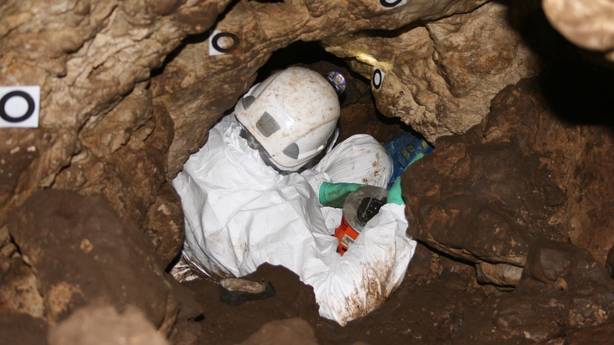
The team of scientists, with members from the US, Germany and France, did however detect an additional ancestry component in the End Neolithic sample.
This they say is consistent with the mixing in of a population of dogs located further east that may have migrated with people associated with Late Neolithic and Early Bronze age cultures.
The study, published in the journal Nature Communications, also estimates the timing of canine evolution.
Dogs and wolves diverged 40,000 years ago with Eastern and Western dogs splitting apart approximately 20,000 years ago, the study says.
Using this information and working out the rate of mutation from the oldest of the animals, the researchers suggest that dogs became domesticated between 20,000 and 40,000 years ago.
They also found that modern dogs all evolved from a single geographical place.
Previously studies had suggested that dog domestication occurred independently in both Eastern and Western Eurasia.
Europe has been a critically important region in the history and evolution of dogs, the researchers say, with most modern breeds sharing predominantly European ancestry.
The oldest remains that can be unequivocally linked to domestic dogs are found in Europe, including an Upper Palaeolithic 14,700-year-old jaw-bone from the Bonn-Oberkassel site in Germany.
The researchers say that in order to further clarify the details of dog domestication and evolution, it will be crucial to get a broader set of ancient dog samples, including ancient representatives from Central and Southeast Asia, and the Middle East.
