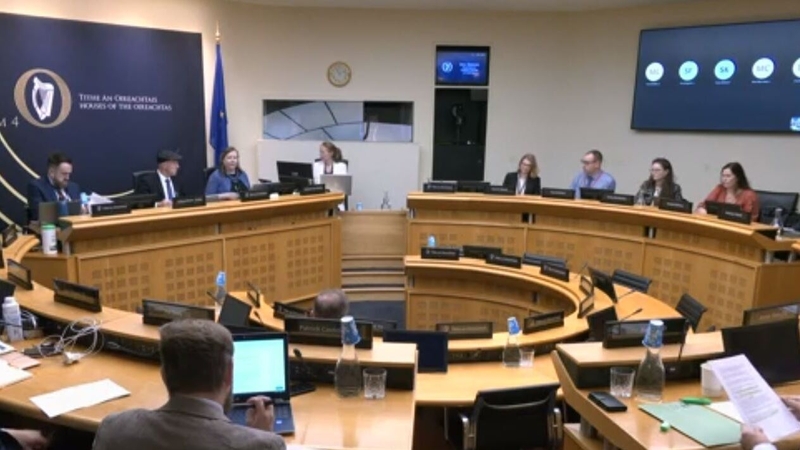

"Major advances" in end of life care could be threatened by any move towards allowing assisted suicide, an Oireachtas committee has heard.
Fergal Twomey of the Royal College of Physicians of Ireland (RCPI), a consultant in palliative medicine, pointed to "major" progress which has been made "in promoting high-quality care at the end of life across the spectrum of healthcare provision in Ireland".
He told the Joint Committee on Assisted Dying that legalising assisted suicide "[risks] a shift away from the funding, development and delivery of new and existing palliative care services and potentially reducing research".
He noted the "progressive broadening" of initial limits for assisted death in several countries, including the Netherlands where "new-born infants" are now included.
The RCPI opposes assisted dying as it is contrary to best medical practice.
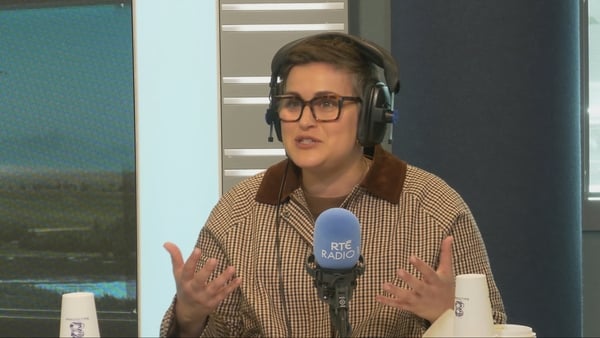
Fergal Twomey of the RCPI said that Irish people are "really atrocious" at recognising the inevitability of death.
"We are really poor at recognising that there are limitations to the treatments," he said.
The fears people in Ireland have around dying - including of "death rattles" - are less about the "actuality" of it happening; those fears are driven by a fear of death itself, he said.
"We in Ireland are excellent at the after-death bit," Dr Twomey said, mentioning how people gather together and noting that international colleagues had been surprised at the number of Irish people who have RIP.ie as a home page.
"As a society we are so frightened of dying we won't discuss it," Dr Twomey said.
He said that the RCPI's responsiblity is to help people to live as best they can, and that terminal illness refers to someone who will die in the "next hours or days".
Dr Twomey described the "erosion" of safeguards around assisted dying in Canada as "frightening".
The committee also heard from doctors who believe that new rules should be introduced to allow adults with a terminal prognosis of six months or less to seek help to end their life.
Support for assisted dying "tends to driven by families and households" struggling with over-medicalised and "unrelieved" end of life suffering, Dr Brendan O'Shea said.
A member of Irish Doctors Supporting Medical Assistance in Dying, he added that family doctors often have close long-term relationships with patients and their families and advised that their concerns be put at the centre of any change to Irish legislation.
He accepted that there are few if any palliative care professionals in his group.
"If there is, it is a very tiny number indeed", he conceded, adding that support for assisted dying tends to come primarily from "family practice" rather than the medical establishment.
It would be "highly desirable" for mental health professionals to be involved in any approval process should assisted dying be introduced, he told Independent Senator Rónán Mullen.
Dr Twomey said that "a vote or a ballot" of consultants to garner their views on assisted dying is not planned at this stage.
The group says it represents 100 doctors in this country and that in its view Ireland should take into account what it believes are changing approaches in Irish society - and changing legislation in other nations.
A third group, the Irish Hospital Consultants Association, gave a neutral view, saying medical opinions vary and no two patients are the same.
The IHCA said ethical questions are central to any health debate and that in its view, discussions around assisted dying and end of life care can at times strain the vital doctor-patient relationship to its limit.
The committee, which also heard the views of Canadian doctors this afternoon - has been holding meetings on the issue in recent weeks.
It is due to conclude its meetings next spring, before publishing a report on its own recommendations next March.