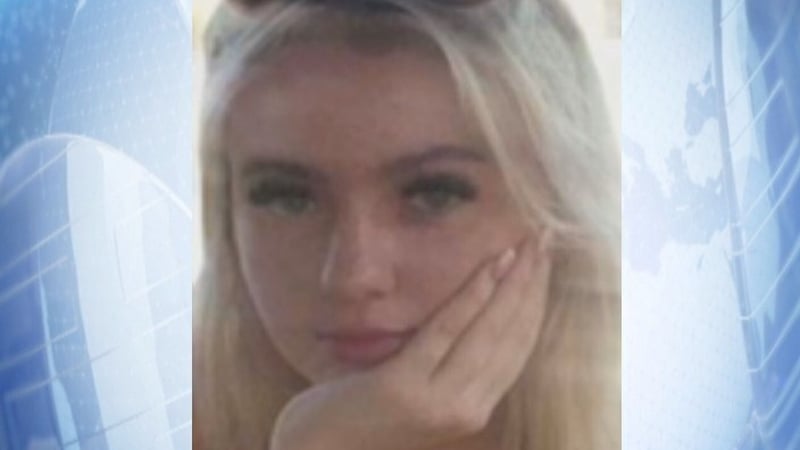

A consultant microbiologist at University Hospital Limerick has told the inquest into the death of Aoife Johnston that it's "highly likely" the earlier administration of antibiotics would have saved her life.
Limerick Coroner’s Court has heard that the 16-year-old waited 15 hours and 15 minutes after presenting at the emergency department (ED), before she was given antibiotics.
The secondary school student was brought to the ED before 5pm on the evening of Saturday 17 December, having being referred by her GP with suspected sepsis.
Antibiotics were not administered until after 7am the next day.
Dr Patrick Stapleton said test results showed the pathogen present in her system was meningococcus, which can be effectively tackled, in most cases, once drugs are administered in a timely fashion.
He told the inquest that sepsis needs to be recognised and treated urgently.
Dr Stapleton said delays in treatment are associated with increased mortality and that risk increases with the passage of time.
He told the Court it was "highly likely that the outcome would have been different and optimal" if antibiotics had been given to Ms Johnston earlier during her stay in UHL.
Dr Stapleton gave a detailed deposition to the inquest about a series of tests, including nasal swabs, urine and blood tests, which were carried out following her arrival in the ED on the previous evening.
It subsequently emerged that some negative test results provided in relation to a swab, related to an earlier examination, carried out in July 2022.
The inquest into the death of Aoife Johnston resumed at Kilmallock Courthouse this morning, with details surrounding staff shortages and overcrowding being heard.
Ms Johnson died in University Hospital Limerick in December 2022, having waited several hours for treatment, after presenting with suspected sepsis.
The inquest, before Limerick Coroner John McNamara, has been hearing more details about staff shortages and overcrowding at the hospital's ED on the weekend Ms Johnston attended there.
We need your consent to load this rte-player contentWe use rte-player to manage extra content that can set cookies on your device and collect data about your activity. Please review their details and accept them to load the content.Manage Preferences
Assistant Director of Nursing Patricia Donovan was the first witness to give evidence, on the third day of proceedings.
She said her role was effectively that of a site manager at UHL, managing complaints and addressing issues.
Ms Donovan said five rostered nurses were not available to work in the ED, on the night of 17 December 2022.
There were 153 people waiting at the start of her shift that night, with Covid, flu and other respiratory illnesses causing additional issues in the facility.
She said that over the course of the night, she spoke to the Clinical Nurse Manager Katherine Skelly a number of times regarding the myriad pressures in the ED.
Ms Donovan asked her to call two consultants, to advise them of the issues.
"I wanted [them] to be aware of the number of category 2 patients waiting to be seen," she said.
This is the term used for those deemed to be in need of urgent care.
Both consultants declined to attend, but subsequently, the paediatric consultant did attend for two hours.
In the meantime, Ms Donovan called the 'Executive on Duty’ Fiona Steed, advising her of a plan to open an overflow area and informing her of the consultants' refusal to come into the ED.
Ms Donovan told the inquest the Emergency Consultant "would only attend for a major emergency, not for volume".
She said Ms Steed told her she would raise the matter with the Clinical Director.
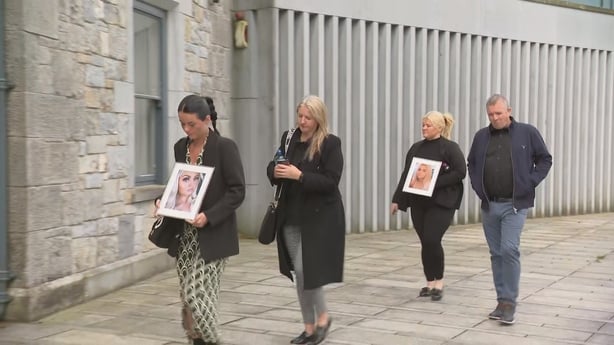
Under cross examination by Counsel for the Johnston family, Damien Tansey, Ms Donovan agreed that the conditions in the ED on the night of 17 December, were the worst that had ever been encountered there.
She also agreed that patients with suspected sepsis should be seen within 10-15 minutes and said it was a "tragedy" that Aoife Johnston had been waiting more than 15 hours before antibiotics were administered.
When asked about her discussions with Katherine Skelly, she said she asked her to contact the consultants on call for the specific areas they were concerned about. This was not the norm.
She said she had been disappointed when she was told they had refused to come in to the ED "given the gravity of what was going on in the Department".
Ms Donovan said she believed a report was subsequently filed with the Hospital's Clinical Director about Dr Jim Gray’s refusal to come into the ED that night but said she could not confirm this.
At the conclusion of the cross examination, Ms Donovan said the capacity of the ED to meet demand was impacted by overcrowding, as was the flow of patients.
She said that while nursing staff levels "certainly" impacted at the time of Aoife Johnston's death, the situation had improved since then.
When asked by Mr Tansey if overcrowding impacted on the quality of care provided to patients, she replied "yes, then, and still to a degree".
Ms Donovan concluded her evidence by addressing the Johnston family directly, saying that the death of their daughter and sibling had "impacted hugely on all of us that worked, and still work in the department and the hospital. I don’t understand your pain, I hope I never have to, I’m just very, very sorry."
Mr Tansey said the family appreciated the expression of such sentiments.
'Horrendous overcrowding but no major emergency' - Ex-Manager of UHL
There have been emotionally charged exchanges at the inquest into the death of Aoife Johnston.
The former General Manager of UHL, Fiona Steed, broke down in the witness box when she was asked about her role in trying to ease pressures in the ED, on the weekend Ms Johnston attended with suspected sepsis.
Asked by Counsel for the Johnston family how she had acted after she had heard about the condition of the 16-year-old, Ms Steed said: "I have been moved by Aoife's death every night and every day since.
"I look at my daughters and realise how lucky I am to have them."
At that point, Meagan Johnston, a sister of the deceased, rose from her seat, expressing her upset and leaving the court room.
Proceedings were paused for a short time before questioning resumed.
Earlier, Ms Steed said there was "horrendous overcrowding" in the ED on the weekend in question, but that conditions did not meet the criteria that would have deemed the situation a major emergency.
She said the extent of the chaos "was not portrayed to me" in a telephone conversation she had with Assistant Director of Nursing, Patricia Donovan, at 10.30pm on 17 December 2022.
Ms Steed was the "executive on call", charged with providing advice when required.
She said she did not have the power to compel consultants to attend but that she gave advice that would have taken "30 or so patients out of the Emergency Department".
The inquest has already heard that trolleys were not moved to wards, in line with Ms Steed’s recommendation.
She said that she "wrongly and regrettably assumed my advice had been followed … Nobody came back to me to say that hadn’t happened".
When put to her by Mr Tansey that people looked to her for advice and leadership, she said she was "very specific about my advice and my recommendations".
She subsequently agreed with Mr Tansey that whatever she did that night, it did not improve the situation.
Ms Steed concluded her evidence by expressing sympathies directly to the Johnston family.
"These are not hollow condolences, she was beautiful and I will never forget, I know that is no comfort to you, but it has completely altered my approach to life and to my own children," she said.