


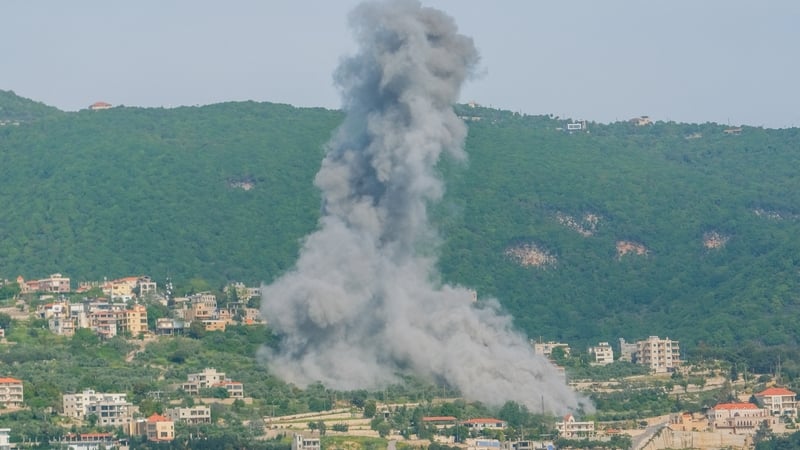
Lebanon and Israel held new peace talks in Washington today, as their latest ceasefire - considered to still be in place despite hundreds of deaths in Israeli strikes - nears its end.
Israel's military said it was striking Hezbollah targets in south Lebanon today after warning residents of several towns and villages there and in the country's east to evacuate.
It also said a Hezbollah drone fell in Israeli territory, wounding several civilians.
Hezbollah said it had "targeted a gathering of Israeli enemy army soldiers at the Rosh HaNikra site" near the border with Lebanon with a drone.
Lebanon's state-run National News Agency (NNA) reported Israeli airstrikes on the south and east, including in areas not covered by the warning, a day after the health ministry said intense raids killed 22 people, eight of them children.
One diplomat privy to the two-day talks said that the two sides started discussions just after 9am local time (1300 Irish time) at the State Department.
The two nations last met on 23 April at the White House, where US President Donald Trump announced a three-week ceasefire extension and voiced optimism for a historic agreement.
Mr Trump at the time made the bold prediction that, within the latest ceasefire period, he would welcome Israeli Prime Minister Benjamin Netanyahu and Lebanese President Joseph Aoun to Washington for a historic first summit between the countries.
The summit did not happen, with Mr Aoun saying a security deal needed to be in place and Israeli attacks needed to end before such a landmark meeting.
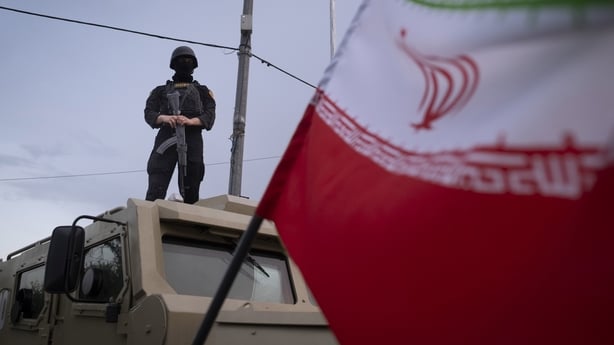
The ceasefire, which went into effect on 17 April, had been extended through Sunday.
Still, Israeli strikes have killed more than 400 people during the truce, according to an AFP tally based on figures from Lebanese authorities.
Israel has vowed to keep pursuing attacks against Hezbollah, the armed group and political movement backed by Iran's ruling clerics, despite the ceasefire.
Hezbollah began a campaign of firing into Israel in retaliation for the killing of Iran's supreme leader, Ayatollah Ali Khamenei, at the start of the US-Israeli war on 28 February.
"Anyone who threatens the state of Israel will die because of his actions," Mr Netanyahu said last week after an Israeli strike in the centre of Beirut killed a senior Hezbollah commander.
A Lebanese official told AFP that the country would seek "the consolidation of the ceasefire" during the talks in Washington.
"The first thing is to put an end to the death and destruction," the official told AFP on custom of anonymity.
Iran has demanded a lasting ceasefire in Lebanon before any agreement to end the wider war, as it has frustrated Trump by refusing his appeals for an accord on his terms.
The Middle East war has spread throughout the region, roiling the global economy and impacting hundreds of millions worldwide.
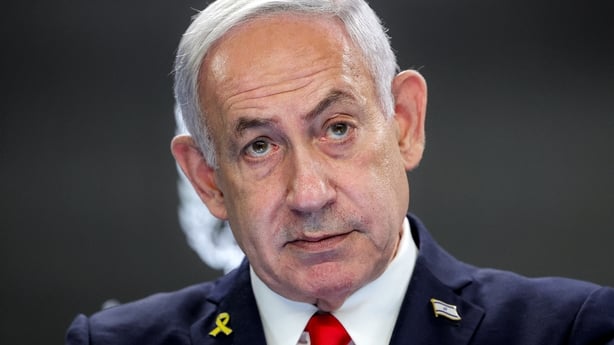
Mr Netanyahu's office said the Israeli leader "paid a secret visit to the United Arab Emirates" during the conflict and met UAE President Sheikh Mohammed bin Zayed Al Nahyan.
It also denied "receiving any Israeli military delegation in the country".
More than 2,800 people have died in Lebanon since Israel launched the strikes in early March, including at least 200 children, according to Lebanese authorities.
Hezbollah said that toll includes its fighters.
Israel has struck areas of Lebanon with large Shia populations, including Beirut's southern suburbs, and has invaded the border region, seizing control in an area it occupied from its 1982 Lebanon war until withdrawing in 2000.
The United States has backed Lebanon's calls to maintain sovereignty over all its territory but also repeatedly pressed it to take action against Hezbollah.
The United States "recognizes that comprehensive peace is contingent on the full restoration of Lebanese state authority and the complete disarmament of Hezbollah," a State Department statement said.
"These talks aim to break decisively from the failed approach of the past two decades, which allowed terrorist groups to entrench and enrich themselves, undermine the authority of the Lebanese state, and endanger Israel's northern border," it said.
These are the third round of talks between the two countries, which have no diplomatic relations.
Unlike the last round, which Mr Trump brought to the White House, or the first round, neither Secretary of State Marco Rubio nor Mr Trump are participating as the president is on a state visit to China.
The US mediators for the two-day meeting at the State Department include the ambassadors to Israel and Lebanon - respectively Mike Huckabee, an evangelical pastor and staunch supporter of Israel's regional ambitions, and Michel Issa, a Lebanese-born businessman and golf partner of Mr Trump, as well as Mike Needham, a close aide to Mr Rubio.
Lebanon will be represented by special envoy Simon Karam, a veteran lawyer and diplomat who has fiercely defended Lebanon's sovereignty, as well as its ambassador in Washington.
Israel's team will include its ambassador in Washington, Yechiel Leiter, an ally of Mr Netanyahu who is close with the Israeli settler movement in the occupied West Bank.
Israelis chant threats, anti-Palestinian slogans at Jerusalem Day march
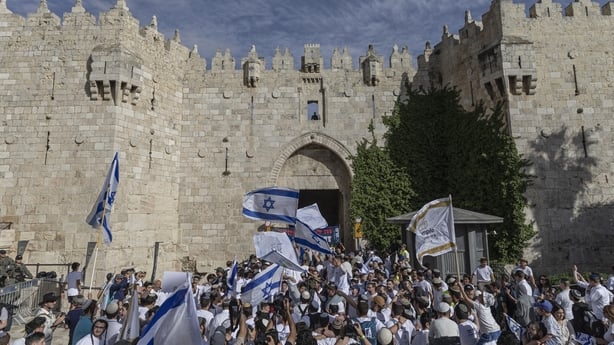
Meanwhile, Israeli nationalists swept through the narrow streets of Jerusalem's Old City today, chanting "Death to Arabs" and "May your villages burn" during the annual Jerusalem Day march, while many Palestinian residents remained barricaded indoors.
Every year, tens of thousands of Israelis - many of them teenagers and young adults - parade through Jerusalem to celebrate what Israeli authorities call the 'reunification' of Jerusalem following Israel's capture and annexation of east Jerusalem in the 1967 Arab-Israeli war.
The annexation of east Jerusalem, home to a predominantly Palestinian population, is not recognised by the United Nations, which considers it illegal under international law.
Over the years, the annual march has repeatedly descended into violence, with groups of mostly young ultranationalists targeting Palestinians with racist chants, intimidation and assaults.
This year's march comes against the backdrop of the Iran war and a ceasefire in Gaza, which sees near-daily violations.
Palestinian president Abbas pledges elections, reforms at Fatah conference
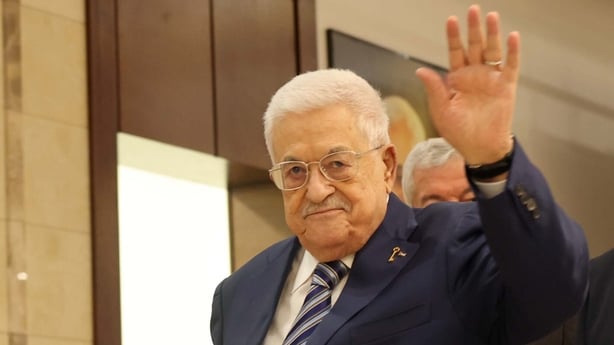
Palestinian president Mahmoud Abbas pledged to press ahead with reforms to the Palestinian Authority at a gathering of his Fatah party today, saying he was also prepared to hold long-delayed presidential and parliamentary elections.
Fatah kicked off a three-day conference to elect a new central committee, its highest leadership body, for the first time in 10 years as it faces existential challenges in the wake of the Gaza war.
"We renew our full commitment to continuing work on implementing all the reform measures we pledged," Mr Abbas said in an address, also vowing fresh elections, without providing a timeline.
Noting the decades-long Israeli occupation of the Palestinian territories, the 90-year-old veteran leader said holding the gathering "on our homeland's soil confirms our determination to continue on the democratic path".
Mr Abbas was unanimously re-elected as the leader of the Fatah movement, according to the Palestinian news agency WAFA.
His re-election also ensures that he will continue serving as the head of the party's central committee.
Mr Abbas and the Palestinian Authority are under mounting pressure from the United States, the European Union and Arab states to implement reforms and hold elections, amid widespread accusations of corruption and political stagnation, as well as the body's declining legitimacy among Palestinians.
Spanish Prime Minister Pedro Sanchez sent a video message to the conference on behalf of the international Socialist movement, reiterating the latter's commitment to a two-state solution at a time of "profound difficulty" for the Palestinian people.
The Socialist premier has been an outspoken supporter of the Palestinian cause and critic of Israel's conduct of the war in Gaza, and Spain was among several European countries to formally recognise a Palestinian state in 2024.
"As the Socialist International, we reaffirm our commitment to a just and lasting political solution based on international law and peaceful coexistence," Mr Sanchez said in a prerecorded message played at the conference.
"The two-state solution remains the necessary framework to move forward towards that goal."
