


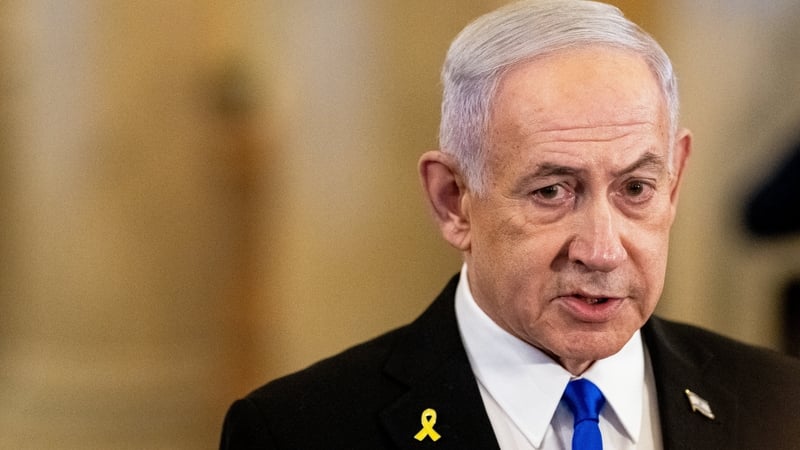
The United Arab Emirates' foreign ministry has denied reports of Israeli Prime Minister Benjamin Netanyahu's visit to the country, adding that any claims regarding an unannounced visits are "baseless".
The Israeli Prime Minister's office said earlier that Mr Netanyahu visited the UAE and met the Emirati president during the war with Iran.
The UAE denied the reports, saying it has not received Mr Netanyahu or any Israeli military delegation in the country.
"Any claims regarding unannounced visits or undisclosed arrangements are entirely unfounded unless officially announced by the relevant authorities in the UAE," it said in a statement.
The Israeli Prime Minister's Office had said that Mr Netanyahu held a "secret" meeting with the president of the UAE.
"During Operation 'Lion's Roar', Prime Minister Benjamin Netanyahu paid a secret visit to the United Arab Emirates, where he met with UAE President Sheikh Mohammed bin Zayed Al Nahyan," his office said in a statement.
The announcement came a day after US ambassador to Israel Mike Huckabee announced that Israel had sent its Iron Dome air defence systems and personnel to operate them to the UAE during the war with Iran.
While stopping short of confirming Mr Huckabee's comments, Mr Netanyahu's office said the visit "marked a historic breakthrough in relations between Israel and the United Arab Emirates".
However, the UAE's denial of the meeting calls into question any potential breakthrough.
Iran targeted the UAE more than any other country during the war, which was sparked by US-Israeli strikes on the Islamic republic at the end of February.
Despite a ceasefire that came into effect last month, the UAE has since reported multiple missile and drone attacks from Iran.
The oil-rich United Arab Emirates is a top US ally in the region and among the Arab nations with official ties to Israel after signing the Abraham Accords during US President Donald Trump's first term in 2020.
Iran says Hormuz control to bring significant revenues
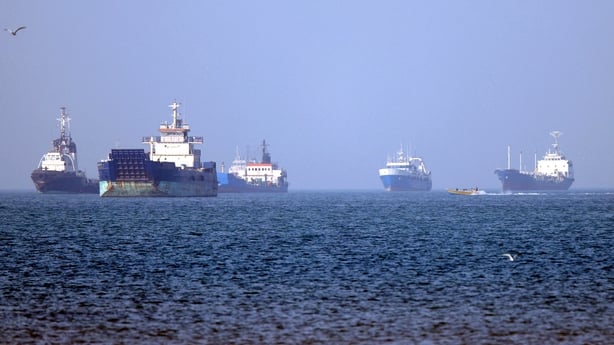
Iran's military spokesman has said that Tehran's control over the Strait of Hormuz could generate "significant" economic revenue and strengthen the country's international position.
Iran has largely blocked shipping through the strait since the outbreak of war with the United States and Israel on 28 February.
In peacetime, the route accounts for roughly a fifth of global oil and liquefied natural gas shipments, along with other key commodities.
Iran's grip over the waterway has rattled global markets and given Tehran significant leverage, while the United States has imposed its own naval blockade on Iranian ports despite a fragile ceasefire in place since 8 April.
"Our oversight of the Strait of Hormuz will generate significant economic revenues for our country - potentially even doubling our oil income - and will strengthen our influence on the international stage," military spokesman Mohammad Akraminia said, according to ISNA news agency.
He added that the western part of the strait was controlled by the naval forces of the Revolutionary Guards, while the eastern section was overseen by the Iranian navy.
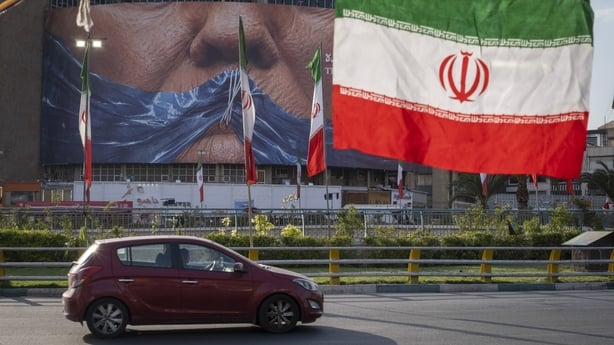
Iran's control over the strait remains one of the key sticking points in negotiations with the United States, which have so far failed to produce a breakthrough.
Ebrahim Azizi, head of the Iranian parliament's national security commission, said his committee had finalised a plan to manage the waterway.
"The Islamic Republic of Iran intends to use this strategic position as a lever of power through strategic management of the Strait of Hormuz," he said, according to state television.
Last month, Iranian deputy speaker of parliament Hamidreza Hajibabaei said Tehran had received its first revenues from tolls imposed on vessels crossing the strait.
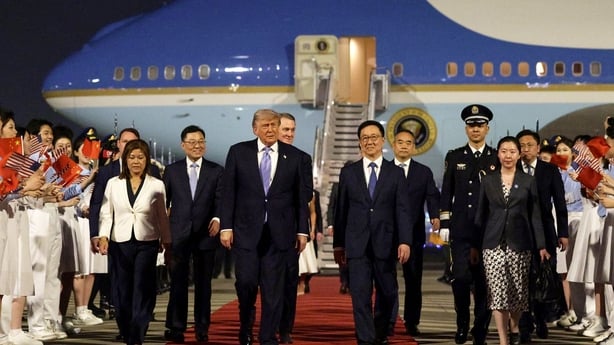
The Trump administration said yesterday that senior US and Chinese officials had agreed last month that no country should be able to charge tolls on traffic through the region, in an effort to project consensus on the issue ahead of the summit.
China, a major buyer of Iranian oil that maintains close ties with Tehran, did not dispute that account.
Earlier, a Chinese supertanker carrying 2 million barrels of Iraqi crude sailed through the Strait of Hormuz, ship-tracking data showed, marking the third known passage by a Chinese oil tanker through the channel since the US and Israel launched strikes on Iran on 28 February.
Other countries are exploring shipping arrangements similar to Tehran's deals with Iraq and Pakistan, sources said, potentially entrenching Tehran's control of the waterway through which fertilisers, petrochemicals and other bulk commodities vital to global supply chains normally flow.
Trump says he doesn't need Xi's help on Iran
Vance says US making progress in Iran talks
US Vice President JD Vance said earlier he believes progress is being made in negotiations with Iran to end hostilities, after President Donald Trump rejected Tehran's latest proposal as unacceptable.
"I think that we are making progress. The fundamental question is do we make enough progress that we satisfy the President's red line?" Mr Vance told reporters at the White House.
"And the red line is very simple. He needs to feel confident that we put a number of protections in place such that Iran will never have a nuclear weapon."
As the costs of the war mount, Mr Trump said that Americans' financial struggles had no influence on his thinking on the Iran war.
The US Labor Department said that US consumer inflation continued to accelerate in April, with the annual rate posting its largest gain in three years.
The data showed food prices surged, while rental costs and airfares also climbed.
Asked by a reporter to what extent Americans’ economic pain was motivating him to strike a deal, Mr Trump said, "Not even a little bit."
"The only thing that matters, when I’m talking about Iran, they can’t have a nuclear weapon," Mr Trump said before leaving the White House for his trip to China.
"I don't think about Americans’ financial situation. I don't think about anybody. I think about one thing: We cannot let Iran have a nuclear weapon. That's all. That's the only thing that motivates me," he added.
The remarks are likely to draw scrutiny from critics as cost-of-living concerns remain a top issue for voters ahead of the November midterm elections.
Brent crude oil futures extended gains, climbing to more than $107 (€91.15) a barrel, as the deadlock left the Strait of Hormuz largely closed.
Read more: What does the Trump Xi summit mean for the rest of us?
US Central Command said the aircraft carrier Abraham Lincoln was in the Arabian Sea enforcing the US blockade, where it had redirected 65 commercial vessels and disabled four others.
The Pentagon put the cost of the war at $29 billion so far, an increase of $4 billion from an estimate provided late last month.
An official told politicians the new cost included updated repair and replacement of equipment and operational costs.
Surveys show the war is unpopular with US voters less than six months before nationwide elections that will determine whether Mr Trump's Republican Party retains control of Congress.
Two out of three Americans, including one in three Republicans and almost all Democrats, think Mr Trump has not clearly explained why the country has gone to war, according to a Reuters/Ipsos poll completed on Monday.
Iranian officials, meanwhile, remained defiant.
A Fars news agency report cited an Islamic Revolutionary Guard Corps official as saying Iran had expanded its definition of the Strait of Hormuz into a zone stretching from the coast of the city of Jask in the east to Siri Island in the west.
In Tehran, the Guards held drills "centred on preparation to confront the enemy", state TV reported.
