


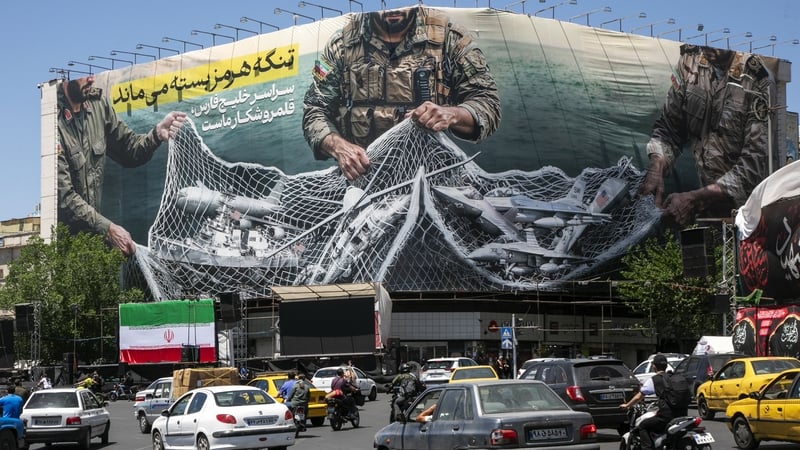
Iran has questioned the seriousness of American diplomacy in the wake of renewed naval clashes in the Gulf, while keeping Washington waiting for a response to its latest negotiating position.
US President Donald Trump said yesterday that he was expecting Iran's response to Washington's latest proposal for a deal to extend a fragile truce and launch peace talks - "supposedly tonight".
But if Iran did send Pakistani mediators a response, there was no public sign of it.
Iran's Foreign Minister Abbas Araghchi called into question the reliability of the US leadership in a call with his Turkish counterpart.
"The recent escalation of tensions by American forces in the Persian Gulf and their numerous actions in violating the ceasefire have added to suspicions about the motivation and seriousness of the American side in the path of diplomacy," he said, according to an Iranian account of the call published by the ISNA news agency.
Iran's UN envoy Amir Saeed Irvani also accused the United States of violating the ceasefire with the attacks on the Iranian tankers, in a letter to the UN secretary-general and Security Council.
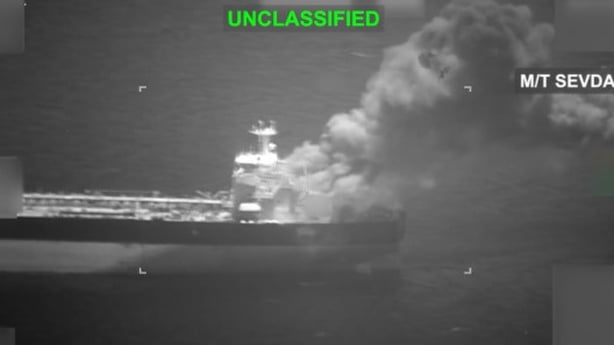
A US fighter jet fired on and disabled two Iranian-flagged tankers yesterday that the US accused of challenging its naval blockade of Iran's ports.
US Central Command said an F/A-18 Super Hornet used precision munitions against the vessels in the Gulf of Oman, the gateway to the vital Strait of Hormuz, to prevent them from continuing to Iran.
An Iranian military official told local media the country's navy had responded "to American terrorism with strikes" and that "the clashes have now ceased".
The latest incident came after a previous flare-up overnight Thursday to Friday in the Strait of Hormuz, a vital international sea lane that Iran is seeking to control to extract tolls from foreign vessels and wield economic leverage over the US and its allies.
Clashes extended beyond the waterway.
The UAE said its air defences engaged with two ballistic missiles and three drones from Iran yesterday, with three people sustaining moderate injuries.
US Secretary of State Marco Rubio has reiterated that it was "unacceptable" for Tehran to control the key oil route.
The US has sent Iran, via Pakistani mediators, a proposal to extend the truce in the Gulf to allow for talks on a final settlement of the conflict launched 10 weeks ago with US-Israeli strikes on Iran.
Iran's foreign ministry spokesperson Esmaeil Baqaei said the proposal was still "under review", according to ISNA.
Watch: Iran questions seriousness of US diplomacy after attack
We need your consent to load this rte-player contentWe use rte-player to manage extra content that can set cookies on your device and collect data about your activity. Please review their details and accept them to load the content.Manage Preferences
Qatar's prime minister Sheikh Mohammed bin Abdulrahman Al Thani met US Vice President JD Vance in Washington yesterday and discussed the Pakistani-led efforts to broker a permanent peace.
Iran has attacked sites in Qatar during the war, pointing to the wealthy emirate's role as the host of a major US air base.
A US intelligence assessment has indicated that Iran would not suffer severe economic pressure from a US blockade of Iranian ports for about another four months, according to a US official familiar with the matter, suggesting that US leverage over Iran remains limited as the two sides seek to end a conflict that has been unpopular with US voters.
The Washington Post first reported the assessment.
A senior intelligence official called the "claims" about the CIA analysis "false", saying the blockade "is inflicting real, compounding damage - severing trade, crushing revenue, and accelerating systemic economic collapse".
It comes as German Chancellor Friedrich Merz said Europe wanted to work to keep the NATO alliance functioning, despite differences with the United States that the Iran war has exposed.
Already high after US criticism of Europe over defence spending and issues like immigration policy, the tensions have increased after Germany and other European countries refused to support the US and Israeli war against Iran that began at the end of February.
"We are really willing to keep this alliance alive for the future," Mr Merz said at a press conference with Swedish Prime Minister Ulf Kristersson.
He also said Sweden and Finland had strengthened the European pillar of the alliance.
"We know that there are some differences. We know that we are seeing challenges, all of us, but our final goal is to bring this conflict to an end and to guarantee that Iran is not able to produce nuclear weapons," Mr Merz said.
"And this goal is a common goal between America and Europe."
Oil slick spreading near Iran's Kharg Island
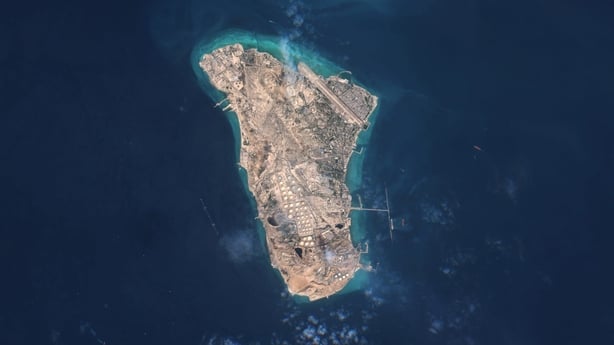
Meanwhile, satellite images have shown that an oil slick is spreading off the coast of Iran's Kharg Island, a key oil export terminal for the Islamic republic.
It was not immediately clear what had caused the apparent spill, which was off the island's west coast and appeared to cover more than 52sq/km, according to global monitor Orbital EOS.
A UK-based non-governmental organisation, the Conflict and Environment Observatory, told AFP that the slick was "much reduced" today and may have been caused by leaking oil infrastructure.
Kharg Island is at the heart of Iran's oil export industry, a lynchpin of its economy, and lies in the Gulf far north of the narrow Strait of Hormuz.
Following the start of the war on 28 February, Iran largely closed the Strait of Hormuz, throwing global markets into turmoil and driving up oil prices.
The US later imposed its own blockade of Iranian ports in response.
On Sunday, Mr Trump announced a US naval operation designed to reopen the waterway to commercial shipping, only to abandon it on Tuesday in favour of a return to negotiations.
Saudi sources told AFP the kingdom had refused permission for the US military to use its bases and airspace for the operation, with one saying Riyadh "felt it would just escalate the situation and would not work".
A parallel ceasefire in Lebanon is also under strain.
Lebanon's health ministry has condemned a "barbaric" Israeli attack which targeted a man and a 12-year-old girl in the southern part of the country, despite the ceasefire agreement in effect since 17 April.
