


Israel carried out strikes across Lebanon killing at least eight people in the south, according to authorities, with raids also targeting a highway not far from Beirut.
The attacks were some of the most intense since the start of a three-week-old ceasefire between Israel and Iran-backed Hezbollah that has done little to halt daily exchanges of fire, mostly in southern Lebanon.
Hezbollah said it had targeted troops in northern Israel with drones on at least two occasions in response to the continued strikes.
The Israeli military said "several" explosive drones were launched into Israeli territory, with one army reservist severely wounded and two others moderately injured in one of the attacks.
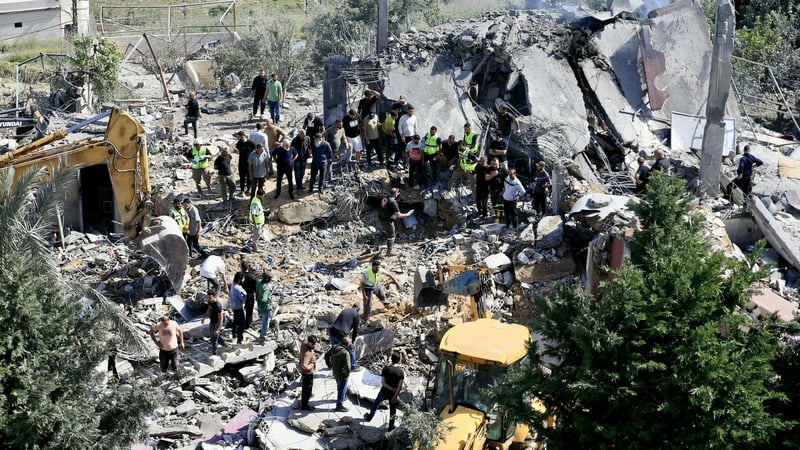
Lebanon's state-run National News Agency (NNA) reported a series of Israeli strikes across the south, including one on the town of Saksakiyeh.
The health ministry said that raid "resulted in an initial toll of seven martyrs, including a girl, and 15 wounded, including three children".
The Israeli military said it struck "Hezbollah terrorists operating from within a structure used for military purposes" in Saksakiyeh.
It added it was "aware of reports regarding harm to uninvolved civilians in the structure in which the terrorists were struck".
"The details of the incident are under review," it added.
Watch: Rescuers search through rubble at site of an Israeli strike in Saksakiyeh, southern Lebanon
The health ministry reported that another Israeli strike on a motorbike in the city of Nabatieh hit "a Syrian national and his 12-year-old daughter".
"After they managed to move away from the site of the first strike, the drone attacked a second time", killing the father, the ministry said.
It added the drone then targeted the girl "directly for a third time".
The girl was undergoing life-saving surgery, the ministry said.
Lebanon's health ministry condemned the "barbaric" attack, adding
Israel's military had called on residents of nine villages to evacuate, saying it would act "forcefully" against Hezbollah, but neither of the two locations of the fatal strikes were included in the warnings.
NNA also reported that the "Israeli enemy launched two strikes on the Saadiyat highway", referring to a location around 20km south of Beirut.
It later reported a third strike nearby.
Under the terms of the ceasefire released by Washington, Israel reserves the right to act against "planned, imminent or ongoing attacks".
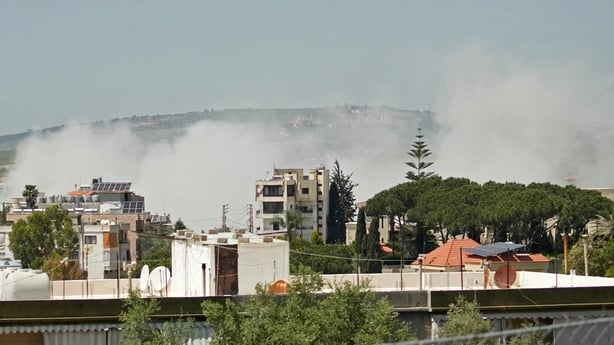
Earlier, its military said it had struck more than 85 Hezbollah infrastructure sites in the past 24 hours.
Israeli troops are also operating inside an Israeli-declared "yellow line", running around 10km inside Lebanon along the border, where residents have been warned not to return.
Hezbollah politician Hassan Fadlallah warned of "a new phase, in which the resistance (Hezbollah) will not accept a return to pre-March 2".
Hezbollah drew Lebanon into the Middle East conflict on 2 March when it launched rockets at Israel to avenge the killing of Iran's supreme leader in US-Israeli strikes.
Even before then, Israel had carried out regular strikes targeting the group - accusing it of seeking to rearm - in spite of a 2024 ceasefire intended to end the last war between the foes.
Until March, Hezbollah had largely refrained from firing back.
"When it attacks our villages and suburbs, the enemy must expect a response and this is what the resistance is doing," Mr Fadlallah said, alluding to an Israeli attack this week on Beirut's southern suburbs that it said killed a Hezbollah commander.
In addition to its drone attack in northern Israel, Hezbollah also claimed several attacks on Israeli military targets inside Lebanon using rockets and drones.
Lebanese and Israeli representatives are set to hold a fresh round of direct talks in Washington next week.
A first meeting was held days before US President Donald Trump announced the ceasefire in Lebanon and the second round as he announced a three-week extension.
Mr Fadlallah said the meetings amounted to a "path of concessions", reiterating his party's call for the government to withdraw in favour of indirect talks.
Israeli attacks on Lebanon killed nearly 2,800 people since 2 March, including dozens since the truce went into force according to Lebanese authorities.
EU official urges increased humanitarian access in south Lebanon
Meanwhile, European Union crisis management chief Hadja Lahbib urged increased humanitarian access in south Lebanon.
"Humanitarian aid is ready, but too often it cannot reach those who need it most," Ms Lahbib told a news conference on the second day of her visit to Lebanon, ahead of an expected EU aid delivery.
"South of the Litani River, access is still severely restricted due to evacuation orders and Israeli military activity. And this includes 55 villages below the so-called yellow line," Ms Lahbib said.
The Litani River runs around 30km from the border, an area where many of the attacks since the ceasefire have taken place.
She noted that key infrastructure including bridges over the Litani have been destroyed "and that means longer routes, people waiting days and days for help".
Ms Lahbib said: "Even north of the Litani River, where some of these constraints have eased, it is still not enough.
"We need humanitarian access in full respect of international humanitarian law. Aid cannot save lives if it cannot reach people."
She said that since the start of the war, the European Union had announced some €100m in new humanitarian support for Lebanon and had sent six planes carrying aid, with a seventh due to arrive in the coming days.
