
Just over half of the 2,706 complaints against gardaí received by Fiosrú, the office of the police ombudsman, were deemed admissible.
Almost one third (27%) related to dissatisfaction with garda investigations, with complaints about roads policing accounting for 15%. Around 300 (305) related to concerns during arrests.
Fiosrú commenced 30 investigations following mandatory garda referrals of serious incidents where the act or omission of a garda may have resulted in the death of, or serious harm to, a person.
Thirteen of these related to fatalities, but Fiosrú stressed that the referral does not necessarily mean gardaí have been accused of wrongdoing.
Six referrals related to an alleged sexual assault or abuse of power by a garda.
Fiosrú also said it sent 61 investigation files to the Director of Public Prosecutions (DPP) because it believed a garda had, or may have, committed a criminal offence.
However, the DPP directed a prosecution in just 15 of those cases, less than 25%.
The figures are contained in Fiosrú's annual report, which covers the last nine months of last year.
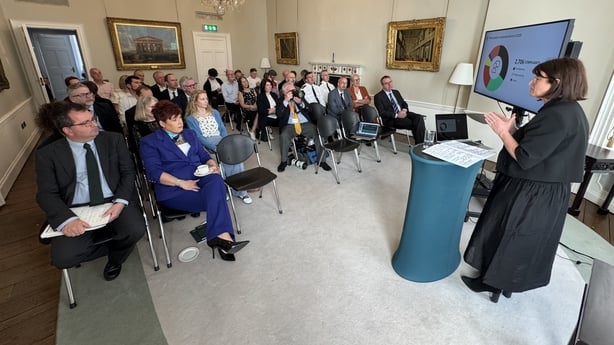
Fiosrú also said it has also changed its structures and procedures to make its investigations more efficient.
A week after a victim, who endured repeated and sustained harassment and violence by serial abuser former garda Paul Moody, said she was met with silence when she complained to Fiosrú.
Ombudsman Emily Logan said the organisation has now established a dedicated Specialist Services Unit to investigate complaints involving domestic, sexual and gender based violence.
It is one of three new initiatives introduced, along with a rapid response unit to speed up response times in criminal investigations and a Digital Investigations Unit to recover and analyse evidence from mobile phones, CCTV and body worn cameras.
Fiosrú said it received 2,706 complaints about gardaí last year, almost half of which (47%) were deemed inadmissible.
- 27% were about the quality or timeliness of garda investigations.
- 15% related to roads policing, for example where gardaí requested a person to pull over.
- 12% were about arrests, by the person detained or someone who witnessed the arrest.
- 11% related to how gardaí handled a call.
- 10% were about community policing.
- 65 complaints related to garda involvement in a domestic incident, while 41 involved issues of mental health.
Half of all the admissible complaints, 717, were referred back to An Garda Síochána to resolve and included discourtesy, service level or performance management issues.
Ms Logan said this caused her "to be optimistic that the proportionate handling of less serious complaints will ensure the swiftest and most appropriate outcomes".
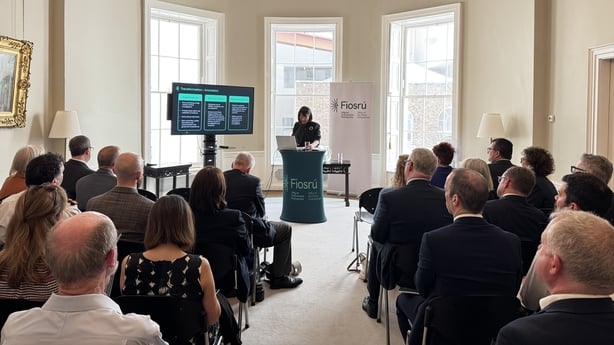
Of the remaining 723 complaints sent for Fiosrú investigation, a third (32%) related to abuse of authority, followed by allegations of a criminal offence (24%), and neglect of duty (21%).
The majority of complaints were about gardaí in Dublin (1,098), followed by Carlow/ Kildare (141), Wexford/Wicklow (133), and Meath/Westmeath (117).
No sanctions over failure to investigate Moody
Fiosrú said that no one has been disciplined or sanctioned for their failure to investigate the serial abuser and former garda Paul Moody.
Ms Logan said there was not only one person that dealt with the victim's complaint and that those involved had since left the organisation.
She also said that Fiosrú's systems had since changed and new investigation units had been established, including one to handle complaints of domestic, gender and sexual violence.
Paul Moody's first victim said her complaint to the ombudsman was met with silence and nothing was done for five years.
She also said if the ombudsman had acted, Moody's second victim, Nicola Hanney, could have been spared.
Ms Logan said there was not any one individual that did anything in that case that would require disciplinary action.
She added that she was not satisfied that the victim did not feel listened to and she took responsibility for that.