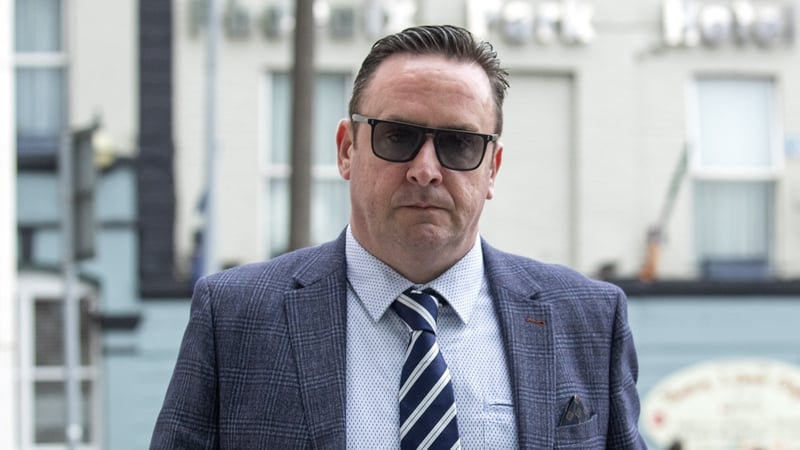

Police Ombudsman Emily Logan has said the treatment of the first victim of former garda and violent abuser Paul Moody when a 2017 complaint against him was not acted on was "wholly unacceptable".
She said the experience of not being listened to or not being responded to was "not acceptable whatsoever", adding a number of key improvements were now being looked at to prevent a similar incident happening again.
The victim told the Circuit Criminal Court this week that had GSOC, which is now Fiosrú, acted when she made the complaint in 2017 then Moody could have been stopped from abusing a subsequent victim, Nicola Hanney.
The woman said she faced "a wall of silence" from GSOC, which she said did nothing about her case.
She described this as "neglect" and "a betrayal of trust".
Fiosrú, the Office of the Police Ombudsman, replaced the Garda Síochána Ombudsman Commission last year.
Watch: Police Ombudsman says she has written to Paul Moody's first victim
Speaking on RTÉ's This Week, Ms Logan said: "It was unacceptable.
"There's no question about that and while I don't personally have experience of what it feels like to be that person, I completely understand how that person would feel very let down by that experience."
She has now written to the victim to introduce herself and offer a meeting.
"I'm very conscious that there is somebody out there who has had an absolutely terrible number of years, not to mind a difficult and traumatic time this week," she said.
"I want to show that individual my respect for their inherent dignity as a human being," she added.
Ms Logan said any meeting could happen at a time and place of their choosing, should she feel able to do that.
She said she had not yet received a response.
Ms Logan said Fiosrú, the new statutory body which will publish its first annual report next week some nine months after its establishment, has introduced a number of initiatives to mitigate against the risk of this ever happening again.
She said: "It is not unusual in these circumstances for victims to make a complaint and then retract."
To this end, she said human rights lawyer Noeline Blackwell has been appointed to advise her and Fiosrú as its "external eye and our external critic".
A specialist services unit is being set up with a team of people who have advanced training in this area, she said.
She said the ombudsman's office was also aware of gender responsiveness to make sure there were men and women on that team.
She added Fiosrú is also working with the charity Women's Aid, funding the secondment of a victim support worker.
The ombudsman said this person would have the skills and understanding to work with victims, especially in the early stages of reporting.
"You really need to mitigate the risk that somebody makes a complaint but then they get a terrible fright or sometimes feel very traumatised by the very action of even doing that," she said.
Ms Logan said high level trauma-informed practice training was also being undertaken at all levels of the organisation.
Yves Sakila case
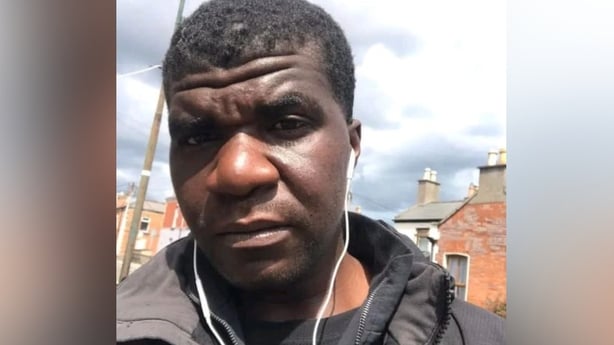
The Police Ombudsman said Fiosrú's job was to focus on any garda contact or interaction with Yves Sakila, who died last Friday.
The 35-year-old Congolese man died on 15 May after he was restrained by security personnel following an alleged shoplifting incident.
Ms Logan said the primary response to any incident like this would be a police investigation.
Offering her condolences to Mr Sakila's family and the Congolese community, she said a referral was made to her office on Friday evening.
She said her team had gone to Henry Street to preserve evidence and look at CCTV and body-worn camera evidence and "any digital forensic evidence that's available".
She said a statement was issued by Fiosrú at 10am on 16 May in which the organisation said it was opening an investigation and the team had been briefed on Monday morning.
She said her office was interacting with An Garda Síochána, the coroner and the Office of the State Pathologist.
She said sometimes early information becomes available, making it clear that Fiosrú does not have primacy in a case.
"You may have very complex underlying issues. It can be medical diagnosis or toxicology which changes that," she said.
Evan Fitzgerald case
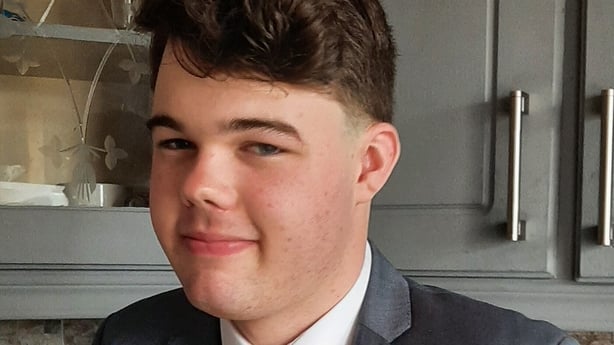
In relation to the case of Evan Fitzgerald, the man who fired shots into the air at a shopping centre in Co Carlow before taking his own life last June, Ms Logan said the investigation is ongoing.
She added it will be concluded quite soon.
Ms Logan said she was aware the first anniversary of Mr Fitzgerald's death at Fairgreen Shopping Centre was approaching and offered her condolences to his family.
The ombudsman said the case was initially referred to the GSOC, now Fiosrú, by the local chief superintendent and an investigation was opened immediately.
There had also been a referral under the category of death and serious harm whereby Fiosrú is obliged by law to immediately open an investigation.
"The purpose of it is to give the organisation greater insight into what's happening in the gardaí for things that may not come through the complaints pathway or may not come through a referral," she said.
There was no legal obligation for the organisation to investigate that, she added.
Shane O'Farrell
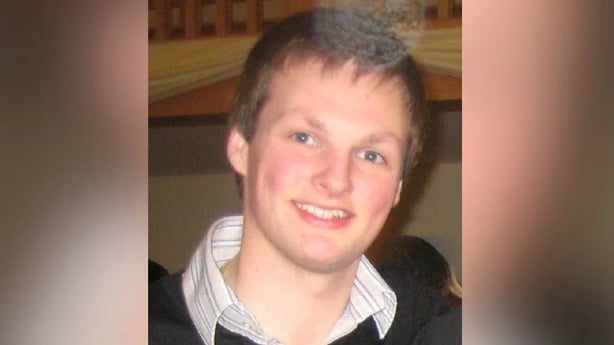
Ms Logan was asked about the case of Shane O'Farrell, who was killed in a hit- and-run incident in August 2011.
The 23-year-old law graduate was knocked down and killed by a car driven by Zigimantas Gridziuska who should have been in jail at the time.
His family has said they would like to get access to the GSOC report completed in 2018 into their complaints about the case, saying this would be in the public interest.
Ms Logan said she was very conscious that the 15th anniversary of Mr O'Farrell's death was approaching this August.
She said: "People need to appreciate that there are now proceedings initiated by the O'Farrell family that are before the High Court, so it would be highly inappropriate for me to engage in conversation about that."
Last year, the Minister for Justice issued a Government apology to the O'Farrell family and promised reforms.
Gridziuska was a repeat criminal and had committed a series of offences while on bail.
A year before the hit-and-run, he had been given a prison sentence which he did not serve.
Following the apology, Minister Jim O'Callaghan commissioned a report into the granting of bail, which he said would assist in considering how the justice system might better respond to offenders who persistently break laws.
We need your consent to load this rte-player contentWe use rte-player to manage extra content that can set cookies on your device and collect data about your activity. Please review their details and accept them to load the content.Manage Preferences
Difficult to attract staff
Ms Logan said it was not her experience that there was a hostile relationship between An Garda Síochána and Fiosrú.
She said cooperation and a strong relationship were essential.
Asked about a suggestion from the Garda Representative Association that perhaps members under investigation could be assigned to other duties away from the public, rather than being suspended while an investigation takes place, she said this was a matter for those in authority.
She added that those kind of issues should be discussed at a political level.
Ms Logan said it had been difficult for the organisation to attract staff.
It now had a staff count of 183 members, with funding for 208 "but like everywhere the labour market is difficult".
She said more was being done to encourage people into the organisation, which was a tough place to work.
But, she said, there were plenty of opportunities for training, learning and development including through a University of Limerick diploma course in human rights and law of evidence which would help investigators to increase their skills and increase confidence in the organisation.