
A body representing the English language school sector has said that it is deeply concerned by the situation of international students owed money by businesses operating in Ireland.
English Education Ireland (EEI), which represents 62 businesses in the sector, said the revelations were "not representative of the standards upheld by our members".
"The vast majority of providers in this sector operate to high standards, hold student fees correctly, and process refunds promptly," it said.
Yesterday, RTÉ News reported claims that dozens of prospective English language students in developing countries had paid significant sums of money to some private colleges here.
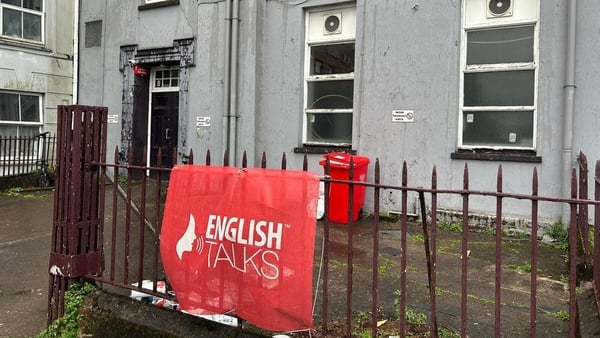
It highlighted the cases of some students owed money by NED College in Limerick and English Talks in Cork. EEI does not represent either of these companies and they are not members of its organisation.
EEI said the situation raised "serious questions that must be addressed".
It said that earlier this year it wrote to the Minister for Justice seeking clarity on the number of compliance inspections carried out in the English language education sector over the past five years, the nature of any non-compliance identified, and whether the department considered any findings to be systemic.
"We have yet to receive a satisfactory response. [Yesterday's] report makes those questions more urgent, not less," it said in a statement.
The Department of Justice has been contacted for comment.
EEI said the rules governing escrow arrangements were clear and had recently been strengthened. It questioned why sanctions were not being applied where colleges were found to be failing in their obligations.
"Providers are required to hold advance fee payments in a regulated account, and failure to comply carries the explicit sanction of removal from the ILEP. That sanction exists. The question is why it is not being applied," it said.
"Where providers are demonstrably failing to meet their escrow obligations, the Department has the power to act and should do so without delay", it said.
EEI said it welcomed the regulation of the sector and looked forward to the full implementation of a new quality assurance framework called TrustEd Ireland.
"TrustEd has a statutory footing and that is to be welcomed. But questions remain as to how compliance will be monitored and policed once TrustEd is fully established. Statutory powers are only meaningful if they are used.
"We would urge Government to set out clearly how enforcement will operate under the new regime," the body said.
The Irish Council for International Students (ICOS) has also expressed concern at how the new quality assurance system will work. It feels that students may be more vulnerable to exploitation under the new system, because it appears to lack robust independent oversight.
Under TrustEd, the Department of Justice will no longer be in charge of monitoring the sector.
EEI said all of its members held quality accreditation and were committed to the highest standards of student welfare, financial transparency and educational excellence.
Highlighting what it said was a student welfare issue, EEI said lengthy visa processing times meant students from developing countries had significant sums of money locked in escrow for months on end.
"That is not a fair position to put prospective students in. Ireland's reputation as a welcoming destination depends on treating prospective students with fairness and transparency from the very first interaction," the EEI statement concluded.