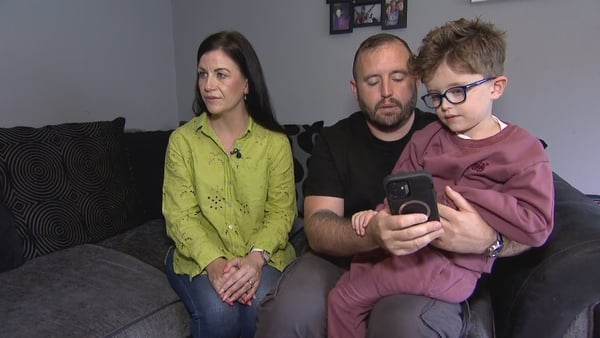

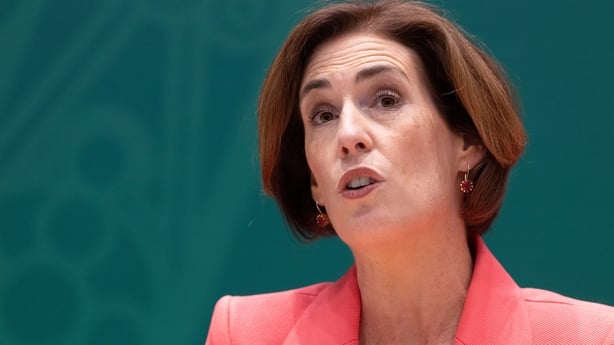
On Thursday morning, just before 9am, Minister for Education and Youth Hildegarde Naughton, to an almost empty Dáil chamber, announced information that special education advocates, journalists, and opposition parties had been requesting for months.
"The NCSE [National Council for Special Education] has verified that by October 1st, 7,860 children and young people notified to them meet the requirements for a special class or a special school place for the 2026/27 school year," she told the handful of TDs present.
"Further children have come forward after that date and this will continue right up until September 2026," she said.
These are all children who do not currently have such a place. We knew that the record number of additional school places being created for next September was not going to be enough.
That was made clear by the Taoiseach and the Secretary general of the department in mid-February. Since then, journalists and politicians had been asking for the actual figure, and on Thursday morning we got it.
The picture became clearer, and the huge shortfall facing the schools sector became apparent.
"Budget 2026 initially provided for 3,000 new places, and there are also over 2,500 places also available through normal annual movement of students from primary to second-level or finishing school," the minister went on to say.
So, there are 7,860 children in need of a special school place for next year - either in a special class or a special school - but there are only 5,500 places available.
That leaves 2,360 children whose needs - under current provisions - will not be met come September. And that does not include the children whose families have contacted the National Council for Special Education to request a special place since 1 October. That number is likely to be substantial.
It was an unusual way to release such important news; unexpectedly, in a chamber with just a handful of TDs present. Labour Spokesperson on Education Eoghan Kenny, whose question the minister was answering, was as surprised as anyone else.
A total of 2,360 children and rising in need of a special school place. That is a significant number.
Additional funding
"So the funding approved by Government earlier this week will allow to provide for further new special places and special school places over and above the 3,000 new places already budgeted for," Minister Naughton continued.
The additional funding she was referring to is €646 million, approved by the Government on Tuesday, news of which also got somewhat lost this week.
Announced by Minister for Public Expenditure and Reform Jack Chambers during a busy Spring Economic Forecast briefing, not surprisingly it was overshadowed by news of the Government’s €9 billion surplus.
"Today we are choosing to allocate additional funding to Education and Youth," Minister Chambers said.
His use of the word 'choose' was interesting. It seemed a warning; it's a choice not a given.
The new approach was "a trade-off", he said, in the form of a levy on other Government departments. Those other departments will need to implement reforms and efficiencies to save €446 million.
"We have to reprioritise in the context of education," Mr Chambers said. "It’s a control mechanism to make room for increased investment in the education sector."
Five months in the job, Hildegarde Naughton had made it clear that addressing what she called the structural deficit in the department over several years was a priority for her.
This additional €646 million will be spent on basics; on pay and pensions for teachers, on buses to get children to and from their schools, and on special educational provision, including the additional demand that was quantified by Minister Naughton in the Dáil on Thursday.
Of those 7,860 additional children and young people in need of special places, 75% are already enrolled in schools, attending mainstream classes for instance because no special place is available.
Approximately 7,000 have a diagnosis of autism. "So the focus continues to be on [creating] new places for children with autism," the minister said.
Special education is the biggest but not the only pressing demand in this department where provision is demand-led.
Those who watch education note there is no additional capital funding; no extra money for the hundreds of dilapidated schools queued on school building lists, or to build or renovate for all those extra special classrooms that are being sanctioned, including the new ones that we now know are needed.
What they are asking now is, will this additional funding be enough?