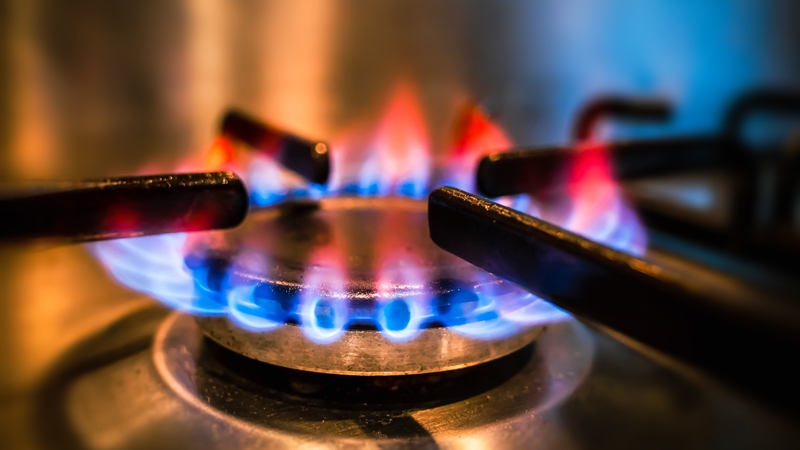

Sinn Féin leader Mary Lou McDonald has told the Dáil that the energy crisis is not easing, it is intensifying.
She said the 750,000 homes who use home heating oil have seen their bills double.
She contended that the Government's message is that things will get worse and it will not look at the issue of supports again until October.
"And now families face rising school transport costs and the return of Junior and Leaving Cert fees. That's what you're bringing to people's doors.
"You scrapped energy credits. You refused even to cut carbon tax on home heating oil when people needed relief most," she said.
The Taoiseach said the war in the Middle East has created a significant shock in terms of energy supply and every country in the world is grappling with this reality.
Micheál Martin said that it makes sense that after a €750 million intervention, the Government would keep things under review, but it was now looking at more permanent ways of easing pressure on families.
He insisted that Government did not wait to intervene to help people.
"Over the last number of years, we brought in very significant schemes that permanently reduced the cost of living for people," he said.
Separately, the UN's Food and Agriculture Organization has warned that spikes in food price inflation later in the year could result in a global agri-food disaster if ships cannot move through the Strait of Hormuz.
Speaking on RTÉ's Today with David McCullagh, Dr Oliver Moore from the Centre for Cooperative Studies in University College Cork said that in Ireland the focus on food for export and the lack of policies to encourage local food production has increased risks of food price spikes.
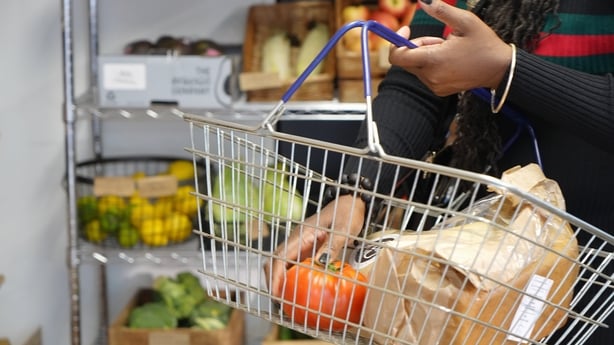
"We're especially exposed because we're an island off the north-west coast of Europe and we've really focused on agri-food exports.
"We've kind of let the domestic ball slip really. We're losing vegetable growers all the time.
"We don't even have targets in Food Vision 2030 for what our domestic market could be and could grow to. We have exported €19 billion worth of food last year, but we are importing about €12 billion."
Dr Moore said that half a million people in Ireland are already in food poverty and that families could be spending up to one third of their incomes to buy healthy food.
He called for more emphasis on local food production and said that we could consider a basic income scheme similar to what has been done for artists and musicians.
Speaking on the same programme, Dr Peter Alexander, Senior Lecturer in Global Food Security at the University of Edinburgh said the current crisis is because the global food system is dependent on inorganic fertiliser produced from natural gas.
"A large percentage of it passes through the Straits of Hormuz, something like 30%. That has potential to really disrupt food production, particularly if farmers choose to fertilise less and not plant crops.
"And that has the potential to lock in future reductions in the supply of food, which we in the UK and Ireland would experience primarily, in my view, through higher food prices, greater food price inflation."
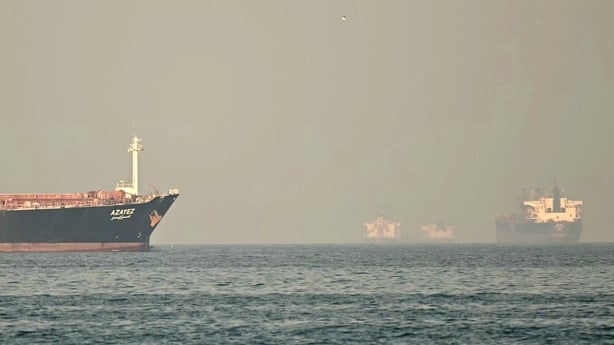
In the rest of the world, people on lower incomes would be less able to afford the food that they need for healthy and nutritious diets with the sort of consequences that flow from that, he said.
Dr Alexander said that the three main staples - corn, wheat and rice - have seen a four-fold increase in yields in the green revolution since the 1960s but that this has been based largely on the use of fertiliser.
"And therefore, they're tied to energy prices and they're tied to the supply chain that we know so well, both from the war in Ukraine and the war in Iran."
He said that in high income countries the consequence would be higher prices rather than shortages.
Dr Moore said that we have a fuel crisis and a fertiliser crisis at the same time, together with just-in-time delivery systems into supermarkets, as well as supermarket concentration in Ireland.
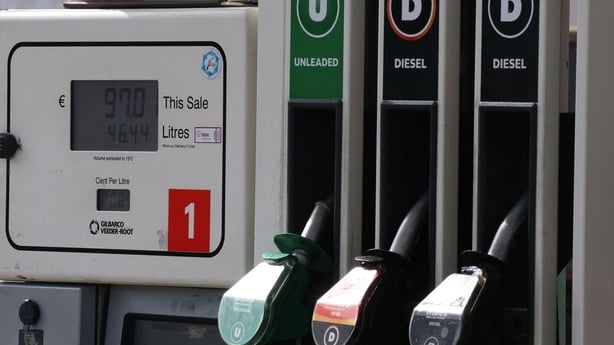
He said that much of the storage for food now happens during transport in lorries and ships, and that transport storage is dependent on fossil fuels.
"There was all the tariffs that Trump landed on the world as well. So, there's a cascade of crises landing at the one time. And we don't even have targets for growing our domestic food production."
Dr Moore pointed out that low local food prices are a problem for local agricultural viability.
"We always had a poor local food provisioning system because we were an extractive colony, but now we're an exporting economy.
"So, we've decided to have a very low cost approach to food, which destroys the farming base, because if it is that cheap, farmers can't survive."
However, he said that there are alternative food models available.
"If you look at Dulhallow Food Services, for example, they provide meals on wheels and school meals to 4,000 people every day and local farmers feed into that.
"So, there's markets that can be created and generated through public provisioning, which could be done well, and then farmers could have multiple routes to market."
Dr Moore said that we need to break away from reliance on the supermarket system and that by leaving ourselves dependent on global trade, we have left ourselves exposed.
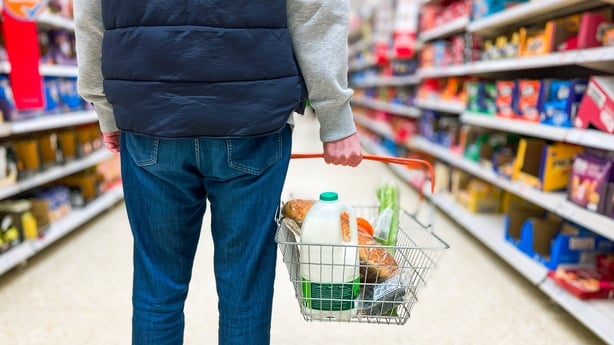
"So, we need to build in food sovereignty, proper resilience and people participation in the food system and start to grow our producer base because it is getting dangerously, dangerously low," he said.
Asked about food security rankings where Ireland scores highly, Dr Moore said that those rankings were based on the security of global trade. That has now been eroded by US tarriffs and the closure of the Straits of Hormuz.
He said that those measures of food security were not based on the ability to grow food.
Food production versus balancing weather events
Dr Alexander said that we need to be cautious about producing a lot of local food because production could be exposed to local weather events, and that the best model is a balance between local and global.
Dr Moore said that we are far too dependent on global supplies for food and that there was a historical context to this.
"Our colonial history - we just ended up being a place that stuff was taken from and sent around the world. And we have kept that system going. We export nine times more meat and milk than we could ever consume.
"We don't have a diversified agri-food system in Ireland. We're obviously still going to keep trading to some extent. It's just that we're not actually building in proper resilience."
Dr Moore said he believed that Bord Bia could do more to encourage local food production.
"We need housing, fuel, and food sovereignty these days, rather than just hoping it's going to work out well with the markets. We are low on infrastructure, but high on income," he said.
Read more
Lactalis warns of higher prices as Iran war raises costs
Supply chains will take days to return to normal, says NECG
UK food inflation heading towards 10% due to Iran war, food industry says