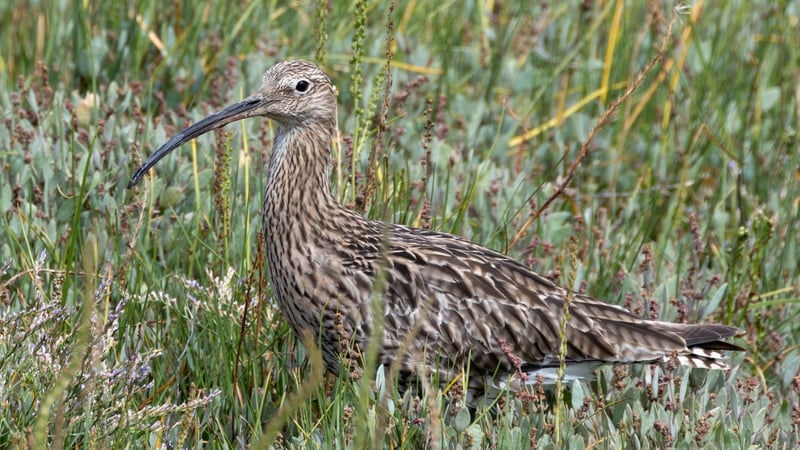

A conservation measure aimed at reversing the decline in the curlew population has yielded a breakthrough as the first recorded instance of a 'headstarted' curlew that has established a breeding territory has been identified.
As part of the 'headstarting' conservation measure, curlew eggs are taken from the wild, protected and reared in a secure and safe environment until fledglings are ready to be released into the wild.
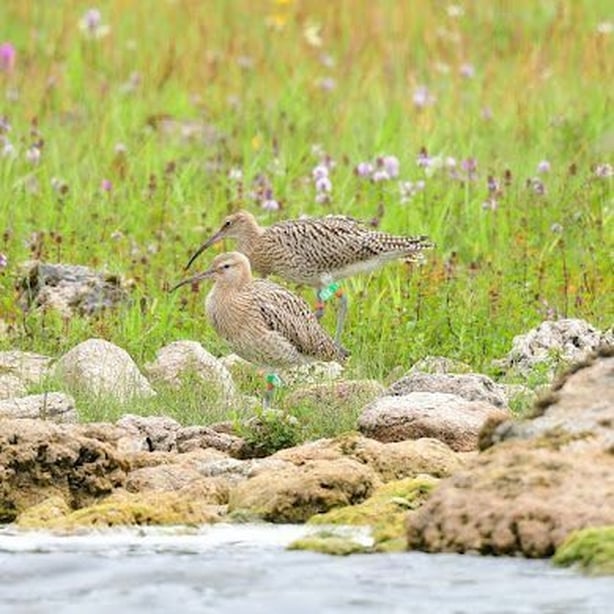
A curlew released in Co Leitrim two years ago has established a breeding territory in Sliabh Beagh, Co Fermanagh, marking the first recorded instance of a 'headstarted' bird returning to establish a breeding territory in Ireland.
The Department of Agriculture, Food and the Marine said the curlew, bred as part of a conservation programme was identified with a mate less than 50km from where it was released.

While the curlew's call was once synonymous with the Irish landscape, population numbers have declined by 98% since the 1980s, leaving the species on the brink of extinction.
The decline has been attributed to changes in landscape and land-use.
As with many wading birds, curlews nest on the ground, leaving eggs and young chicks vulnerable to predators.
In recent years, conservation measures have been introduced through the Breeding Waders European Innovation Partnership - a project funded by the National Parks and Wildlife Service (NPWS) and the Department of Agriculture, Food and the Marine.
Watch: Curlew are a ground-nesting bird which makes them vulnerable to land use change
Minister Agriculture, Food and the Marine Martin Heydon and Minister of State Christopher O'Sullivan welcomed the conservation breakthrough, in an announcement that coincides with World Curlew Day.
Mr O'Sullivan said the milestone proves that the conservation technique can produce birds capable of surviving migration and returning to breed in the wild on the island of Ireland.
He said collaboration, science and innovation were at the heart of the project and commended the partners involved in the discovery including the Sliabh Beagh Curlew Conservation Trust, the Royal Society for the Protection of Birds (RSPB) and the Breeding Waders EIP.
"The curlew is such a special bird, with a distinctive curved beak and an unmistakeable call.
"Until recent decades, they were a common feature of Irish landscapes and the 'cry of the curlew' would have been a familiar sound," he said.
Mr O'Sullivan committed to investing in projects such as the Breeding Waders EIP to help bring the bird "back from the brink of extinction".
Mr Heydon said the conservation milestone was a testament to the work of all involved in the project.
"This is a very positive development for conservation, and we look forward to hearing more from the Breeding Waders EIP as it progresses," he said.
Senior Project Manager of the Breeding Waders EIP Owen Murphy said such milestones are the reason many persevere, in what he described as "the challenging discipline of ground-nesting bird conservation".
"Huge credit goes to our landowners, our project staff and our project partners who working collaboratively, allow such moments to happen.
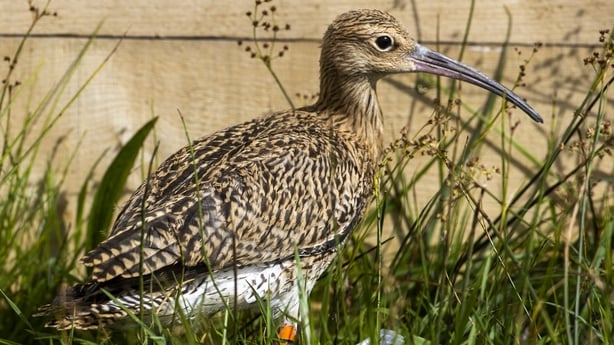
"We all look forward to watching this curlew’s progress as he starts his journey as a breeding adult," Mr Murphy said.
Nest Protection and Headstarting Manager of the Breeding Waders EIP Dónal Beagan said the development was an encouraging first sign.
"This is a really encouraging first sign that headstarting Eurasian Curlew is beginning to have an impact on bolstering our curlew population," Mr Beagan said.
The Breeding Waders EIP initiative is co-funded by the European Commission and the Government under the CAP Strategic Plan.
Both the NPWS and the Department of Agriculture, Food and the Marine fund agri-environmental actions, while the NPWS also funds the operational group’s administrative costs.
That operational group consists of Irish Rural Link in partnership with Michael Martyn Agri-Environment, Irish Wildlife Services, Hen Harrier Project, Atlantic Technological University, University College Dublin, Fota Wildlife Park and Dublin Zoo.