
Garda Commissioner Justin Kelly said he is "ready to go" with plans to drug test serving garda members, and that he expects that the Department of Justice will finalise new regulations soon.
The testing of serving police officers is something that is done in other jurisdictions, including in the PSNI, and had been recommended in the 2020 Garda Inspectorate Report that looked at the threat of corruption within the organisation.
Speaking at a meeting with the Policing and Community Safety Authority (PCSA), the Commissioner said he was keen to get a system implemented as he felt that An Garda Síochána was behind other agencies that have already implemented it.
Assistant Commissioner Jonathan Roberts said that as the organisation is testing new applicants, and is familiar with the process and all that will be needed is the go-ahead and to organise a unit to carry the tests out.
He added that the new regulations will involve both targeted and random testing of members.

Today's meeting with the oversight body had a focus on recommendations made in the 2020 report.
This week the PSCA published its review of the report, which found that of 34 recommendations made, just over half had been implemented or partially implemented.
It said the formation and resourcing of the Garda Anti-Corruption Unit, introduction of policies addressing the abuse of power for sexual gain, the definition of boundaries, and banning of accepting gifts from human intelligence sources were among measures brought in.
The report found that there were issues around rules on receiving gifts, while it said it was "surprising" that neither drug testing or in-service vetting had been implemented.
In-service vetting
The review noted that there is strong support among garda members to implement in-service vetting, with 83% supporting it.
Authority member Ken O'Leary asked the Commissioner what the sytem to vet members would ideally look like.
The Commissioner said there would ideally be two types, one where members are looked at in intermitted periods, and another where members being moved into specialised areas are vetted before going into such roles.
He said it would involve intruding into people's finances and social media, which is something they have never done before, but is something he supports.
Assitant Commissioner Roberts said gardaí would look at international best practice, and that it will take some time to reach their final position on it.
The authority said that although there has been a reduction in the number of members accepting gifts, some are still being taken as part of fundraising work.
It said these gifts are not being properly recorded, and that although senior officers are approving them, they are still against policy.
Many of these include concert and sports event tickets, as well as alcohol, which had been donated towards raffles for charitable or community causes.
The authority said there were issues with accepting gifts from individuals or businesses holding licences that come under garda supervision.
The review said: "The accepted gifts which are cited as charitable fundraising, may come from businesses such as pubs and restaurants which come into professional contact with An Garda Síochána due to requiring an alcohol or other licence or needing service.
"Secondly there was no evidence to indicate whether the gifts were offered by the business or requested by An Garda Síochána or if undue influence was applied by either An Garda Síochána or the businesses.
"Accepting or lobbying for such gifts enhances significantly the risk that the balance of the scales in the relationship is affected and one party or the other may feel unduly obligated."
'Hard to conclude' if new gift rules work
Mr O’Leary said that it would be "hard to conclude" that new rules around gifts "worked well".
The Commissioner told him that new policy has now been drafted to "correct" the issues highlighted.
He said that there is work to be done in internal messaging, so people understand what they can and can’t accept.
The Commissioner said the accepting of gifts in itself isn’t a problem, it’s about "who you accept them from".
He said a lot of work has been done in communities and people want to sometimes give gardaí gifts as tokens of gratitude.
He said that gardaí should not accept gifts from those they deal with around licensing or events, and that gardaí should not seek gifts from them.
Commissioner 'completely conscious' of domestic violence issues
The Commissioner told the authority that he is "completely conscious" that there is more work to do when it comes to the issue of domestic violence.
He said this in response to comments from authority member Emma Reidy, who spoke about the experience of victims with gardaí.
Ms Reidy, who is a social worker, gave examples of where contact between gardaí and victims and follow-up contact "isn’t delivering".
The Commissioner said that gardaí receive 65,000 calls related to domestic violence each year, and that it is disappointing to hear that victims are "are effectively getting the runaround".
Experiences of female members
Authority member Martina Moloney asked about the experience of female members.
The Commissioner said that there is an expansive survey and work being done to find out more around the subject.
He said management in the organisation will have to prepare itself for the results, as he feels information will come out of this survey that may surprise them, but added that "that’s the whole point of getting this done".
Chair of the authority Dr Elaine Byrne said she believes there are "acronyms people use where they don’t make complaints" and that there is "almost a terminology" by some female members that is part of a culture of not making complaints against male colleagues.
She said "CE" is one she has heard being used, standing for "career ending", in reference to a culture among female members that making a complaint may have negative consequences on their own careers.
Scramblers, e-bikes, and crime
The authority also heard that members of An Garda Síochána have travelled to London and north Wales to meet with other policing forces to see how they are dealing crime associated with bikes, e-scooters, and scramblers.
The Commissioner said that they are also looking at "new methodologies", such as DNA tagging spray.

Tagging spray is an invisible spray used in the UK that marks offenders.
It is an invisible dye that can stay on a person or item for weeks, meaning a suspect can be checked for its presence if they are caught later.
Ireland vs Israel to present gardaí with 'unique challenges'
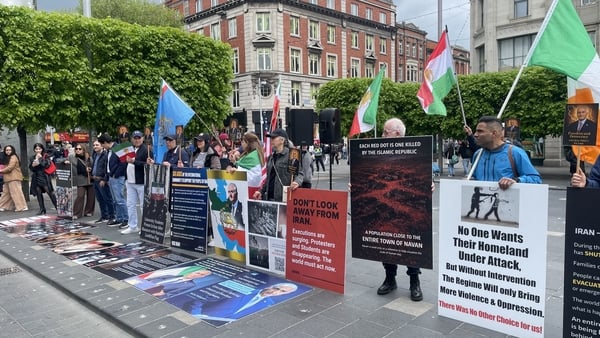
Speaking after the meeting, the Commissioner also spoke about the Ireland vs Israel football match which is due to take place in Dublin later this year.
There had initially been questions over whether the game could be held in Dublin due to safety concerns, while there have also been calls for Ireland to boycott the game.
Yesterday, the Football Association of Ireland confirmed that the game will be played in Dublin’s Aviva Stadium.

The Commissioner said that the match will present "unique challenges" for gardaí, but added that he is "absolutely confident that we have the men and women in our organisation to police this properly".
"We have the equipment in place, we have the training, we spent a lot of time and effort training people around these types of matches, so I am confident we can police this event."
He said there will be a lot of messaging ahead of the match.
"If people want to go and watch the match, if people want to protest peacefully, that is all absolutely fine.
"If people want to go to that event and want to commit criminal acts, we will deal with that. We’ll make arrests, whatever we have to do."