
Poverty and social exclusion remain key issues for the Traveller and Roma communities in Ireland, according to a survey, which also shows high levels of discrimination towards Travellers.
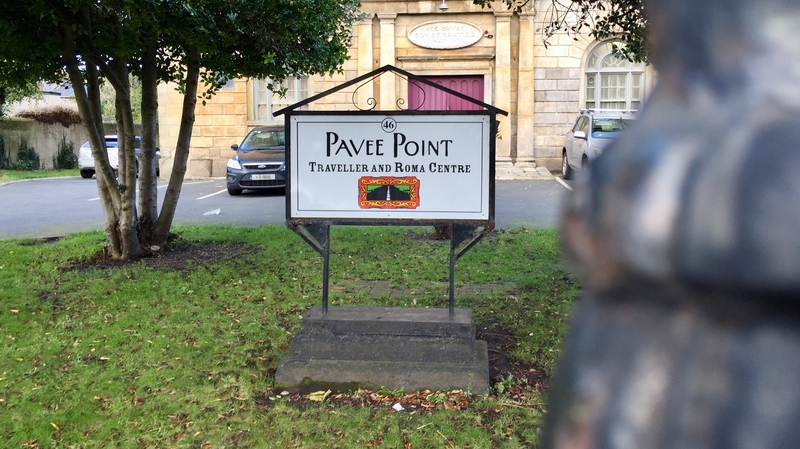
Pavee Point Traveller and Roma Centre conducted interviews with 415 Travellers and 106 Roma in 2024, the second survey of its kind from the European Union Agency for Fundamental Rights (FRA).
Thirteen European countries conducted surveys, the results of which were published by the FRA in October last year. Pavee Point is presenting the Irish findings today.
The findings reveal improvements across health, education, and employment for Travellers in Ireland (compared to 2019); however, life expectancy for Traveller and Roma women in Ireland is almost eight years less than the general population, and almost 11 years less for Traveller and Roma men
75% of Travellers in Ireland said they were discriminated against in the year before the survey, a 10% increase in experiences of discrimination compared to the FRA Survey in 2019.
Despite improvements in health education since 2019, 39% of Travellers in Ireland felt discriminated against when accessing healthcare.
60% of the Roma community in Ireland said they were discriminated against in the year before - just 5% reported this discrimination to an official body.
97% of Traveller children and 96% of Roma children were found to be at risk of poverty; and 41% of Roma in severe material deprivation.
42% of Travellers live in housing deprivation, with 63% living in overcrowded conditions while 74% of the community felt discriminated against when looking for housing in Ireland.
34% of Roma reported that they were in housing deprivation and they reported extremely high incidents of overcrowding at 92%.
More positively, there was an increase in Traveller child enrolment in early childhood education: rising from 64% to 68% between 2019 and 2024.
The survey also revealed a 5% increase in Travellers aged 20-24 completing the Leaving Certificate, rising to 27%, but that compares to 97% of the general population.
Roma children in early childhood education were at 33%, and 37% of Roma aged 20-24 had completed at least the Leaving Cert.
There has been a 7% increase in the number of Travellers in paid work (now 22%), however this is compared to 79% of the general population. 49% of Roma are reported to be in paid work.
84% of Travellers in Ireland felt discriminated against when looking for work and 65% of young Travellers in Ireland are neither in employment, education or training compared to 7% of the young general population.
The data collection for the Irish survey was undertaken by peer-researchers in local Traveller organisations and groups working with Roma, building on a methodology developed by Pavee Point over the past 40 years.
Pavee Point has said the findings show some progress has been made, but that overall, urgency, accountability, and ambition is needed in Ireland and elsewhere so that the European Union "truly reflects a union of equality in all its Member States including Ireland."
Pavee Point Co-Director Martin Collins said the survey showed that as minority ethnic groups, Travellers and Roma experience ongoing racism and discrimination based on their ethnicity, and other intersecting grounds.
"In the context of increases in incidences of hate speech and growing far-right mobilisations, these findings require robust responses," he said.
"In order to achieve equality for Travellers and Roma, particular attention is needed to address the structural inequalities and racism that impact on them, across all areas, including education, employment, poverty, and health."