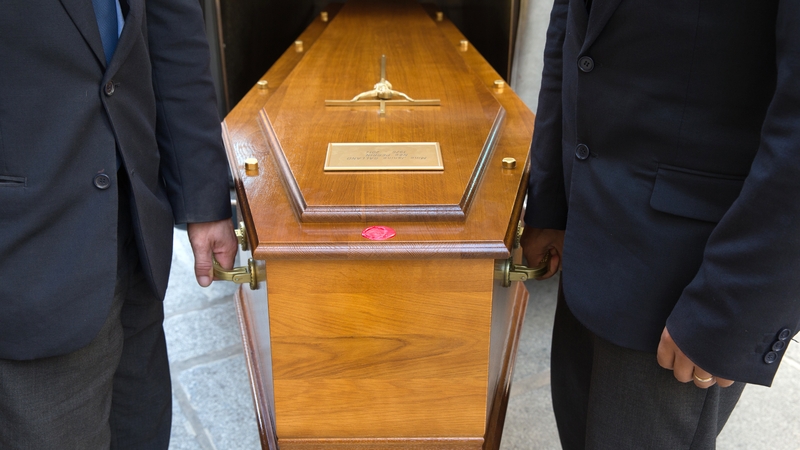

The Bishop of Ardagh and Clonmacnoise has clarified diocesan guidance that wakes, with an open coffin, are not permitted in churches.
It follows a letter from Bishop Paul Connell to funeral directors in south Leitrim which said reposing of remains in churches would not be permitted in any church belonging to a Catholic parish in the diocese from 9 February.
In a statement issued through the Catholic Communications Office, he noted that in recent months a practice had developed in some parishes around the use of churches for the reposing of the remains of those who had died.
This is a practice he said that was usually held in the home, or in recent years in a funeral home, where family and friends could gather, offer sympathy and support.
However, while he acknowledged that every community wished to support a family at the time of a funeral, some parishes had asked for guidance on the matter and others had questioned if a church is the best place for reposing of remains to occur.
In the interests of bereaved families in particular, he said he wished to provide clarity on the issue.
Three stations and two processional routes are at the heart of the ritual around Christian burial.
The three places are the home, the church, and the place of committal.
Between each of these there is a procession, highlighting a pilgrimage to eternal rest.
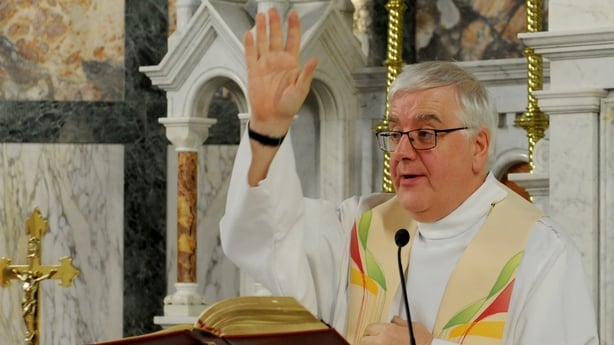
Bishop Connell said none of these were "purely functional, but hold significance, both in the comfort that they bring and in the faith that they profess".
He noted that in recent years the station at the home had, quite often taken place in a funeral home, and then from there to the church, and place of committal.
However, he added that the use of a church in a manner that makes it like a funeral home, breaks this practice and is not faithful to the tradition held.
"The element that takes place in the church should always be in the context of faith and worship, as this is the nature and purpose of each church.
"It is a sign and symbol of the Lord's presence in the community, and the place where the Blessed Sacrament is reserved. This point is important for all those who use a church outside the celebration of the liturgy," he said.
Bishop Connell has directed that in parishes where the practice of remains reposing in the church has not begun, these parishes do not introduce the practice.
Where it has occurred, he has directed that the practice be discontinued as and from 9 February, and he has requested that parish communities involved look at other possibilities within the area for hosting this station of the funeral rites.
He added that the use of Parish halls or other parish facilities is "in order".
Bishop Connell also pointed out that the Reception of Remains to a church should follow the Liturgy "designed for this station", after which the community should come forward to offer condolences.
"It is imperative that those attending always acknowledge that the Blessed Sacrament is present and that this is a sacred place of worship. Hence the importance that when the remains are placed in front of the Altar, the coffin remains closed."
He described the celebration of funeral rituals as "an important element both in our faith and in our culture".
"I am requesting that these guidelines be followed, so as to ensure the dignity and respect for both those who have died and the place of worship," he concluded.
The guidelines state that there has been no change to the traditional Catholic funeral service, which includes a removal of the remains to the church the evening before the Funeral Mass, when the remains are met with prayers and the opportunity for people to sympathise with the family afterwards.
The guidelines also point out that the coffin remains closed during this removal service as it does during the Funeral Mass and there is no difficulty whatsoever with the remains reposing overnight (with a closed coffin) in the church.