The chairperson of the Government-appointed independent review into how Ireland handled the Covid-19 pandemic has said its final report should be with Government by the end of the year.
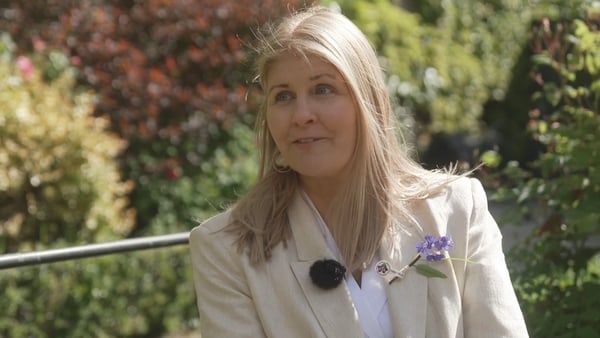
In an exclusive interview with RTÉ News, Professor Anne Scott said that while the review does not have statutory powers, it has had an extremely high level of cooperation with government departments and other key parties so far.
Private listening sessions with bereaved families are also being organised in February and March for people affected.
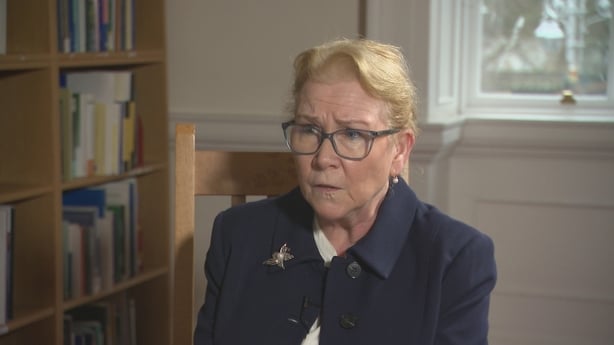
Prof Scott said the review will carefully examine whether human rights were supported rather than infringed, during the pandemic here, and if civil liberties were supported.
In its submission to the review, the Irish Hospice Foundation said that often there was no holding and tender touches allowed in people's final days and hours in nursing homes, or hospitals.
Prof Scott said the pandemic, which involved Irish people living with various levels of restrictions between March 2020 and January 2022, was one of the most significant national crises in the last 100 years.
Public consultation
The independent Covid-19 Expert Evaluation was set up by the Government in late 2024 and opened a public consultation in May last year.
Its task is to examine how the Government prepared for, planned and managed the pandemic.
The review team was asked to complete its work within an 18-month period and Prof Scott said it is due to report by the end of this year.
It is looking at the impacts of the pandemic and the management of the pandemic on society.
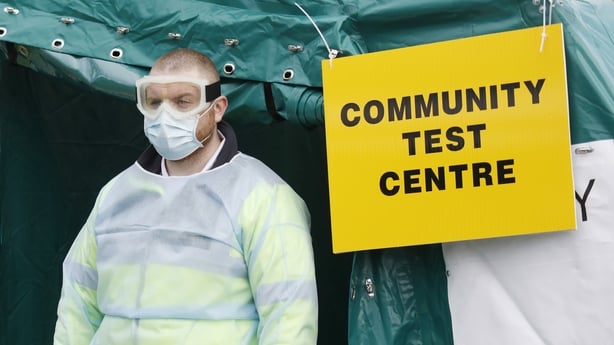
Prof Scott said the evaluation has received over 7,000 individual responses from the public to its consultation call last May and also has received submissions from many organisations.
While the evaluation in still in the late stages of data collection and analysis, the key points from people who responded to the public survey about their experiences during the pandemic were: mental health and well-being, relationships and social connections and physical health.
The most negative experiences for people who responded were around civil liberties, human rights, trust, and mental health.
Young people's survey
Prof Scott said that by far the most significant issue for parents and young people, was how young people's education and development were affected.
The evaluation has conducted a survey of young people who were 11 to 20 years of age during the pandemic, and it is currently analysing that data.
However, some of the early indicators are that young people not only experienced the disruption of education, but also of their social development, the ability to engage with peers, and missing big milestones, like moving from primary school to secondary school, or going to university.
The review team is looking at the impact of school closures here, in comparison with countries like Finland and Sweden.
Nursing homes
The response to the pandemic in long-term residential care will be a significant part of the inquiry's work.
A survey went live this month on its website and it is encouraging people who had a connection with long-term residential care to engage with it.
The evaluation will also be offering private listening sessions for the bereaved in February and March, to share their experiences.
"It's absolutely the case that many people were highly traumatised by both the visiting restrictions but particularly restrictions which meant they could not spend times with their loved one, in the last days of their lives, and also the disruption of funerals having few people present," Prof Scott said.
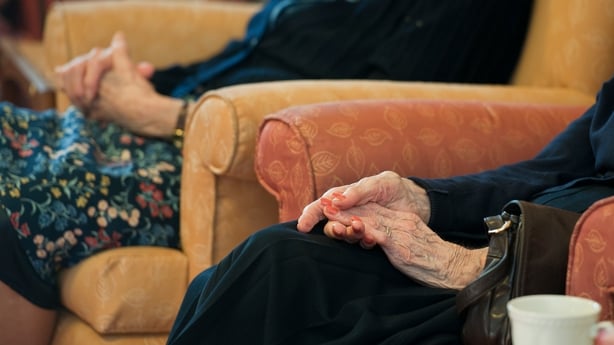
She pointed out that in some of the submissions she has received regarding bereavement, people say they are still living with this trauma and say that it will never go away.
Prof Scott said it was also very difficult for some patients in hospital, or nursing homes, who were trying to use technology and were very hearing impaired.
The evaluation is tasked with building on the work of the Nursing Homes Expert Group, chaired by Professor Cecily Kelleher, which reported in August 2020.
That group came up with 86 recommendations and Prof Scott said there are some outstanding recommendations, which must be implemented.
Overall, Prof Scott said she has committed to come up with very practical, implementable recommendations in her final report of the Covid-19 evaluation.
Meanwhile, Majella Beattie of the patient advocate group, Care Champions Ireland said while it highly respected Professor Scott, the organisation feels that the Evaluation model protects policies and decision makers from any scrutiny at all.
She described the planned private listening sessions for bereaved families as being like a managed venting exercise.
Restriction of civil liberties
On the restriction of civil liberties, Prof Scott said meetings have been held with the Irish Human Rights and Equality Commission and the Irish Council for Civil Liberties.
In its submission to the evaluation, the Irish Council for Civil Liberties said new laws and health measures were introduced during the pandemic in haste, and with little time for scrutiny, with ordinary life being heavily regulated.
"Everyone is on the same page in that in an emergency situation, emergency measures have to be taken, and the protection of health is a key right for people in society and was the high priority," Prof Scott said.
"But as the pandemic evolved and as our response to it evolved, we do need to look carefully to make sure that human rights were supported rather than infringed and that civil liberties were supported, so we will be looking at that."
The National Public Health Emergency Team
The evaluation has communicated with all 18 Government departments that were in existence during the pandemic and has received submissions from these departments and their agencies, including key bodies like the National Public Health Emergency Team (NPHET).
It is looking at the whole of Government response and the inputs into the decision making that were key to those big decisions.
"NPHET was a significant advisory group to the Government, so obviously how NPHET linked with Government, how it linked through the Minister for Health and its influence we will be absolutely looking at," Prof Scott said.
The Covid-19 evaluation is not a statutory inquiry, and it cannot require the production of documents, or witnesses to attend or to give evidence.
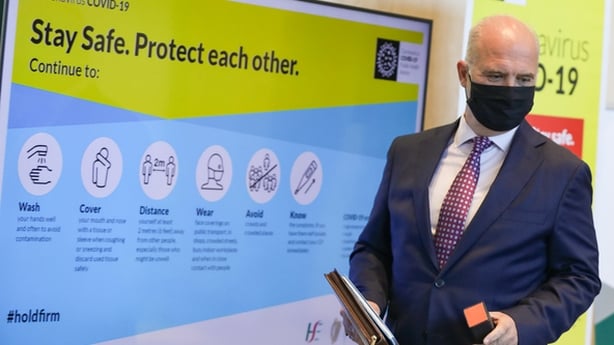
However, Prof Scott said she can assure the public that no government department has refused to produce anything the evaluation has looked for to date.
She also observed that evaluations, compared to public tribunals of inquiry, each have their pros and cons.
Several European countries - like Luxembourg and Belgium - went for the evaluation model.
Prof Scott said that with evaluations, the programme of work can be "contained in a shorter timeframe" and that also enables a relationship of cooperation and constructive engagement to try to get the information required.
"We are not trying to evaluate what happened with the benefit of hindsight. We are looking at what was happening during the pandemic, what were the inputs, what were the decisions made and what were the impacts of those decisions," she added.
Top decision makers
Later this year, the evaluation team will be meeting with some of the top decision-makers during the pandemic, and examining government decisions, to get a sense of the complexity of the trade-offs that had to be managed.
Prof Scott said that reviewing the documentation from departments has been a time-consuming process and that in the original submissions from government departments, there were 4,850 pages.
The review team has gone back to seek further documentation, where it believes this is needed for clarification.
The work of the evaluation is essentially a fact-finding process and it is not tasked with apportioning blame.
Prof Scott described it as "forward-looking" and trying to ensure that lessons that can be learned, will be learned.
Vaccination programme
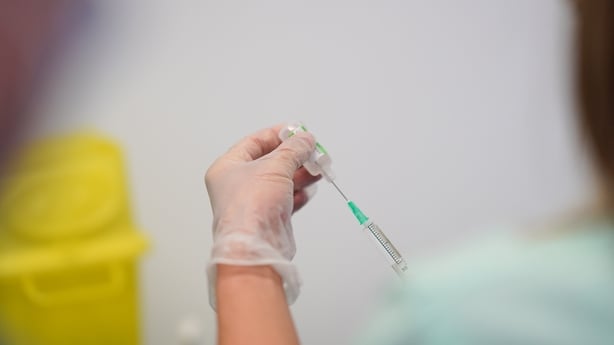
The evaluation will be looking at the strategy around the roll-out of the vaccination programme, the communication of benefits and risks and whether communication of information could have been improved.
On the issue of vaccine hesitancy, and anti-vaccine sentiment, Prof Scott said people here were entitled to ask questions to seek reassurance on the risks and benefits.
"I am minded of a comment by Dr Michael Ryan of the World Health Organization one morning on the radio, where he said people are perfectly correct to be concerned about what they put into their bodies, or what they put into their mouths.
"So, it is absolutely not only understandable, but it is in fact to be encouraged that people would ask questions, so that they would gain an understanding," she said
Prof Scott added that Ireland is seen as having one of the vaccination programme success stories across Europe.
However, she said there were people who could not receive vaccines due to health conditions, or due to individual choice, and the evaluation wants to examine what kind of impact that had on them.
Prof Scott said that circumstances really matter in examining the pandemic in Ireland.
The pandemic did not affect everyone in the same way, and from the public consultation to date, she said this is starkly clear.
The surveys have found it affected people's financial situation, and that those who entered the pandemic trying to make ends meet had a much more negative experience.
People with very young children, particularly single parents, also had quite negative experiences.
"Age really did seem to matter and maybe this is the one aspect that surprised me the most.
"Young people, in particular, felt quite impacted by the pandemic across a number of areas but particularly the 13 to 19 year old age group," Prof Scott said.
Carers who were providing family care in the home were heavily affected, people who lost supports during the pandemic, and people with disabilities, she said.
The evaluation will be seeking to put Ireland's handling of the pandemic in context, with the broader international situation, and it has a panel of experts on its team, to bring this perspective from the UK, Europe and the US.
The Prof Scott-led evaluation can be contacted at info@covid19evaluation.ie