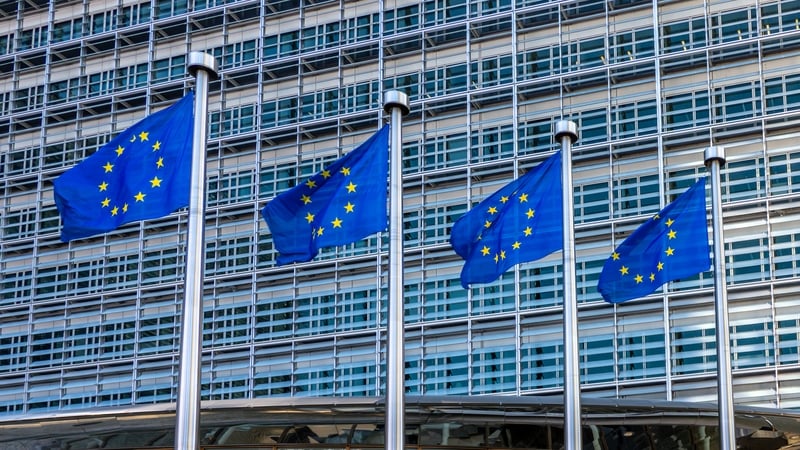

If January 2025 began with European trepidation about the incoming second Trump presidency, the impact of his return to the White House has been more severe on Europe than even the pessimists could have imagined.
President Donald Trump and his acolytes have rhetorically vilified and undermined the European Union, weaponising tariffs, interfering in elections to support far right parties and replacing decades of enmity towards Russia with deference.
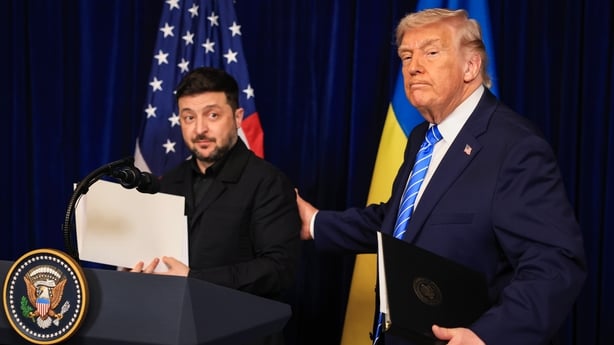
Vice-President JD Vance’s diatribe against the EU at the Munich Security Conference, the humiliation of Ukraine’s president Volodymyr Zelensky in the Oval Office, the red carpet treatment for Russian president Vladimir Putin in Alaska and billionaire Elon Musk’s call for the EU to be abolished have all been jaw-dropping moments.
"It’s been worse than expected," says Luuk van Middelaar, founding director of the Brussels Institute for Geopolitics.
"It's a clear acceleration of the sense we have had since he took office: the [Vance] speech in Munich in February, the Alaska summit with Putin in the summer. This is only what he's been doing visibly when it comes to Europe, Russia and Ukraine.
"EU policymakers - and national governments - have each time underestimated the speed and scale of change Trump wants to engineer."
It is true that President Trump has vacillated wildly on Ukraine’s survival - at times admiring the country’s bravery - and has grudgingly maintained his commitment to NATO, for now.
But off-the-cuff remarks do not a coherent world view make, so December’s National Security Strategy (NSS) is seen as crystalising his true intentions.
It speaks of Europe’s "civilisational erasure", suggests the continent will be "unrecognisable" in 20 years (a dog-whistle remark that there are too many immigrants).
It accuses the EU of undermining liberty, suppressing political opposition and suffocating free speech (this from an administration that will now vet the social media accounts of foreigners wanting to enter the US).
What's more, the US should "cultivate resistance … within European nations," taken to mean further support for far-right and Eurosceptic parties.
For those who dismiss the NSS as a document read by a small community of foreign policy experts, Mark Hertling, a former commander general of US forces in Europe, has news.
"A good NSS doesn’t merely describe what America hopes for," he writes in The Bulwark.
"It also tells the national security community what must be protected, what must be deterred, and what must be resourced. It is the progenitor of a whole family of other documents that also provide required guidance: the [US's] National Defense Strategy, Joint Strategic Planning System, and the theater and service plans."
The NSS's emphasis on re-establishing "strategic stability with Russia" will, in that case, send a chill through European policymakers.
The NSS was welcomed by the Kremlin.
Optimists will point to the US's National Defense Authorisation Act (NDAA) just passed by Congress which calls for the Pentagon to approve $400 million for the Ukraine Security Assistance Initiative (USAI) for the next two years.
This is still a fraction of the $70bn in support that Congress had approved since Russia launched its invasion, and the money will be spent on US weapons.
"Europeans should note that Congress remains a stalwart pro-NATO body even as it asks Europe to shoulder more responsibility for its own defence," according to an analysis by the German Marshall Fund.
"Yet, even its most pro-European and pro-NATO passages are unlikely to dissuade administration efforts to disengage from the continent."
Europeans have certainly been following that advice.
The imperative of the continent stepping up as the US withdraws was captured in German Chancellor Friedrich Merz’s brisk observation on 14 December that the era of "Pax Americana" was over.
The shock dismantling of the transatlantic alliance and what it means for European security - and Ukraine’s survival - will continue to dominate in 2026, up to and including Ireland’s presidency of the EU.
The landscape compared to Ireland’s last presidency in 2013 could not be more different.
Then the State was emerging from a humiliating EU-IMF bailout, meaning it had just over €60m to spend on the presidency compared to the €110m in 2004.
The agenda then was dominated by the euro and banking crises, while on the horizon there were ambitions of an EU-US free trade agreement (Brexit was barely a twinkle in David Cameron's eye).
Now 13 years on, Europe finds itself squeezed between a hostile Trump administration and a revanchist Russia which, senior NATO commanders are convinced, will attempt an attack on European territory within the next five years.
Far-right parties, often pro-Russian, are increasingly either in government or leading the opposition, and have shifted the balance of influence in the European Parliament, teaming up with the centre-right European People’s Party (EPP) to water down or delay climate legislation.
"Looking ahead to the Irish presidency," says Luuk van Middlaar of the Brussels Institute for Geopolitics, "this relentless succession of events will continue and Europe will be operating in a far more constrained geopolitical environment.
"In the second year of Trump's administration, which is also the year of your [Ireland] presidency, it might only gain speed in dismantling that post-1945 order, not to mention the fact that we will still have - depending on the peace talks - continued war on the European continent and pressure on our economic model from China as well."
Prior to the Lisbon Treaty, the taoiseach of the day would have chaired EU summits, and the holder of the presidency would have had a much more direct influence on the EU's policy agenda.
Now there is a full-time president of the European Council - António Costa - and as holder of the EU presidency, Ireland's role will be less strategic and more about ensuring that all of the legislative files inching their way through the machinery get properly negotiated and concluded.
"The relative importance of planning, programming and trying to shape the EU agenda (during) the presidency is becoming less important," says Georg Riekeles, Associate Director at the European Policy Centre (EPC).
"The real issue is having all hands on deck and being ready to deal with whatever contingencies that come.
"On top of that is the legislative work that needs to be pushed through, and which is very often enormous, very significant, and significantly more important in volume than what it was ten, 15, 20 years ago."
That is because the EU is now a bigger machine compared to 2013.
Europe has weathered a migration crisis, Brexit, Covid and the Ukraine war, and has attempted to lead the world in tech regulation and net carbon neutrality.
The EU may be one country smaller thanks to Brexit, but the competences it has taken on in the past 13 years mean it is a much bigger beast.
In 2013, the Irish presidency slogan was Stability, Growth and Jobs.
The Government’s formal priorities this time around will not be published until June, in deference to the incoming Cypriot presidency, but they will be heavily shaped by the geopolitical environment, i.e., security, defence and European competitiveness.
Security to dominate 2026
If, in 2013, Ireland was seen as a plucky innovator which had lost its way during the banking crisis, and in turn was granted enviable solidarity during the Brexit negotiations, in 2026 the spotlight burns a little hotter.
The chronic under-resourcing of the Defence Forces, while the State rakes in lavish corporate tax receipts from US tech giants, has exposed Ireland to increasingly critical editorials in the European, but also Trump-friendly, press.
"Ireland's historic neutrality is no excuse for its pitiful investment in defence - roughly 0.2% of gross domestic product - which is among the lowest in the European Union," wrote former Trump national security advisor Robert C O’Brien in the Wall Street Journal.
"Ireland lacks key technical defences, like radar systems and efficient cyber and human intelligence networks, leaving the country vulnerable to espionage and cyberattacks from Russia, China and extremist nonstate actors - which creates an opening to target American tech firms with significant Irish infrastructure," he wrote.
Irish officials acknowledge the criticism but point to progress being made in plugging capability gaps when it comes to those radar, sonar, aircraft and counter-drone systems investments.
One source reports that in any discussions with EU counterparts, Ireland’s defence of its historic neutrality is respected, but questions are asked about how the State intends to defend itself.
"Dublin will always argue that defence decisions and spending are a national competence, and to that extent there are no targets for EU member states," says another source.
"But there is a degree of discomfort, for sure. If you have a pebble in your shoe, it’s a bit irritating, but you'll get on with it.
"While there is a degree of discomfort, it has not got to the point that Dublin is feeling pressure to do something it would rather not do."
Nonetheless, because European security is going to dominate in 2026, Ireland’s vulnerabilities on that score will draw more attention.
"Why is 2026 such a testing moment?" asks Georg Riekeles of the EPC.
"Europe is pretty much on its own in supporting Ukraine, certainly financially.
"If the US is still sending weapons, it's only because Europeans are paying for it.
"The EU is going to have to come out of the woods and be ready to, not only to talk about it, but to decide and act on what they're going to do for Ukraine operationally."
The reputational stakes for Ireland could not, therefore, be higher.
Officials say the priority will be to negotiate and close legislative files in Brussels, to mount an operationally successful series of meetings in Ireland - there will be 274 gatherings at the latest count (more than double the number of meetings compared to 2013), with delegates from 26 member states and EU institutions all descending - and to generate a national conversation about Ireland's place in the EU, in what direction people want the EU to go and how Ireland can achieve that.
The Government has been preparing for at least two years, hiring and training hundreds of extra staff and doubling the Irish diplomatic footprint in Brussels.
A team of Irish officials will be tasked with chairing 170 meetings of member state officials across the gamut of EU policy making.
For the past 18 months, every Irish ambassador in every member state has been tasked with getting to know the country's MEPs, ministers and officials to understand where national (and parochial) politics can often collide with EU policy making.
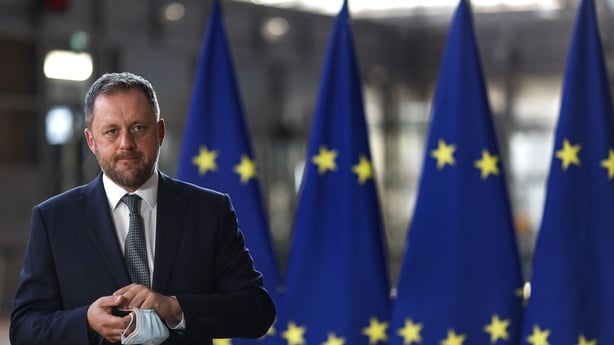
Minister for European Affairs Thomas Byrne has visited every member state and candidate country since last June, while other ministers have been back and forth to Strasbourg to meet all the key European Parliament committee chairs.
In all the key legislative negotiations, an Irish minister - or ambassador - will be in the chair, and his or her ability to steer negotiations to a successful outcome will be how the presidency is measured.
Being an honest and neutral broker is key - those ministers are not representing Ireland but other member states. However, Ireland can push its own priorities up to a point.
"Your work is cut out for you, and there's a heck of a lot of work, and that work just is driven through," says a senior EU official.
"But as a presidency, what you can do is bring a flavour, a spotlight, champion an initiative above and beyond the rest."
Denmark has just concluded its six month presidency and by all accounts it has managed to reflect its own priorities in chunks of legislation it managed to get over the line.
These were: the EU’s 2030 defence readiness ambitions, support for Ukraine via the €90 billion joint debt loan negotiated at the December EU summit, the 2040 carbon emission reduction targets, a major plank of the EU Migration Pact and six so-called Omnibus files, i.e., broad simplifications of EU regulations.
Denmark is also a good example in how it used its management of the legislative agenda to serve its own priorities: Danish officials were adept at scheduling meetings to ensure that policy areas - such as the EU-Mercosur trade deal - got more time and attention in order that the file might be successfully closed.
The Government has earmarked concluding the seven-year EU budget, known as the Multiannual Financial Framework (MFF) as the big ticket item, while concluding accession negotiations with Montenegro, with a view to the country joining the EU in 2028, will also be a priority.
It is expected to hold an informal meeting in Ireland of EU development ministers as a way of highlighting that sphere’s importance (Denmark declined to host such a meeting).
But the Government will start the year still embroiled in the EU-Mercosur trade deal issue.
The Government has been facing domestic pressure on three agriculture fronts: Mercosur, the nitrates derogation and the fate of the Common Agriculture Programme (CAP) when it comes to the next budget.
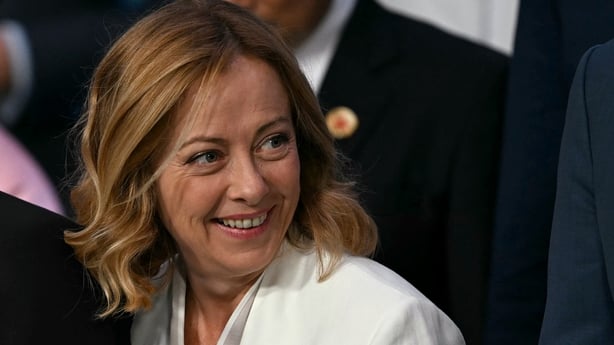
On Mercosur, there is still no clear majority to endorse the trade deal with Italy’s Giorgia Meloni voicing last minute objections which ultimately delayed the signing that was due on 20 December.
Ms Meloni secured an informal agreement with Brazil’s president Lula da Silva for a delay in ratification while extra safeguards for European farmers are assessed.
The Government's position is that it will continue to work with France and Italy on those safeguards, in particular whether there can be further mechanisms to ensure that South American food exports align with EU standards.
If the Italian government, under intense pressure from its industrial and exporting sector, decides to accept the safeguards and support Mercosur, then it is almost certain that the deal will go through.
Then it will be a question of whether the Government wants to spend valuable political capital in further fighting the deal, especially when senior government figures privately acknowledge that Irish pharmaceuticals, machinery and med tech exporters - not least the dairy sector - will benefit from the Mercosur trade deal.
The Government is also pushing for changes to the draft seven-year budget (MFF) when it comes to agriculture.
In order to prioritise competitiveness, the European Commission has proposed merging farming subsidies with regional funds into a single envelope which will then be dispensed by national governments.
So far, Pillar One of CAP - direct payments to farmers - has been ring-fenced at €300 billion (€293bn for direct payments and €6bn as an emergency fund to offset the potential impact of Mercosur).
However, Pillar Two - payments linked to rural development and environmental schemes - has not been ring-fenced.
The Government wants to get improvements on this before Ireland assumes the presidency, since it will have to be a neutral chair on the issue.
"We would be concerned about the longer term sustainability of CAP," says a senior source.
"We have to tease through this ring-fencing issue. We'd like some of these issues boxed off even before we take the presidency."
Farming groups will, nonetheless, hope that having Ireland in the chair will mean a greater emphasis on getting the MFF concluded, especially when it comes to the sustainability of CAP, before Lithuania - which will want to prioritise defence over farming - takes over in 2027.

In general, the Government will need to be sensitive to further shifts in the political winds across Europe.
In 2026, there will be regional elections in France, while in Germany, in two of the five Länder which go to the polls next year, the AfD is currently at 40%.
In 2027, the far-right National Rally is on course to win the French presidential and assembly elections, while there could be major right-wing gains in Poland and Spain.
Far from suffering from their association with MAGA and the Trump administration, whose tariffs may well crush European jobs, such parties celebrate what they see is a transatlantic movement away from liberal democracy, where they - and not the incumbent governments - are the real interlocutors for the White House.
"In terms of European Council composition, this will make a massive, massive difference," says Sophia Russack, research fellow at the Centre for European Policy Studies (CEPS).
"These parties don't just challenge further European integration, they challenge the system and challenge democracy as well.
"We can see how much pressure they put on national centre-right parties, and how that has repercussions at the European level."
Throughout 2026, the Ukraine war, and whether or not a fragile peace agreement is established, will overshadow everything.
If Russia decides that it will forge ahead with the war, then a hybrid version against Europe proper is expected to intensify.
The Royal United Services Institute (RUSI) expects more Russian sabotage of expanding defence production and supply chains, in order to push up security costs, deepening misinformation and subverting elections, and more airspace and maritime intrusions.
"Despite these signals, Europe still does enter 2026 with the potential of weakened resolve to deter specific hybrid activity," according to a RUSI's forecast.
"Politically far-right parties - often with pro-Russian sympathies - are topping polls in a year of major elections on the continent.
"Economically, EU governments have been constrained by slow growth, sticky inflation and energy supply uncertainties.
"Militarily, many are only at the beginning of their rearmament cycles.
"Combined, it limits their ability to take a decisive hybrid response specifically in 2026, strengthening the Kremlin's belief that these tactics can succeed in the year ahead."